


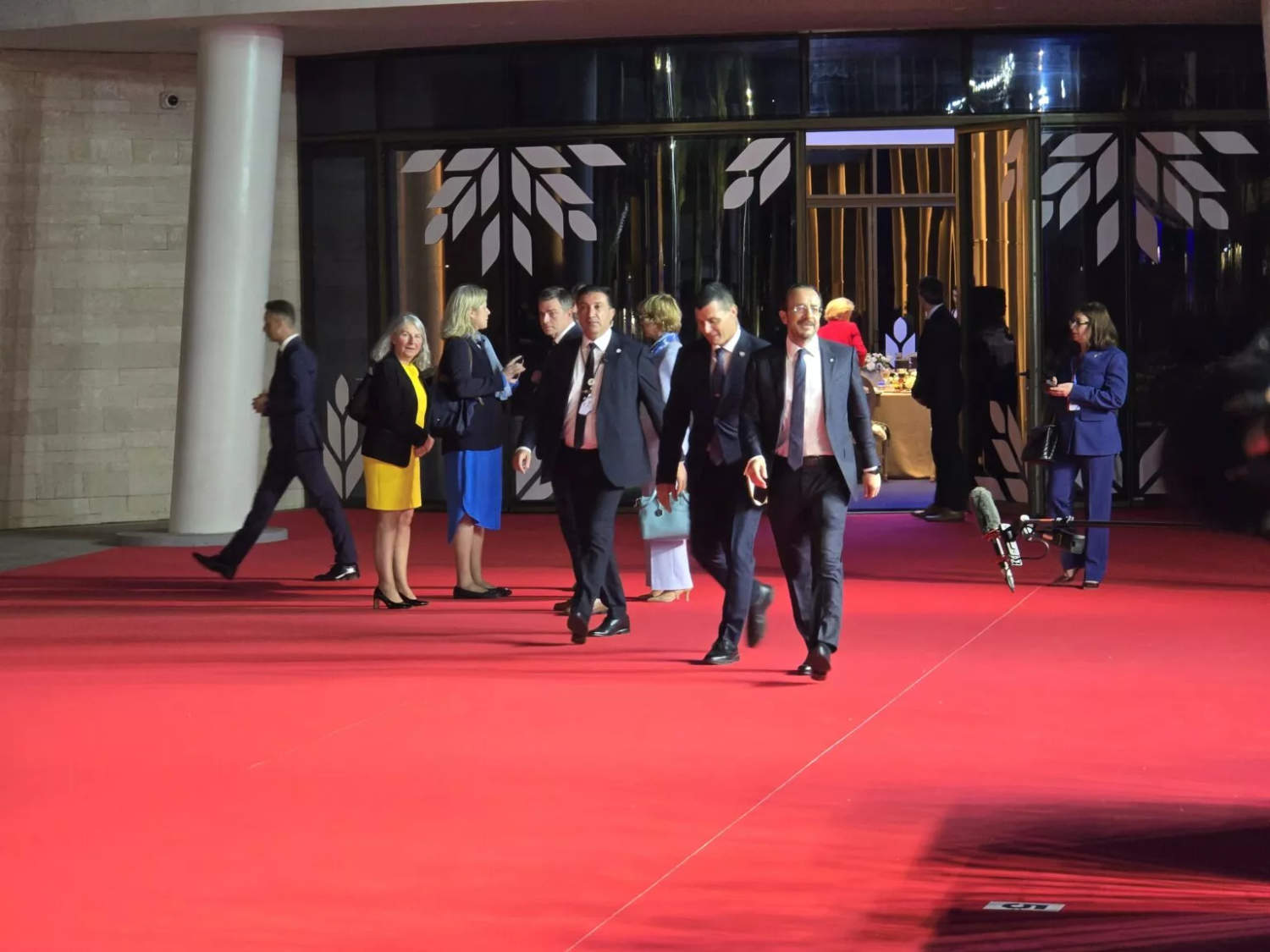
EU leaders accepted President Nikos Christodoulides’s proposal to begin drafting a structured blueprint for activating Article 42.7 of the EU Treaty — the mutual defence clause — at the conclusion of the first day of the informal European Council in Ayia Napa, sources close to the discussions told Phileleftheros.
The first day of talks, which ran until around midnight, produced two significant outcomes linked to Cypriot presidency initiatives, according to the sources.
Article 42.7: blueprint agreed
Leaders agreed that discussions must move to the next stage — the preparation of a draft for a structured activation process for the mutual assistance clause. The process Cyprus is pushing for would include practical steps for the affected member state, an institutionally grounded decision-making procedure, a clear channel for submitting assistance requests, and a substantive match between what a member state needs and what other member states can provide.
In practical terms, Nicosia is proposing a process analogous to the existing EU civil protection mechanism used in emergencies such as fires or floods — where a member state registers specific needs and others offer assistance accordingly. Cyprus’s goal is to keep the issue on the European agenda to strengthen the effectiveness of the EU’s response if the clause is ever activated by any member state.
Speaking on arrival at Ayia Napa marina on Thursday, Christodoulides said: “Now is the time, taking into account regional and international developments, to give substance through concrete actions and deeds to our common goal of achieving the EU’s strategic autonomy.” He said the presidency had specific proposals and was confident the Commission and other member states did too, adding: “What happens when a state activates this Article? For example, account must be taken of the region in which that state is located, which states can help immediately, what kind of assistance is needed — because the assistance depends directly on both the capabilities of the state and the threats it faces.”
Regional summit initiative welcomed
On the second outcome, sources said EU leaders described as excellent Cyprus’s initiative to invite regional leaders to Friday’s session in Nicosia for a dialogue on developments and on strengthening cooperation in addressing the challenges and consequences of the Iran crisis.
First-day agenda
During the first day, leaders addressed the major geopolitical challenges facing the EU, with Ukraine, the broader situation in the Middle East, the impact on energy prices, and the need to give operational substance to the mutual assistance clause all at the centre of discussions.
The physical presence of Ukrainian President Volodymyr Zelensky gave leaders the opportunity to highlight the work carried out under the Cypriot presidency to implement relevant European decisions.
After the dinner at Ayia Napa marina, leaders left without making statements. Christodoulides referred journalists to Friday’s press conference. European Commission President Ursula von der Leyen also indicated that the Commission would make announcements on decisions related to addressing the impact of the war in Iran. The German and Italian leaders were the last to leave the conference centre, remaining behind after all others had departed and continuing their discussion as they walked to their vehicles.
Day two programme
The second and final day of the informal European Council moves to the Philoxenia Conference Centre in Nicosia. Leaders will arrive between 8:35am and 9:15am and be welcomed by Christodoulides.
Work begins at 9:30am with an exchange of views between EU leaders and European Parliament President Roberta Metsola, followed at 10am by the main session on the Multiannual Financial Framework, expected to last around two hours. A press conference with Christodoulides, European Council President António Costa and von der Leyen will follow.
At 12:50pm, Christodoulides will welcome regional partners. The working lunch with regional leaders is expected to last around two hours, after which statements will be made and the informal European Council will conclude at 4:30pm.

