


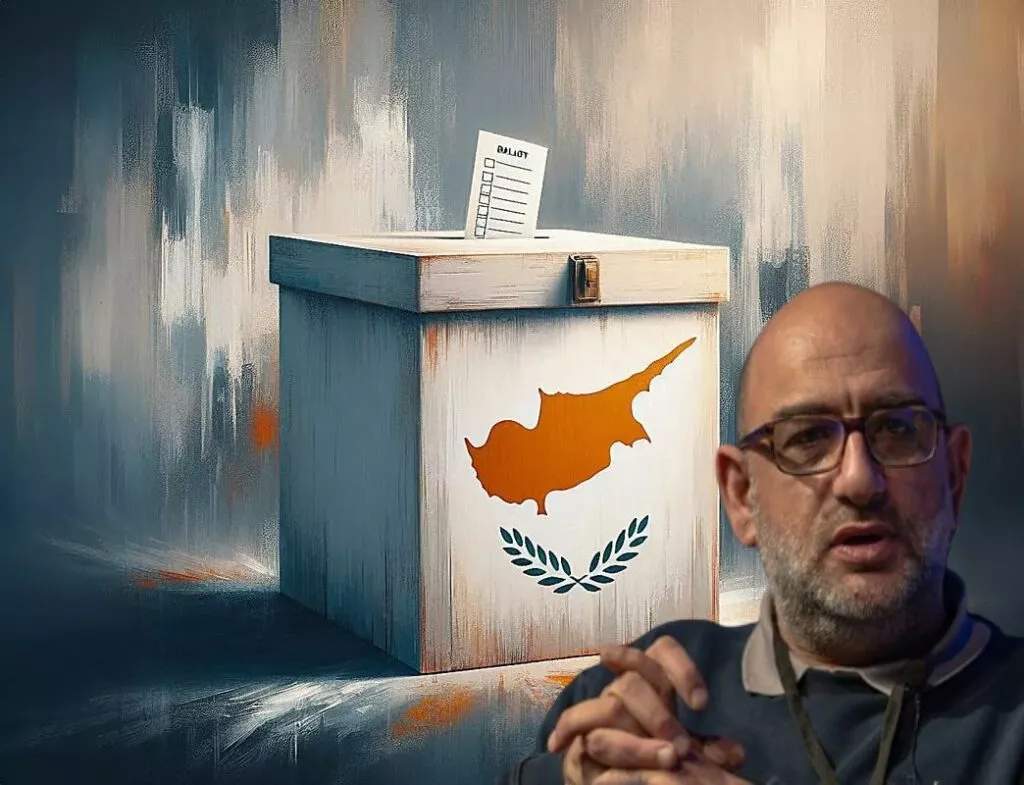
The parliamentary election result confirmed growing fragmentation in Cyprus’s party system but did not substantially change the balance of political power, political scientist Giorgos Charalambous told Phileleftheros.
Charalambous, an associate professor of political science at the University of Nicosia, said the result reflected a common view in political science that big changes in party systems usually happen gradually. The election showed both continuity and change, he said.
Continuity was reflected in the resilience of three of the four parties that have formed the pillars of parliamentary politics since the 1980s, despite the pressure created by widespread political disappointment and fragmentation. Their organisational structures, capacity for mass mobilisation and links with the state, where these exist, appear to have contributed to their relative durability, he said.
At the same time, he said, all three parties continued to lag behind their vote totals from 2011 and 2016. AKEL reversed its downward course for the first time in 15 years, but recovered only about one-fifth of the voters it had lost between 2011 and 2021. If the increase in the number of voters is taken into account, the recovery may have been even smaller.
DIKO lost about 3,000 votes compared with 2021, while DISY lost 0.8 percentage points but increased its actual number of votes by about 1,000.
The election also marked a further weakening of EDEK, which was left outside parliament after about five decades, and the entry of two new parties, one focused on corruption and the other described as apolitical. The entry of ALMA and Direct Democracy showed that a significant part of the electorate sought alternatives outside the traditional party framework, increasing the importance of smaller parties as potential power brokers.
Charalambous said ELAM was the big winner of the election and was now established as the third pole of the party system. He said the party was becoming normalised as another party of the broader right, alongside DISY, despite its far-right ideas and origins.
Four parties that came close to the electoral threshold — KEPK, Volt, EDEK and DIPA — were left outside parliament, creating what he described as a representation gap of around 17%. Although the election brought political change and the rise of new forces, 188,331 citizens still chose not to vote, showing that the crisis of representation in Cypriot politics has not been overcome, he said.
Overall, Charalambous said the reduced dominance of traditional parties and the greater political fragmentation recorded in opinion polls were largely confirmed. In the end, however, the political balance of forces did not change substantially.
He said the social formation reflected in the election results continued to move to the right. The pro-government bloc of DISY, DIKO and ELAM retains a comfortable majority, while the remaining three parties — AKAIL, ALMA and Direct Democracy — do not have a majority and may struggle to set common lines on several bills and legislative proposals.
Read more:

