


The British Bases in Cyprus remain a highly sensitive issue that no Cypriot government has ever truly confronted head-on.
Beyond superficial statements aimed at placating domestic audiences, no Cypriot government has ever dared to stand up to Britain and directly demand the closure of these bases.
Past studies examining the future of British Bases on the island have been shelved, either due to changes in administration or fear of making final decisions. Political forces prefer to make noise about the Bases issue, but none will raise it directly – despite all major political parties having held power or been part of coalition governments over the past 50 years.
This hesitation stems primarily from fear of “British retaliation” – as evidenced by events themselves. Despite grandiose declarations from political leadership and “patriotic articles,” in practice, everyone harbours the fear that if Cyprus raises the Bases issue, Britain might retaliate through the Cyprus Problem, either by recognising the pseudo-state or through UN resolutions.
However, the United States, through its new policy on the island, could provide Cyprus with a way out of these phobic syndromes (where Cypriots dare not challenge or confront certain powers) and end this colonial remnant – one that offers Britain little beyond confirming its former dominant role in the region and globally.
While Cypriot political leadership may see no way forward on the Bases issue, believing it impossible to reopen the matter, foreign analysts suggest an alternative path. This could come through the United States, which, despite its special relationship with the United Kingdom, must consider its own regional and broader interests.
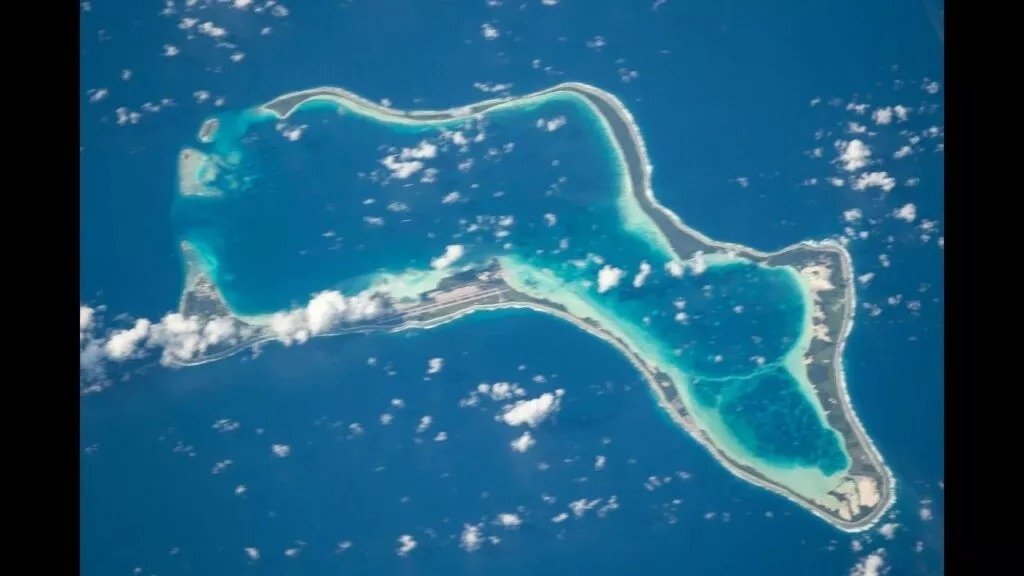
Analyst Michael Rubin, in a recent article published in The National Interest, suggests that “The U.S. should nudge Britain from Cyprus”. According to Rubin (a senior fellow at the American Enterprise Institute, specialising in Iran, Turkey, and broader Middle East issues), “The UK’s withdrawal from the Chagos Islands should open an opportunity for a U.S. naval base in the Eastern Mediterranean”.
In his analysis, Rubin notes how Britain can no longer maintain the assets of a different era: “Today, British possession of the Sovereign Base Areas is more a memorial to past influence than an effective mechanism to project power or protect the Eastern Mediterranean”.
He argues that “the United Kingdom might hand over control of their Cypriot bases to the United States just as it did with Bahrain. The U.S. presence in Bahrain operates under Bahraini sovereignty. The United States might lease the bases from Cyprus but return full sovereignty to the island”. Similarly, the US could return areas not under active military use to Cyprus. In Bahrain, US bases operate within just 152 acres.
According to Rubin, “U.S. lease of Akrotiri and Dhekelia could further cement U.S.-Cypriot ties”. The long-awaited decolonisation of Cyprus could be achieved through “United States leasing of a rump British base area,” which could also “serve as a model to rid Cyprus entirely of its colonial legacy”.
This suggestion can only progress if the Cypriot government dares to put it on the table, without fear of retaliation and by highlighting the benefits Washington would gain from such a move.

