


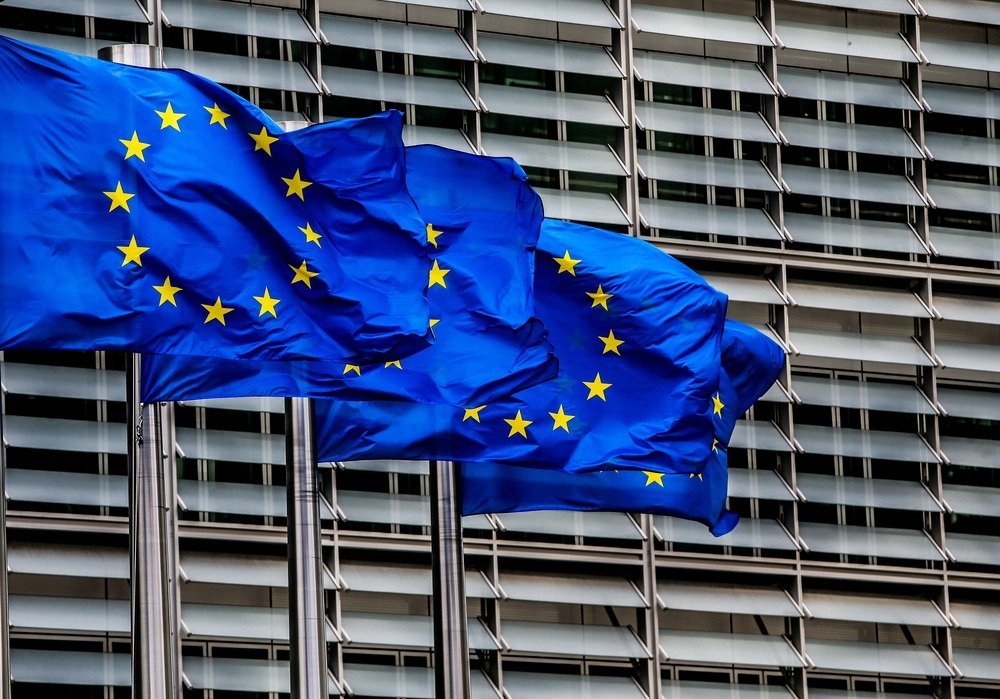
On April 16, 2003, also a Wednesday, at the Stoa of Attalos in the ancient Agora in Athens, new and existing members of the European Union signed the Treaty of the largest enlargement, and from May 1 that year, the EU comprised 25 countries.
Accession to the EU was one of the greatest achievements of the Republic of Cyprus.
This goal could not have been accomplished without significant help from Greece. Fortunately, there were visionaries who insisted that for strategic and political reasons, Cyprus needed to become part of the EU.
One such person was the late Giannos Kranidiotis, who conceived the policy for a European perspective, the decoupling of accession from the solution of the Cyprus problem, and the utilisation of the European dimension to serve as a catalyst for reaching an agreement.
He managed to convince both Athens and Nicosia to follow this path—the path toward the future.
That day, at the Stoa of Attalos, the country’s trajectory changed. A semi-occupied country, against all odds and facing threats and blackmail from occupying Turkey, managed to join the EU.
On that day, President Tassos Papadopoulos signed the Treaty alongside Foreign Minister George Iacovou. In the press room, which was a massive tent, Government Spokesman Kypros Chrysostomides, deeply moved, explained to small groups of journalists the significance of this historic development. Former Presidents Clerides and Vassiliou were also part of the Cypriot delegation.
We succeeded! The circumstances, planning, and persistence toward the goal yielded results. Turkey reacted strongly at the time, announcing that it did not accept—from a legal and political perspective—the Accession Treaty of the “Greek Cypriot Administration of Southern Cyprus” regarding its full membership and the relevant protocol.
For his part, Rauf Denktaş “threatened heaven and earth” while demanding separate accession for the breakaway entity simultaneously with Turkey. This was preceded by threats of “unlimited reaction”.
Despite these threats, Turkey did not respond. It accepted the fait accompli of accession that was imposed upon it. This sends a message for current strategies as well.
The late George Sertis wrote in his column in Phileleftheros on April 16, 2003 that “having navigated through countless waves, Turkey’s voracity, foreign traps and domestic dependencies, deadlines for self-dissolution, and the knife of Turkish occupation at its back, the Republic of Cyprus receives its accession seal”. He added, “Have no concern; this land has its own good fortune”.
On April 18, the President of the European Council and Prime Minister of Greece, Costas Simitis, arrived in Cyprus for a visit, continuing the celebratory atmosphere. At the same time, Nicosia announced measures for Turkish Cypriots.
On that day of great historical significance, the ship of Kyrenia set sail, making a symbolic short journey in Cypriot waters—to ensure Kyrenia would never be forgotten and that the goal of return would never be considered unattainable.
The truth is that by joining the EU, the Republic of Cyprus invested in the Cyprus problem and security. This journey was never easy. There are no ready-made formulas; you create the formulas yourself.
On the Cyprus issue, the groundwork had already been laid with many concessions and acceptance of the results of the invasion. The reversal of this scenario cannot come from Brussels, which has no particular concern, but from Nicosia.
For a solution to be European, distortive and undemocratic arrangements must be taken off the agenda. Meanwhile, the goal remains to incorporate the country’s geopolitical dimension into the strategic handling of the Cyprus problem.
Accession was a giant leap forward. Steps have been taken, but many remain. This applies to attitudes, the functioning of institutions, and addressing corruption and entanglement.

