


When in September 2021, Daniel Craig appeared at the global premiere of “No Time To Die,” the 25th James Bond film where the actor bid farewell to the role of the famous agent, wearing a pink velvet jacket by the iconic The Anderson & Sheppard, the world was stunned!
The brotherhood of universal masculinity couldn’t digest Craig’s choice to strip away the masculine image of the character he portrayed. Instead of the traditional black tuxedo, he appeared in a color historically associated with femininity.
From Piers Morgan, who suggested (always in reference to the actor!) that James Bond (the character, of course!) would never wear a flashy pink jacket (!) to the sarcastic remarks of top media analysts, outdated discussions about masculinity and colors were reignited. Not even the uninformed bothered to check how many times Sean Connery, not as Sean but as James Bond, wore pink shirts, jackets, and ties in the movies. But it’s not the times that are to blame; it’s our resistance to change.
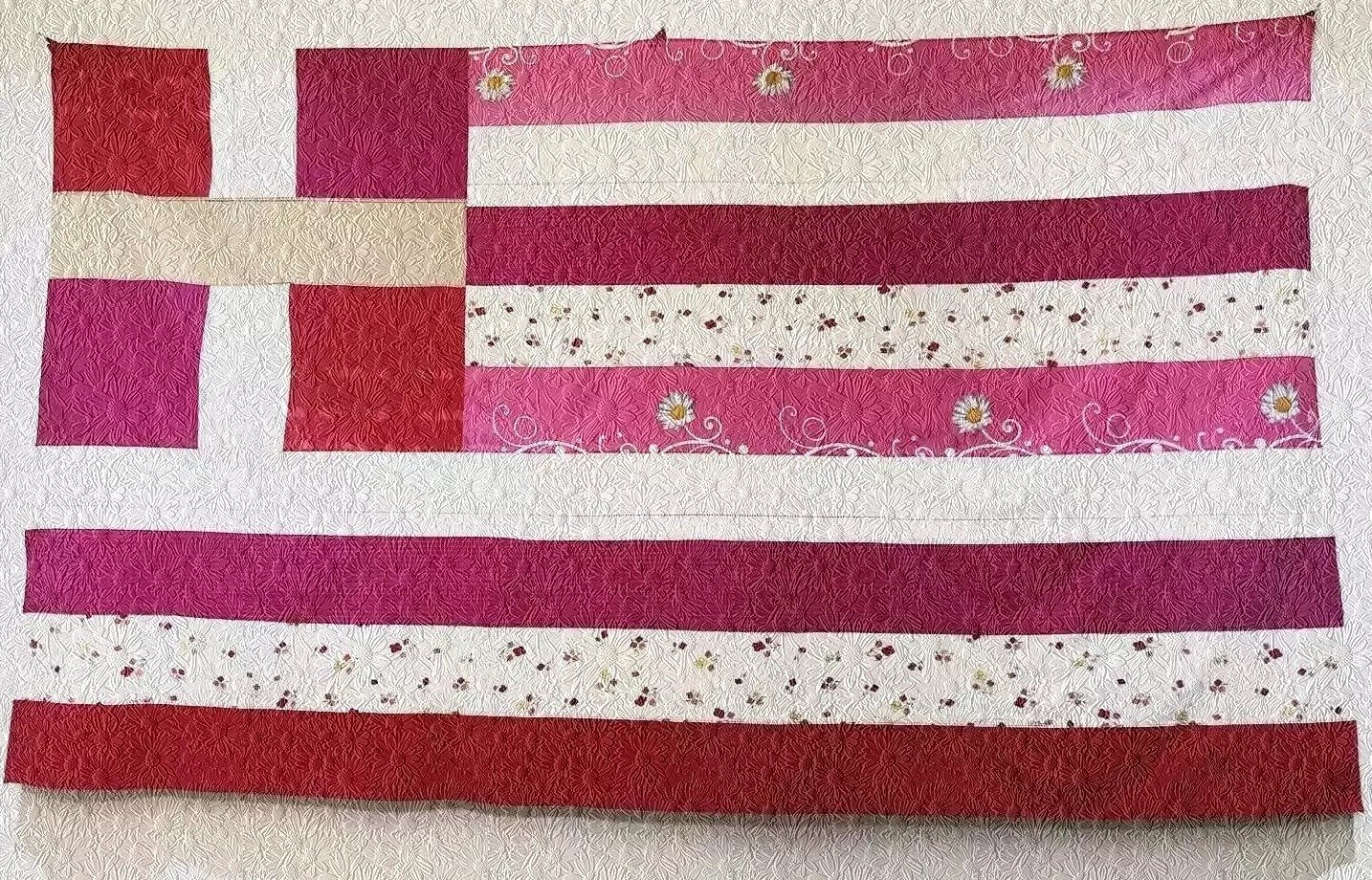
Despite claiming many times that nothing can surprise or shock us anymore, we couldn’t have imagined that, just two years later, levity would take on national dimensions. This happened due to a work, well-known around the world, exhibited at the General Consulate of Greece in New York. A powerful piece touching on gender-based violence, femicide, and domestic abuse. I don’t know if their masculinity or their patriotism was offended first. Both, expressed in their sick way, provoke a nauseating feeling, especially when it doesn’t matter. Yet, I suspect it was masculinity that was offended first in this case—their discomfort with the color pink. Simultaneously, the quick reflexes of nationalistic complexes rushed to support and embellish the discussion with their pumpkin-like turns.
The far-right faction took the lead, dragging along various narrow-minded and nationally hypersensitive individuals who, more than the youth struggling with text comprehension, advance in neither understanding texts nor general perception and comprehension.
Excuse me, and whoever takes offense, may refrain from wishing me Merry Christmas, but discussing a “symbolic offense” when the work (although I find defending it on the basis of its humanitarian message a mistake) touches on such an important issue is not a sign of intelligence. It’s not even ridiculous! It is an expression of provincial nationalist complexes, the roots of which, I dare say, reach into misogyny. When symbol distortion in stadiums and (nationalist-religious) protests has reached absurd levels without anyone being offended—on the contrary, with their collaboration—when the symbol has become a flip-flop within the context of “live your myth in Greece,” nationalist complexes were disturbed by a work addressing the major issues of femicide and domestic violence! At a time when recent statistics place Greece at the unfortunate European forefront in this regard!
Certainly, the artist Georgia Lale did not discover the wheel with the, in my opinion, powerful “Neighborhood Guilt.” The flag in art is a symbol that has been used globally many times to send social and political messages. I don’t need to recall well-known examples from abroad. Regarding Greece, one of the most accurate instances was just last spring, a creation by Betroot from Thessaloniki, with the flag’s lines resembling derailed train cars! However, it doesn’t take much for nationalist complexes to react, especially when combined with the fearful syndrome of masculinity that pervades a significant portion of their expressions.
The complaints of a handful of fools, supposedly offended, who have made a business out of appropriating history, homeland, and its symbols, are not a recent phenomenon. Do I need to remind you of incidents fifteen years ago? When, in no time, a Facebook profile titled “DEATH TO THE TRAITOR” with 5,000 members was created because someone burned a Greek flag at a football match—who? A guy known to everyone, who roamed the streets of Nicosia constantly talking on his phone without anyone on the other end of the “line”?
Should I remind you of the frenzy we experienced in 2009 for an artwork at the Venice Biennale or a play in Rizokarpaso that both fell victim to ideologies? The disappointing aspect is, firstly, that as the years go by, perceptions regress, and secondly, the stance of the hosting state, governed by a party wearing the cloak of a grand liberal and European faction, while the stench of the far-right and nationalist complexes is repulsive in its passing.
*The title is a variation of Vasilis Papakonstantinou’s song, “And If I Am Rock.”

