


By Guru Rajesh Ananda
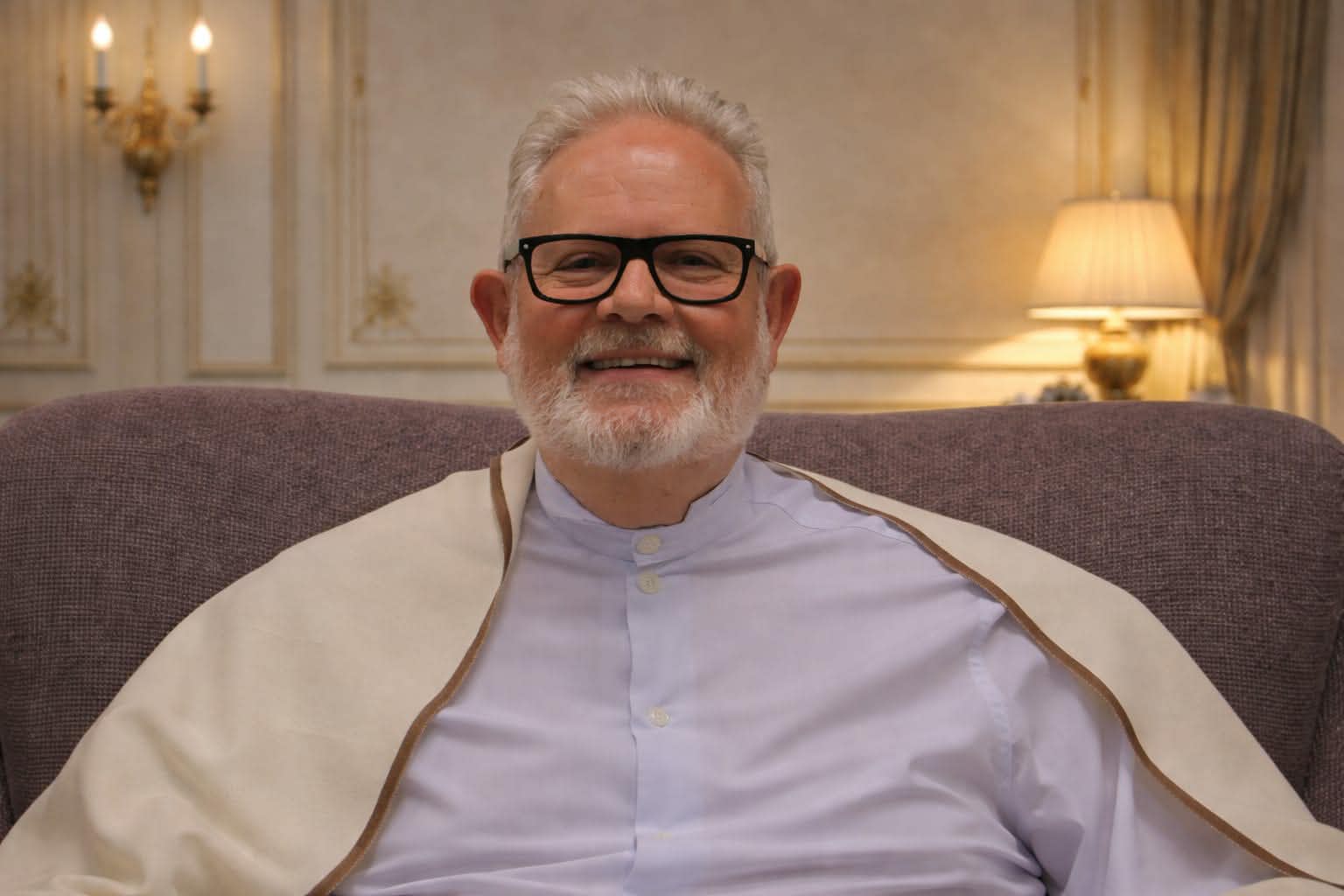
Adapted and edited by Constandinos Tsindas
Editor’s foreword
Do we know how and why we vote? Always a million-dollar question in the hearts and minds of those who shuffle around in numbers and voter habits, the shifty analysts-but more pertinent here to our current circumstances, as the decisions we will take in the next few weeks will decide the personalities we would actually like to call representatives in parliament, following the 24th May election, a quite fragmented affair this time around with every spectrum of options in the mix.
The premise here is no, we don’t know how we vote. All due respect, but do we really take the time to shift all the social media mumbo jumbo that actually mean very little other than sensationalism connected to the issues of the day, the opinions of every possible individual who wake up from their slumber to stir up stagnant water, as well as all the traditional promises that will never materialise as the legislative authority does not initiate but only amends legislation?
In other words, do we have clarity, or simply following trends, wherever a fresh wind or a big wave takes us in terms of decision making or going with the safe option of past choices.
The Guru here is very specific. Be aware and conscious at ‘a time of Noise, Division, and Uncertainty’. Choose depth of mind. Drown out the millions of voices that come at you from all possible directions at every possible speed and in so many different ways, intonations and pitches. Screeching, sopranoing, tenoring or whispering. Shift them to the side and be your own best possible image when you’re choosing. Stop setting your habitual nature in motion. Check out your own truth at the voting till, not what everyone else is frantically selling you.
Reflect, don’t give in to fatigue and disengagement. In a collage of blurred images that challenge the mind, be still. Be your own direction. And your own consciousness.
Choosing Leadership from Clarity, Not Conditioning
As a Guru (Non-Denotational Spiritual Teacher), I do not usually comment on politics.
My work has always been to guide individuals inward—to discover clarity, peace, and truth within themselves, rather than become entangled in the noise of the external world.
Yet on this occasion, I was asked to reflect on voting from a spiritual perspective—I felt it was important to respond.
Because Cyprus is not just another place to me.
I feel deeply grateful and blessed to live here, on what I often call an “island of saints.” There is a quiet depth to this land, a history not only of division, but of resilience, spirit, and potential.
I believe Cyprus stands at the threshold of something greater—an emerging powerhouse of opportunity, not just economically, but culturally and spiritually.
A small island, yes—but with the capacity to influence far beyond its shores.
And this is precisely why the present moment matters.
It is no longer only about governance or policy. It is about direction.
To move beyond past divisions.
To build a society rooted in cooperation rather than separation.
To honour and protect the identity and integrity of Cypriots—while also embracing those who, like myself, have come here seeking a better life, and a platform to share meaningful work.
To do this well, we must choose carefully.
And more importantly, we must choose consciously.
The Deeper Question Behind Every Vote
In the run up to the vote, we hear many voices, many promises, and many competing visions.
But beneath all this, a quieter question exists:
How do I choose?
For many, voting has become habitual. A reflection of upbringing, social influence, or immediate concerns around economy, security, or identity.
Yet the deeper truth is this:
We do not choose leaders purely based on who they are — we choose based on who we are when we choose.
The quality of our decision is shaped by the quality of awareness.
The Outer Landscape Reflects the Inner State
Across Cyprus today, several themes are clearly present:
- A highly fragmented political landscape, with more voices than ever before
- Economic pressures and rising cost of living
- A growing distrust of institutions and established systems
- The emergence of alternative and anti-establishment movements
- Increasing polarisation
- And a concerning level of disengagement, particularly among younger generations
These are not isolated political phenomena.
They are reflections of a deeper collective experience—uncertainty, fatigue, and a search for direction.
When the inner world of a society becomes unsettled, the outer structures begin to mirror that instability.
This is not a criticism—it is an observation.
And it brings us back to responsibility.
The Neuroscience of Choice: Why Clarity Matters
Modern neuroscience helps us understand why decision-making becomes more difficult during times like these.
The brain is designed for survival—not for truth.
When we feel uncertainty or stress, the amygdala—the emotional centre of the brain—becomes more active. It pushes us toward decisions that feel immediately safe, familiar, or protective.
At the same time, the prefrontal cortex, responsible for rational thinking, long-term planning, and ethical reasoning, becomes less dominant.
This means:
- We are more likely to react than reflect.
- We are drawn to strong emotional narratives.
- We seek certainty, even where it may not exist.
This is why political messaging often appeals to fear, urgency, or identity. It aligns with how the brain behaves under pressure.
But it also reveals something important:
If we can calm the mind, we can change the quality of our decisions.
The Three States of Voting
From a psychological and spiritual perspective, we can observe three distinct states from which people tend to vote.
1. Fear
“Who will protect me?”
“What if things get worse?”
Fear narrows perception. It seeks immediate reassurance, often at the expense of long-term clarity.
2. Conditioning
“This is who we’ve always supported.”
Here, decisions are inherited rather than examined. Familiarity replaces conscious evaluation.
3. Awareness
This is where true choice begins.
Awareness is calm, reflective, and grounded. It is not driven by urgency or habit, but clarity.
From this state, we ask:
- Does this leadership reflect integrity?
- Does it serve something greater than itself?
- Does it bring clarity—or more confusion?
Clarity at a Time of Noise, Division, and Uncertainty
In a complex and emotionally charged environment, discernment becomes essential.
Let us look more deeply.
Integrity in a Time of Distrust
Public scepticism is understandable. But when trust is low, we must be careful not to fall into cynicism.
Instead of asking who is flawed, ask:
- Is there consistency between words and actions?
- Is accountability embraced—or avoided?
Integrity reveals itself over time—not in moments.
Clarity Over Noise in a Fragmented Landscape
With so many voices, it is easy to be drawn to the loudest or most persuasive.
But clarity is rarely loud.
- Does this individual bring understanding to complexity?
- Or do they oversimplify issues to gain support?
True leadership organises complexity—it does not amplify confusion.
Stability Over Reactivity in Economic Uncertainty
Financial pressure affects our nervous system.
And when we are under pressure, we are more likely to accept quick, emotionally appealing solutions.
So consider:
- Are responses measured and realistic?
- Or reactive and driven by urgency?
Stability is strength under pressure—not avoidance of it.
Responsibility Over Rebellion in Alternative Movements
New voices often emerge in times of dissatisfaction. This can be healthy.
But not all disruption leads to progress.
- Is there depth, structure, and accountability?
- Or only opposition without constructive direction?
True leadership is not only about challenging systems, but also about building better ones.
Unity Over Division in a Sensitive National Context
Cyprus carries a unique history and a profound opportunity for unity.
In such a context, leadership must rise above division.
- Does this voice bring people together—or push them further apart?
- Is there balance in communication—or emotional provocation?
Strength lies in creating connection.
Depth Over Popularity in the Age of Visibility
In today’s world, influence can be built quickly.
But visibility is not the same as capacity.
- Is there depth of understanding?
- Is there readiness to carry responsibility—not just attention?
Leadership is not performance—it is stewardship.
Engagement Over Apathy—Next Generation
One of the most important challenges today is disengagement—particularly among younger people.
When individuals withdraw from participation, decisions are shaped without their voice.
But conscious societies require conscious participation.
Not choosing is still a choice.
Meditation and the Removal of Inner Noise
In a world overcrowded with information, opinion, and emotional intensity, the mind becomes blurry.
And a packed mind cannot see clearly.
Meditation offers something simple, yet profound.
It does not tell you what to think—it allows you to see without distortion.
Scientifically, meditation helps:
- Reduce emotional reactivity
- Strengthen clarity and reasoning.
- Improve overall emotional balance.
But beyond science, the experience is direct.
When the mind becomes still, a quiet clarity emerges.
And from that space, decisions become more aligned—not forced, not reactive, but understood.
A Moment Before the Vote
Perhaps the most important part of the entire process is not the vote itself—but the moment before it.
A pause.
A breath.
A simple inward reflection:
- Am I choosing from fear—or clarity?
- Am I reacting—or truly seeing?
- Does this choice reflect the future I wish to create?
In that stillness, something deeper often becomes clear.
This inner search acts as the final check of our “spiritual compass.” It is the moment when theory becomes practice and consciousness turns into choice.
The Future Is Chosen Within
It is easy to believe that a nation’s future is shaped solely by systems, structures, or leaders.
But in truth, it begins much earlier.
It begins in each individual’s mind.
In the quality of awareness.
In the depth of reflection.
In the sincerity of intention.
Cyprus does not just need leadership.
It needs conscious leadership—and conscious citizens.
Because ultimately:
The leaders we choose are a reflection of the consciousness from which we choose them.
And so, as these elections approach, the invitation is not simply to decide.
It is to pause.
To reflect.
To move beyond noise, beyond habit, beyond fear – And to choose, perhaps for the first time, from a place of clarity, balance, and inner stillness.

