


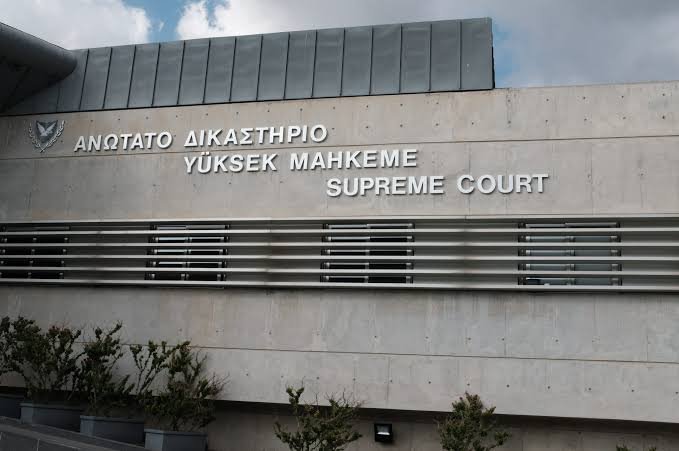
Only the board of the Cyprus Theatre Organisation (THOC) can allocate state grants to private theatres, the Supreme Constitutional Court has ruled, finally settling the question of who awards the funding. The board cannot hand that power to a committee or an independent body, the court found.
Six of the court’s eight judges ruled, for the first time on the question, that the board alone was responsible for allocating the funding. As a result, no other arrangement was possible, such as the independent committee proposed by the Commission for the Protection of Competition (CPC).
The court found that neither of two provisions in THOC’s legislation offered a way out. One allows the board, at its discretion, to authorise the director to decide and act on its behalf. The other provides for committees made up of board members. Neither could offer a solution independent of the board.
Because the board was the only body competent to take decisions on the organisation’s objectives throughout the law, the majority concluded, THOC had shown that the case fell outside the scope of Law 13(I)/2008. Two judges dissented, on different grounds.
How the case began
The CPC had imposed an administrative fine of 342,221 euros on THOC. In 2022, the competition watchdog had concluded that THOC’s practice of awarding state grants to private theatres was a classic case of abuse of a dominant position that harmed fair competition.
The CPC found that THOC could have chosen a less onerous measure in line with Law 13(I)/2008. It suggested a purely technical and fully independent committee that would decide on the grants and be unable to pass information about THOC’s direct competitors on to its management.
THOC challenged the decision at the Administrative Court, which ruled in its favour, finding there was no other way for it to delegate its powers over state support for other theatres. The CPC appealed, and the Court of Appeal overturned that ruling. It found that the board could lawfully delegate its powers unless the law expressly prohibited it, which in this case it did not.
THOC then took the case to the Supreme Constitutional Court, the third and final tier of review, referring three points of law. The main one was whether a public body’s board could transfer the powers its founding law gives it to anyone else, without that law permitting it. The question turned on Article 3(2) of a 1962 law on the delegation of statutory powers (Law 23/1962).

