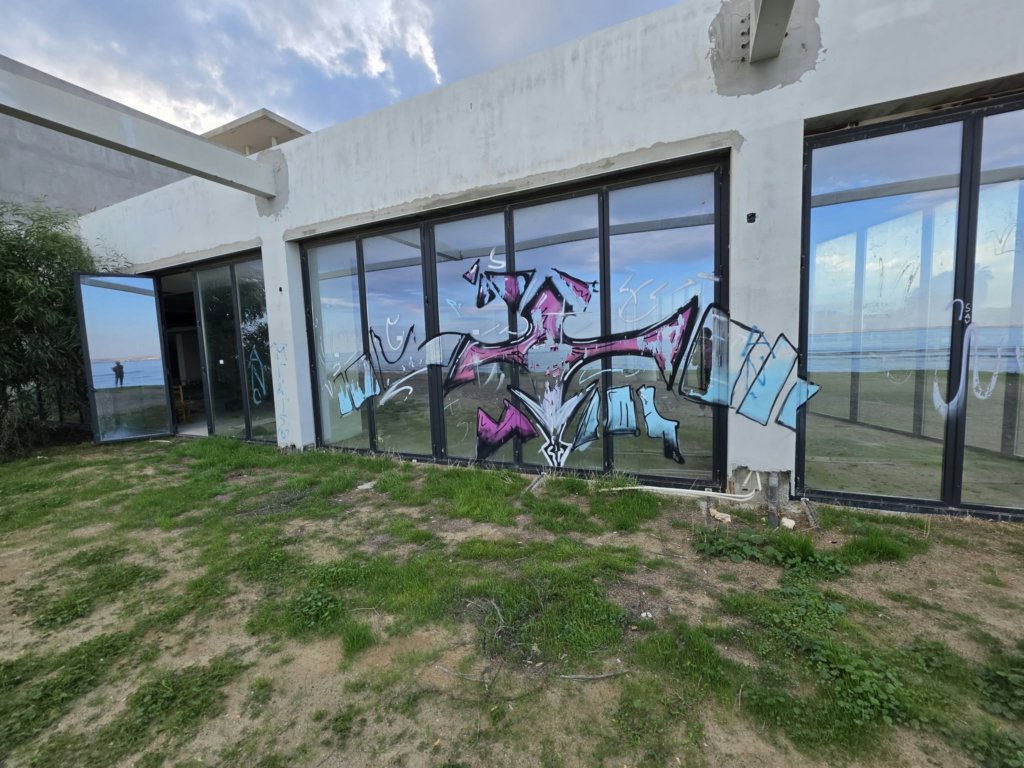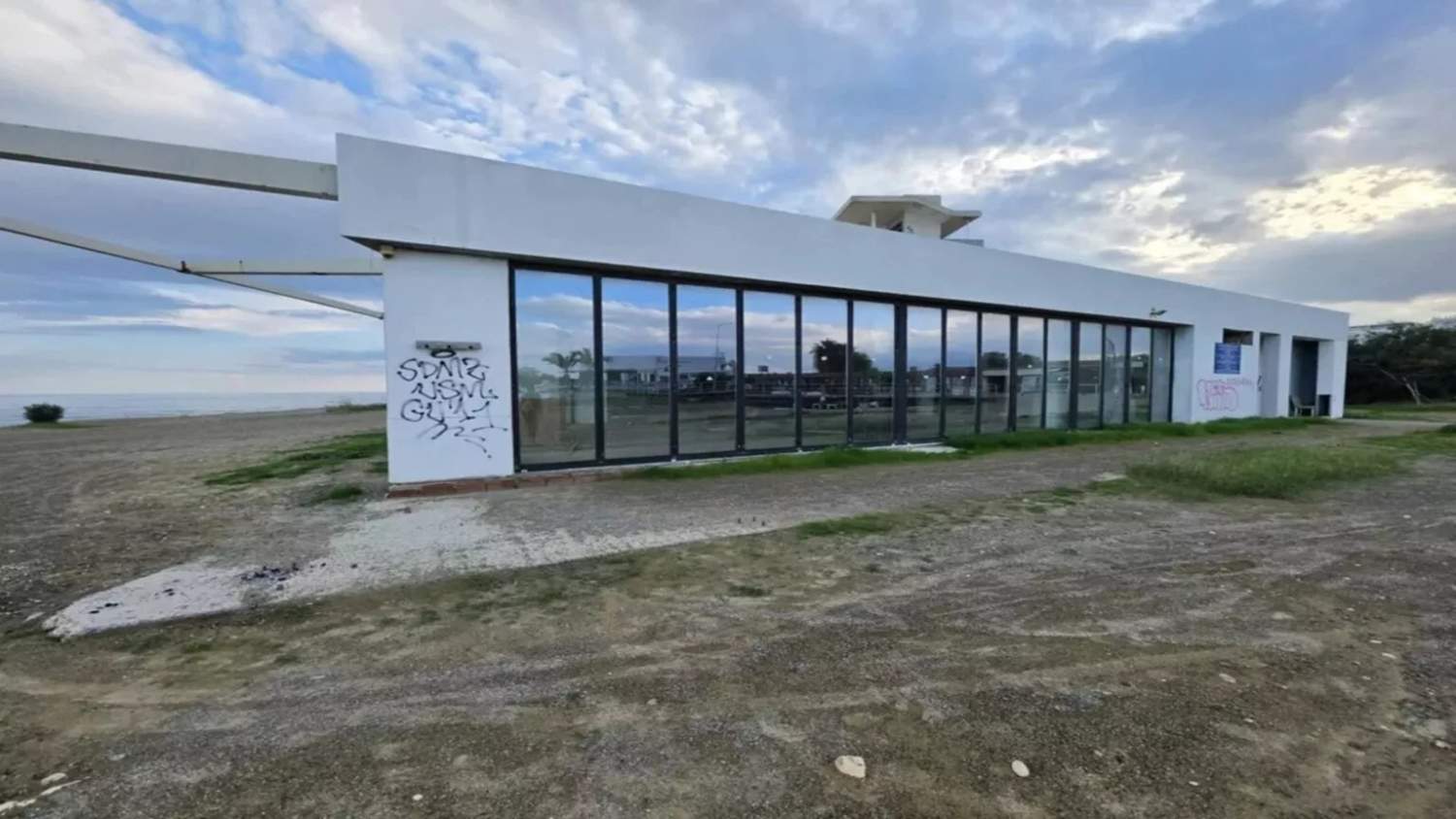
An abandoned seafront building in Larnaca’s Mackenzie area, which was meant to be part of a multimillion-euro investment, has been taken over and filled with rubbish. Larnaca Municipality is moving to have it declared a nuisance so it can be cleared. Meanwhile, the Larnaca District Local Government Organisation (DLGO) has gone to court in a bid to clear the way for its demolition.
The privately owned building has stood unused for almost a decade. Until recently its only problem was graffiti on the outside, but people have since occupied the interior, which photographs taken by Phileleftheros show filled with rubbish and other items.
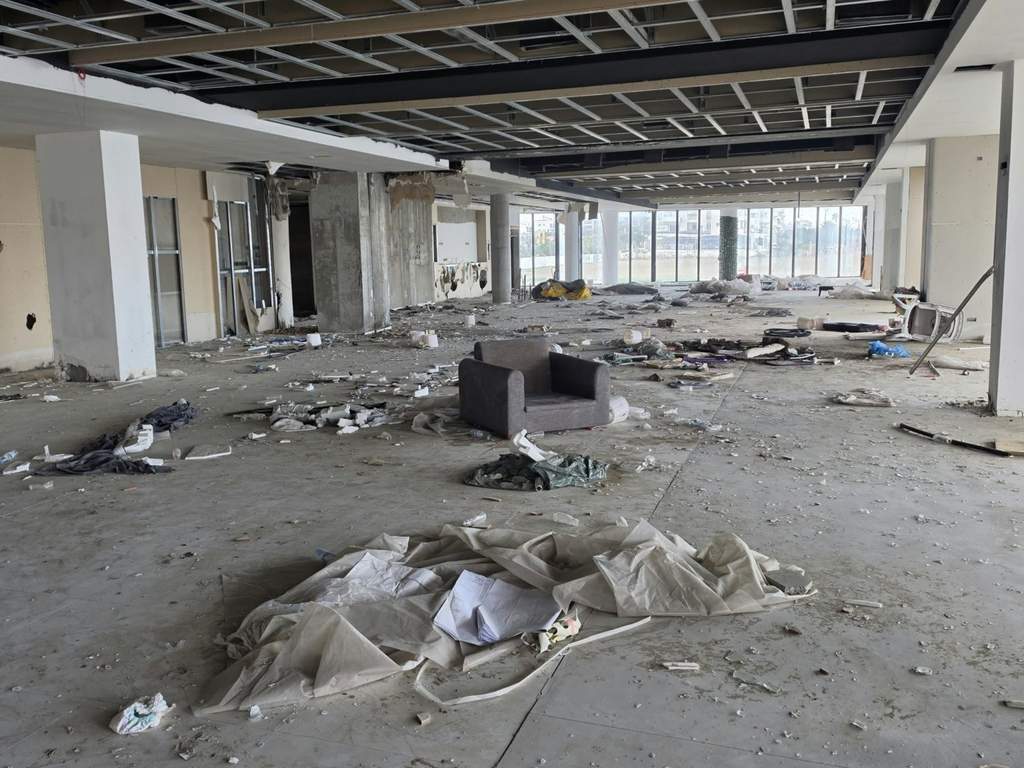
The surrounding area, which draws many winter swimmers, is in a poor state and now also raises public health concerns. The building sits next to busy hotels, restaurants and cafés.
Larnaca Municipality told Phileleftheros that steps were being taken to have the building declared a nuisance, which would allow municipal services to step in and remove the rubbish.
The longer-term goal is demolition. The municipality took legal action over the building in the past but lost the case. The DLGO, which has since taken over the matter, has launched new proceedings through an application to the court to have the building’s irregularities addressed, its president, Angelos Hadjicharalambous, said. The aim is for the organisation eventually to be able to issue a demolition order.
“As an organisation, we will push the matter so there are no further delays,” he added.
The original plans
The investment was announced on 5 August 2016 and presented as the “diamond of Larnaca”. It included the Castle Project, named after the historic Castle hotel building on the beach side, where part of the project was to be built. Two merged plots across Piale Pasha Avenue were also included.
The first phase was to include a complex of restaurants, cafés and a beach bar by the sea. The second was to be a five-star, 13-storey hotel with 400 beds across the avenue, linked to the beach development by a bridge over the road.
The project’s centrepiece, billed as the “crown jewel”, was to be an artificial island in the shape of Cyprus, reached from the beach restaurants and bar by a large pier. None of it was built apart from the seafront building.