


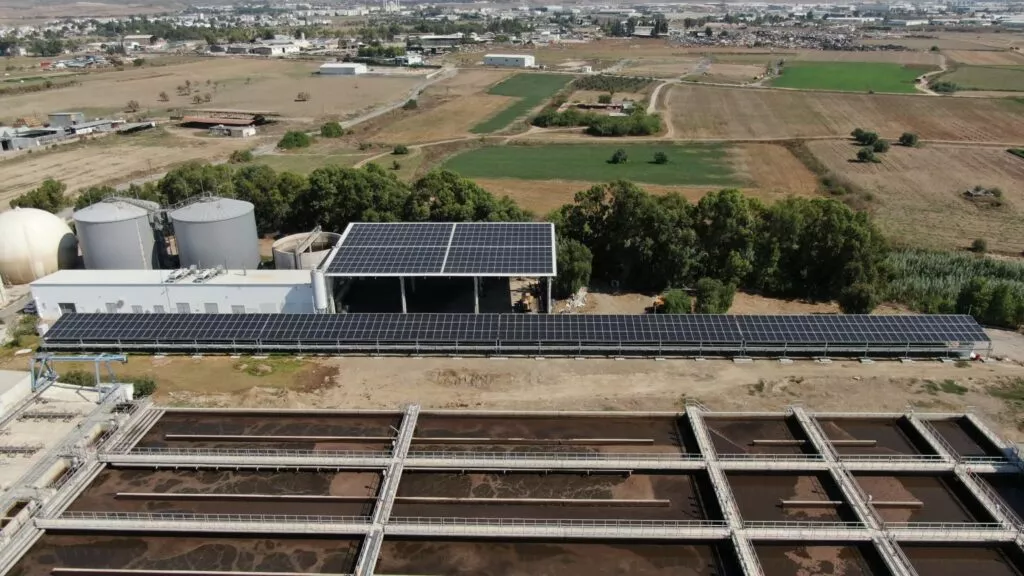
A new photovoltaic plant has been connected to the grid at the bicommunal Nicosia Sewage Treatment Plant in Mia Milia/Haspolat. It is expected to cover up to 18 per cent of the plant’s annual electricity needs.
The EU funded the 1.6 million euro project through its assistance programme for the Turkish Cypriot community, and the United Nations Development Programme (UNDP) carried it out through the Local Infrastructure Mechanism. The plant was connected in August 2026, after about ten months of construction.
It has a capacity of 840 kW (AC) and 1,018 kWp, and consists of about 1,860 panels. Its annual output is estimated at about 1.6 million kWh, equal to 15 to 18 per cent of the sewage plant’s annual consumption.
The new plant is expected to reduce the sewage plant’s reliance on the grid and cut operating costs, which fall on the Turkish Cypriot local community of Nicosia. It is also estimated to cut carbon dioxide emissions by about 830 tonnes a year.
Wastewater treatment is energy-intensive, and biogas produced on site already covers about 30 per cent of the plant’s energy needs. With the new system, renewable sources will cover a significant part of its total needs.
The project covers the design, construction and supervision of the installation. Final adjustments to the system are under way, and an inspection will follow before final handover.
The sewage plant serves most of Nicosia, covering needs on both sides of the city.

