


It took decades for us to begin speaking about one of the greatest tragedies of the 1974 invasion: the rape of hundreds of women and girls by Turkish forces. To confront the criminal acts that occurred and acknowledge that victims suffered multiple forms of abuse – first from Turkish soldiers, then from a society that stigmatised them, marginalised them and effectively denied them the possibility of overcoming their deep trauma.
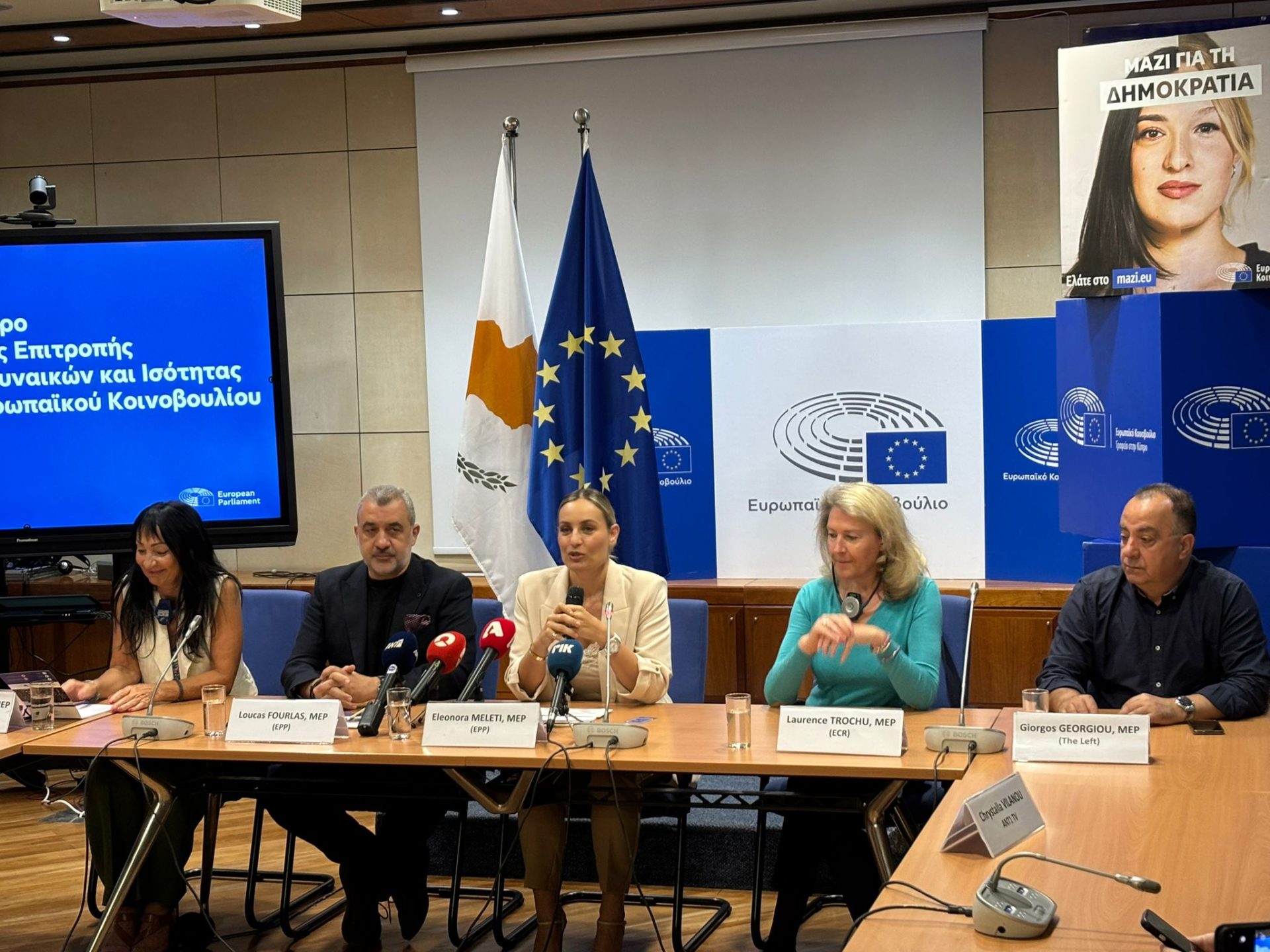
Members of the European Parliament’s Committee on Women’s Rights and Gender Equality (FEMM) visited Cyprus last week to highlight and condemn the sexual violence suffered by women during and after the 1974 Turkish invasion, and to initiate political measures for restoring historical truth and supporting survivors.
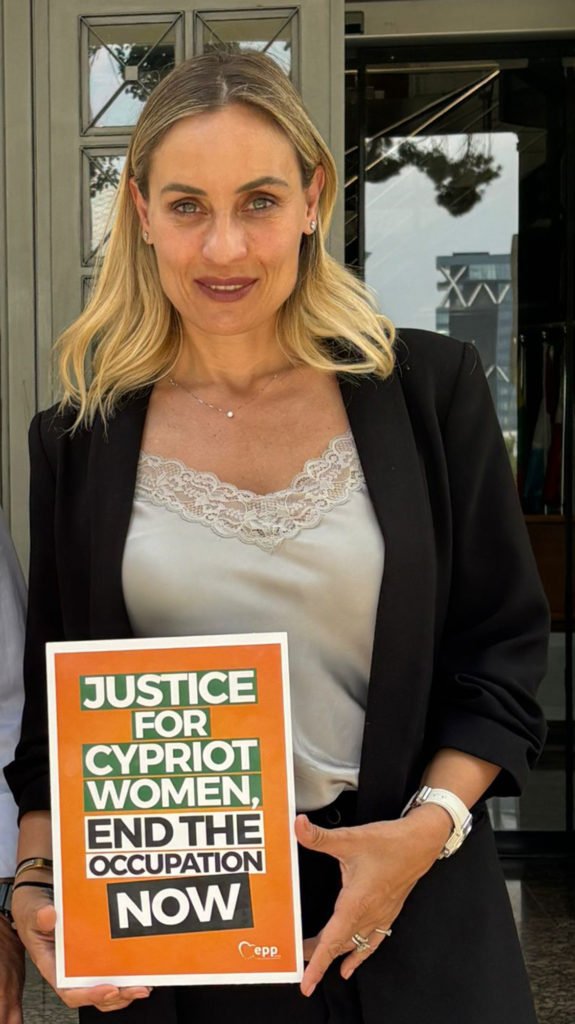
In her interview with Phileleftheros, Greek MEP and delegation head Eleonora Meleti spoke about how shocking the women’s testimonies were. “I was moved to tears, couldn’t even speak. I didn’t know what to tell them, couldn’t even look them in the eyes, nor did I have anything to ease their pain. These women’s eyes were tearful before they even began speaking,” she said.
What is urgent now is taking the next steps that will lead to vindication for women who were sexually abused in 1974. As Meleti noted, pressure will be applied for a European Parliament resolution recognising that Cyprus women fell victim to sexual violence in 1974 – something that will help open discussion about what is happening today in other conflict zones.
What are the EU’s policies and initiatives for preventing and addressing sexual violence in conflict zones? What further measures do you believe should be taken?
The European Union has begun recognising the serious phenomenon of sexual violence being used as a weapon in conflict areas. It’s significant that a resolution was recently approved recognising that sexual violence is used as a weapon in war zones like Sudan and Congo. What the FEMM mission seeks is for the same to happen for Cyprus in 1974. This makes it even more imperative to focus more on policies that centre victims of sexual violence as a weapon in conflicts. It’s an aspect of war that nobody spoke about. Not everyone understood, and many still don’t understand today, that rape is used as a weapon – and systematically so. We’re therefore trying, through various proposals, to determine the next steps that will make the legislative framework more functional in preventing and addressing sexual violence as a weapon during conflicts.
What was the European Parliament mission’s objective in Cyprus and what did you achieve through your contacts?
Our goal was to discuss and exchange ideas with women’s organisations and organised bodies that contribute to the fight for gender equality and understand women’s rights. We also spoke with the women themselves who experienced all that violence in 1974. They felt safe to speak about their personal experience, which will help us amplify their voices so they can be heard more, bringing back to the table the use of sexual violence as a weapon in war. Cyprus is an example showing this problem remains real. Therefore, we believed that pushing for recognition through a resolution that Cyprus women fell victim to sexual violence in 1974 would open discussion about what’s happening today in other conflict areas. Most importantly, it would represent vindication for Cyprus women. 1974 is recent history. For me, when the protagonists are alive, then history is alive – still being written.
So the European Parliament will take initiatives to ensure victims’ complaints from 1974 are heard and utilised across the EU, guaranteeing justice for other victims?
That’s exactly what we aim to do. When we return, we’ll prepare a report informing about the results of our contacts in Cyprus, while simultaneously pushing for a resolution recognising that Cyprus women fell victim to sexual violence as a weapon of war during the 1974 invasion. We’ll also give broader dimension to post-conflict and post-traumatic periods, so these women can heal and be supported, stopping their further victimisation. This will allow us to enrich the existing directive on victims’ rights. Through various actions by MEPs in their own countries, initiatives will be undertaken aimed at raising public awareness. The world must learn this history, recognise these victims and ultimately see them morally vindicated. The moral stigma must begin to break. Victims are condemned to a life they don’t deserve.
What actions are important to support women and men who fell victim to such violence, even 50 years late?
I believe what we were told during our contacts in Cyprus is very important – erecting a monument dedicated to the 1974 female victims. This would represent recognition that yes, there were victims of sexual violence in 1974 – women, children and men. That yes, sexual violence was used as a weapon systematically and strategically, aimed at causing fear, terror and submission, and yes, these women were instrumentalised. Such a monument would preserve the historical narrative of Cyprus women’s historical identity. This is collective trauma, not just individual. The message would also be transmitted to future generations. I’m aware the Cypriot government has proceeded to provide some benefits for these women, but recorded incidents are few. Money isn’t what motivates these women. They’re not asking for anything. They seek acceptance, love, integration that some never received, to share the psychological burden they carry and have their voices heard.
You’ve spoken with 1974 sexual violence victims. What moved you most about what they shared? Can these wounds heal, even with such delay?
Conversations with these women were shocking. I was moved to tears, couldn’t even speak. I didn’t know what to tell them, couldn’t even look them in the eyes, nor did I have anything to ease their pain. These women’s eyes were tearful before they even began speaking. I didn’t expect this rush of emotions. I was disturbed inside. I was almost displaced by everything I heard – rapes even of minors, torture, unwanted pregnancies, suicide attempts, abortions, hymen reconstruction surgeries. Some women we saw spoke for the first time after almost 51 years.
The Cypriot government shows no willingness to denounce the Turkish state or army for sexual crimes committed in Cyprus in 1974. How can women be encouraged to do this alone? Can they achieve a conviction?
I believe in human will, hard work and persistence. We want these women to come forward and speak about what they experienced, but the question is: can we make them feel comfortable enough to speak? Can we stop pointing fingers at them and pitying them in ways that marginalise them? Can we stop blaming them and feeling ashamed of them? When we manage to achieve all this, it will be the first step for them to come forward and speak about their experiences. This is what the European Parliament delegation wanted to do – listen to these women and, to the extent possible, become their voice. The road to making complaints is difficult, and women who do this must have every kind of support. To reach the point of having convictions, there must be testimonies, officially recorded incidents and legal support that will guide them at either national or international level.
Unbearable trauma
How do you think systematic sexual violence affects societies after conflicts end?
I’ll reverse your question and tell you how societies affect women after conflicts end. Trauma is experienced individually and then often worsens due to social reaction. Speaking with women who were sexually abused in 1974, I can tell you the trauma is unbearable and the pain enormous when you hear there are women who, from age 14, live on psychotherapeutic treatment to manage what they experienced, or when there are cases of women who lost their minds – to put it plainly – from multiple rapes they suffered, or women who withdrew from society, deliberately choosing very solitary lives.
How each society reacts relates to its framework. Fortunately, things aren’t as they were 50 years ago, when women were abandoned by men because they were raped and thus considered “contaminated,” or when they were forced to abandon their homeland. It’s time to focus on victims, not societies – on how societies must embrace these women. Societies must be educated about this new reality through holistic, coordinated efforts involving everyone: media, educational systems and schools, spiritual leaders, politicians – all together. These women must have every kind of help to heal their traumas, not acquire new ones.
Massive wound of impunity
Why are there so few convictions for wartime sexual violence when we know thousands of cases exist, many horrific?
The impunity aspect is a massive wound. Wartime rape is a crime for which existing legislative frameworks prove inadequate, resulting in it remaining unpunished – hence the difficulty in achieving convictions. This is what we want to change. Beyond that, the EU has rich resources for addressing sexual violence in all directives and conventions. We must, however, focus more on conflict areas, as reality demands.
Do you have data on how widespread sexual violence is in armed conflicts?
Collecting precise data is nearly impossible. We know that in conflicts, sexual violence as a weapon exists indiscriminately. It’s very difficult to record incidents. We start with the simplest fact that many women don’t even know this constitutes a war crime. As in Cyprus’s case, there are far too many incidents that go unrecorded, let alone reported. Those most affected in armed conflict are women and children – not officials or frontline soldiers. They’re the most vulnerable groups in war.
Regarding Cyprus, what we were told is that female victims of sexual violence in 1974 number between 800 and 1,500. This large gap exists because many women likely never spoke about what they experienced. As for their ages, the youngest victim was just nine years old. Characteristically, we were told victim ages ranged from nine to 99 years.
What are the biggest obstacles victims of wartime sexual violence face in seeking help and especially in reporting?
The obstacles are unfortunately numerous. Based on testimonies from women who spoke to us, I’ll mention social stigma, shame, devaluation, fear of how society and their families will react – reasons that make women reluctant to speak and report their experiences. Additionally, lack of support services doesn’t create the proper security framework for victims to open up and report. Five or ten more laws won’t solve the problem, because what matters most is how society itself treats sexual violence victims. We comment, criticise, don’t open our arms, close our ears because it might be difficult to handle a situation, we alienate, don’t provide financial and psychological support to victims. Personally, I often feel that sexual violence victims in war subsequently experience secondary abuse from everything that follows socially.
Read more:

