


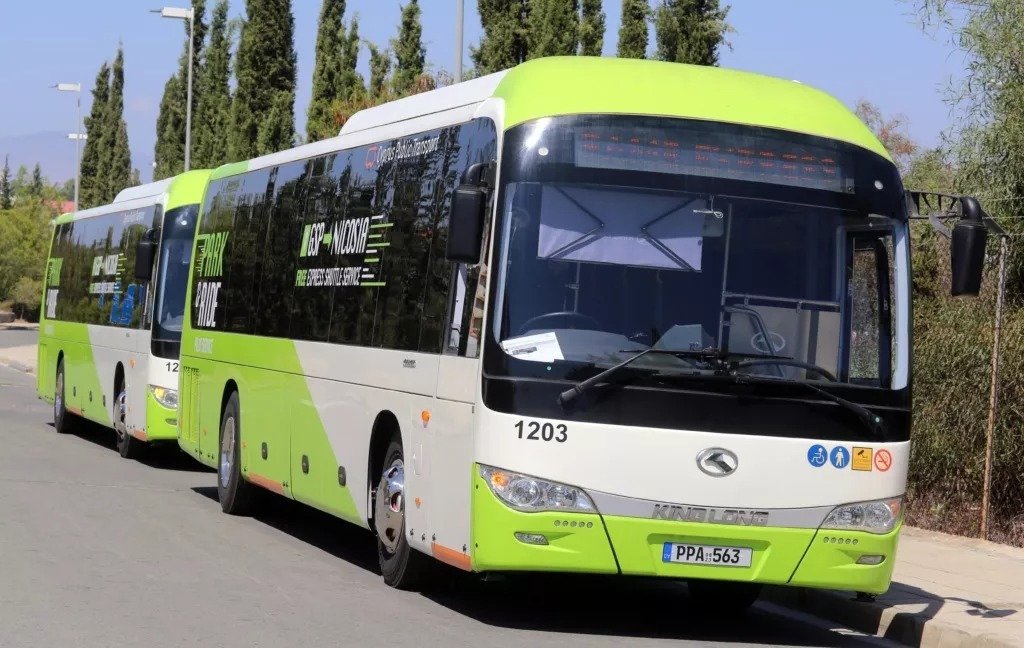
Larnaca is poised for significant transformations over the next two years as two major projects under the Sustainable Urban Mobility Plan (SUMP) are implemented, with a total budget exceeding €22 million.
Following the success of the Park and Ride initiative in Nicosia, Larnaca will introduce its own version, complemented by the creation of bus and bike lanes on the city’s key avenues and streets. The Public Works Department, in partnership with Larnaca Municipality, aims to provide residents and visitors with enhanced commuting options.
While Larnaca does not currently face the same level of traffic congestion as Nicosia and Limassol, the rapid development of the city has prompted the adoption of the Park and Ride concept. The dual objective is to ease traffic within the city and reduce the number of vehicles entering highways leading to Nicosia, Limassol, and Paralimni.
The Public Works Department has issued a tender on July 18 for the construction of the first two Park and Ride stations. These will be located in Aradippou Municipality, near the Rizoelia roundabout, and within the Kalo Chorio community, near its namesake roundabout.
Evie Anayiotou, Head of the Sustainable Urban Mobility Branch of the Public Works Department, explained that the project involves the study, construction, and twelve-year maintenance of the two Interchange Stations. Falling under the Recovery and Resilience Plan, the project is estimated to cost €3.7 million, excluding VAT.
Specifically, the Aradippou station will feature a 315 sq. m. ground-floor building with a canopy, a bus stop for two buses, and uncovered parking for 67 vehicles. The Kalo Chorio station will include a similar building and bus stop, with uncovered parking for 195 vehicles. Construction is expected to begin in January 2025, lasting 14 months, assuming no objections arise.
Transport Minister, Alexis Vafeades, confirmed ongoing discussions with the Municipality to advance additional Park and Ride designs, stating, “The philosophy of Park and Ride is to reduce the number of cars entering the city by providing incentives to visitors. We are constantly looking for new spaces that can accommodate car parking, bicycle rentals, and connections to bike lanes and pedestrian zones.”
Another key aim is to reduce the number of cars on highways, which will help alleviate traffic issues in other cities. Transport Minister Alexis Vafeades noted, “It will be able to serve both workers and students who may not be able to rent accommodation in the area where they study due to high rents.”
Efforts are also underway to identify additional Park and Ride locations near the city centre. The Municipality has proposed the GSZ, with its extensive parking area, and is exploring areas in southern Larnaca near the airport. However, Vafeades highlighted a complication: “Regarding a potential connection to the airport, it’s a bit complicated due to a clause in the Intercity contract stipulating that it should not enter the airport premises.”
Larnaca’s main roads are also set to undergo substantial changes. The SUMP priority projects, which are expected to commence in January 2025 and last 16 months, include the construction of bus lanes, bike lanes, pedestrian and cyclist crossings, and ramps for people with disabilities across the city.
The tender for these works, issued on June 28, is estimated at €18,750,000, excluding VAT. The comprehensive plan will cover key roads, aiming to “enhance road safety, improve accessibility, maximise mobility, upgrade the quality of life, and ensure economic sustainability,” according to the Larnaca Municipality.
These projects have been designed based on European geometric standards, with the Public Works Department coordinating the efforts in collaboration with the European Investment Bank and local consultants.

