


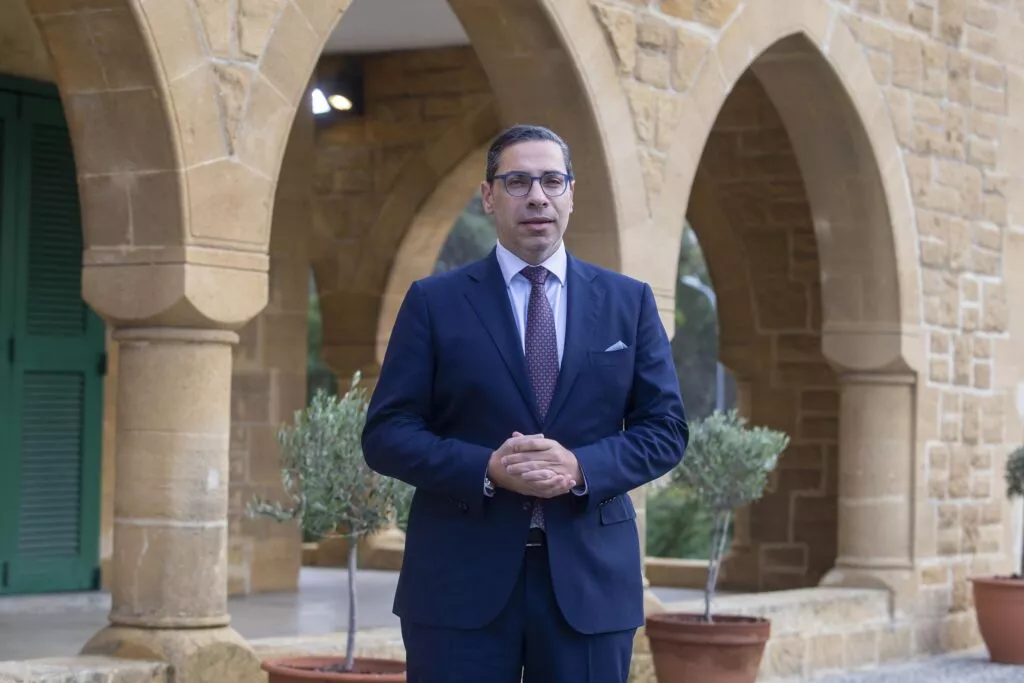
The Republic of Cyprus has submitted a working document to the EU on the new post-Assad realities in Syria and in light of developments in the region, foreign minister Constandinos Combos said in statements to Phileleftheros’s Andreas Bimbishis, as Nicosia is working to get ahead of the situation, being one of the immediate countries likely to be affected by yet another bout of instability in Syria.
The document will be discussed at the preparatory Foreign Affairs Council and put to the European Council of leaders in Brussels later next week. Further to the same point, President Christodoulides has also written to the EC President Antonio Costa requesting that the issue tops the agenda of talks.
In his interview, Kombos also details two important foreign policy developments this month, the visit by British PM Sir Keir Starmer to Nicosia earlier this week and the upcoming 2nd Strategic Dialogue between the Republic of Cyprus and the UK, set to be launched on December 17th during his own visit to London and a meeting with his British counterpart.
‘Starmer’s talks in Cyprus carry particular weight, given that the last official visit by a British PM took place in 1971′, Kombos said, noting the fact that it was realised just a couple of months following President Christodoulides’ own visit to Downing Street.
He stressed that this was not a development that could be taken in a solitary, independent context, but in a wider framework of planning and design that pertains to the exchange of visits by the two leaders and his own working breakfast with the British Foreign Secretary in London next Tuesday, launching the Strategic Dialogue between the two countries.
‘These are major developments that are occurring in a short space of time and have their own particular importance’, Kombos added, alluding to the fact that they are obviously not chance political encounters but a result of carefully laid out policy.
The foreign minister also referred to the blooming Cyprus-United States relationship, just a few days after President Christodoulides spoke of an ‘historic high’ in bilateral ties.

