


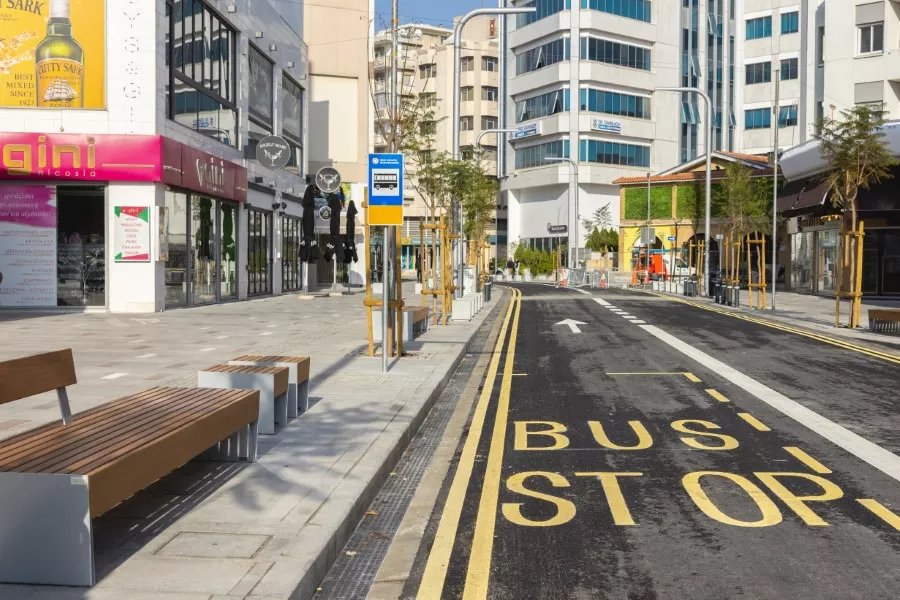
Vehicle traffic on Makarios Avenue in Nicosia could increase by approximately 1,300% if the municipal council proceeds with its decision to allow all vehicles access to the road, according to traffic measurements and expert estimates.
Current data shows 1,000 vehicles per day use Makarios Avenue, including buses. Experts estimate opening the road to all vehicles could attract up to 13,000 vehicles daily, matching levels before renovation works began. Traffic could potentially reach 2004-2005 levels of 14,500 vehicles per day due to general increases in road network usage.
Transport specialists warn the vehicle increase would primarily create negative impacts without delivering the positive results supporters of the council decision expect. During 2014-2015, when Makarios Avenue was open to all vehicles, 80% of shops were closed. The Makarios-Stasikratous-Evagorou Triangle project was promoted partly to improve commercial viability and attract citizens and customers to the area.
Infrastructure changes raise safety concerns
The current road infrastructure differs significantly from previous configurations. Until 2019, three traffic lanes existed, including one for right turns, compared to today’s two lanes. Pedestrian crossings, previously available, no longer exist along the route, raising safety concerns.
No pedestrian crossing exists between the central police station and Evagorou Avenue. Stasandrou Street has been closed and converted into a square, fundamentally altering traffic patterns in the area.
Transport experts question whether current café customers along Makarios Avenue and surrounding streets will continue visiting when daily traffic increases from 1,000 to approximately 13,000 vehicles. The increase in emissions and noise pollution could drive customers to seek alternative locations away from traffic and exhaust fumes.
Safety and commercial impact warnings
Specialists highlight increased safety risks, particularly for families with small children who may struggle to distinguish between roads and pavements, as both now exist at the same height level.
Transport experts note Makarios Avenue already faced traffic problems when open to vehicles and experienced commercial difficulties that vehicle access alone cannot resolve.
The municipal council majority reached its decision without conducting studies or examining alternative solutions, according to expert observations.
EU funding concerns
Concerns exist that the European Union may seek recovery of funds provided for the co-financed project. Nicosia Municipality cited bus lanes as a key indicator when securing funding. These lanes, whilst created, would effectively be neutralised by thousands of vehicles occupying them.
The General Directorate of Development and the Public Works Department will examine these issues. The decision to open Makarios Avenue to all vehicles ultimately rests with the Chief of Police, who will consider recommendations from the Traffic Studies Authority before deciding.
Current and previous traffic data
Current situation (two directions, 2 traffic lanes):
- Daily vehicle circulation: 1,000 vehicles/day (including buses)
- Data source: Nicosia Municipality Smart City systems
Daily bus circulation breakdown (Nicosia Buses & Intercity):
- Monday-Thursday: 218 buses
- Friday: 224 buses
- Saturday: 178 buses
- Sunday: 142 buses
Previous situation (two directions, 3 traffic lanes):
- Daily circulation: 13,000 vehicles
- 2004-2005 AXIS traffic study recorded: 14,500 vehicles per day
Data sources include the Public Works Department database and measurements taken on Makarios Avenue before closure to private vehicles.
Read more:

