


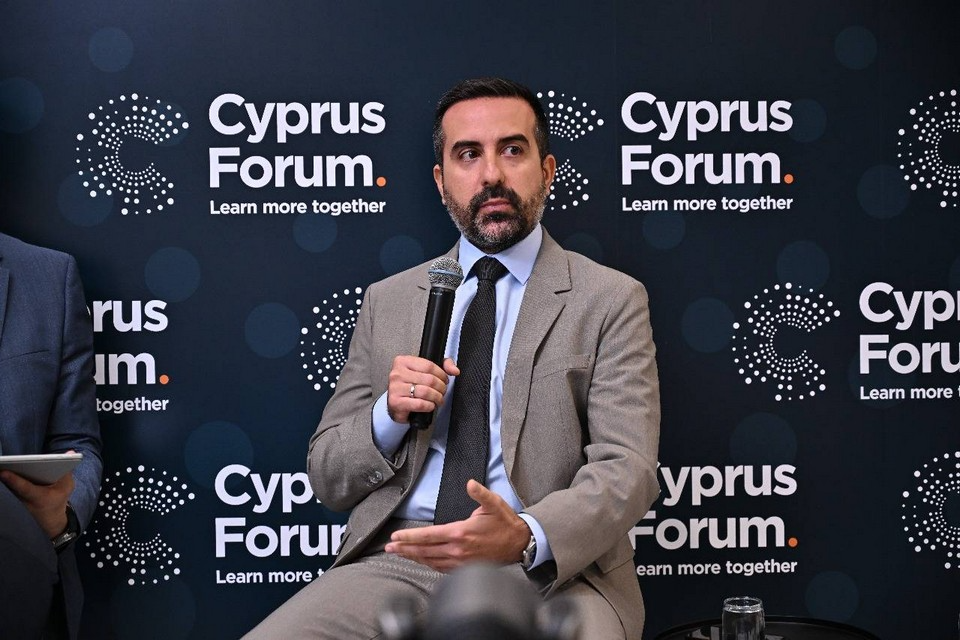
More than 150,000 third-country nationals legally reside in Cyprus for reasons of study, work or family, whilst asylum seekers and beneficiaries of international protection number just over 30,000, the country’s Deputy Minister of Migration and International Protection has said.
Dr Nicholas Ioannides made the clarification on Thursday during the Cyprus Forum 2025, outlining Cyprus’s migration management framework ahead of its European Union presidency in 2026 and emphasising the need for proper implementation of the new EU migration pact.
Participating in a discussion entitled “Migration Policy: Challenges, Realism and Prospects for Cyprus and Europe”, Ioannides highlighted Cyprus’s strategic priorities as it prepares to assume the rotating EU Council presidency.
Referring to the New Pact on Migration and Asylum, Ioannides said: “With the new Pact we acquire a unified management system, faster procedures and a framework of solidarity. Our effort during the Cypriot presidency will be to ensure its implementation in practice.”
National integration strategy to enter public consultation before November approval
He added that the Pact introduces for the first time provisions for solidarity and burden-sharing, clearer rules on the concept of “safe third countries” and encourages the strengthening of legal migration pathways to meet labour market needs.
The Deputy Minister made special reference to integration, characterising it as “a strategic priority with a clear roadmap”. The National Strategy has been completed and will be put to public consultation before its submission to the Council of Ministers, with the aim of approval within November, he said.
Responding to a question about the role of public interventions in reducing polarisation, Ioannides said: “We are investing in modern infrastructure and in a National Integration Strategy that reduces polarisation and empowers those who reside legally, for the benefit of social cohesion and the economy.”
Nearly 11,000 third-country nationals departed Cyprus in 2024
Regarding European support for frontline states, Ioannides noted that “the EU and international/Union law are not a panacea, but the binding framework within which the Republic of Cyprus and all member states must operate”. He underlined that Cyprus closely monitors illegal trafficking phenomena in coordination with European partners, with emphasis on prevention and protection of human life.
On European solidarity, he said that since March 2023, more than 2,900 relocations of asylum seekers from Cyprus to other member states have taken place, describing this mechanism as “a tool that substantially relieves domestic infrastructure and offers those moving more integration prospects”.
Regarding returns policy, Ioannides noted that “in 2024 almost 11,000 departures of third-country nationals were recorded, whilst in the nine months of 2025 departures are already approaching 10,000”. He also highlighted the rejection rate for international protection applications, which stands at approximately 95 per cent, underlining that this reflects “the need to keep the system viable so that protection is provided to those who truly deserve it”.
New reception centre nearing completion in Larnaca’s Limnatis area
On infrastructure, the Deputy Minister presented progress in Limnatis, where the creation of a new reception centre for asylum seekers is being completed alongside a pre-departure centre, featuring modern facilities.
In closing, he underlined that the Republic of Cyprus will continue consistently with its policy of managing flows, protecting borders, effectively examining applications and returns, as well as implementing targeted integration policies, so that “legality is combined with social cohesion and European solidarity with administrative effectiveness”.
Read more:

