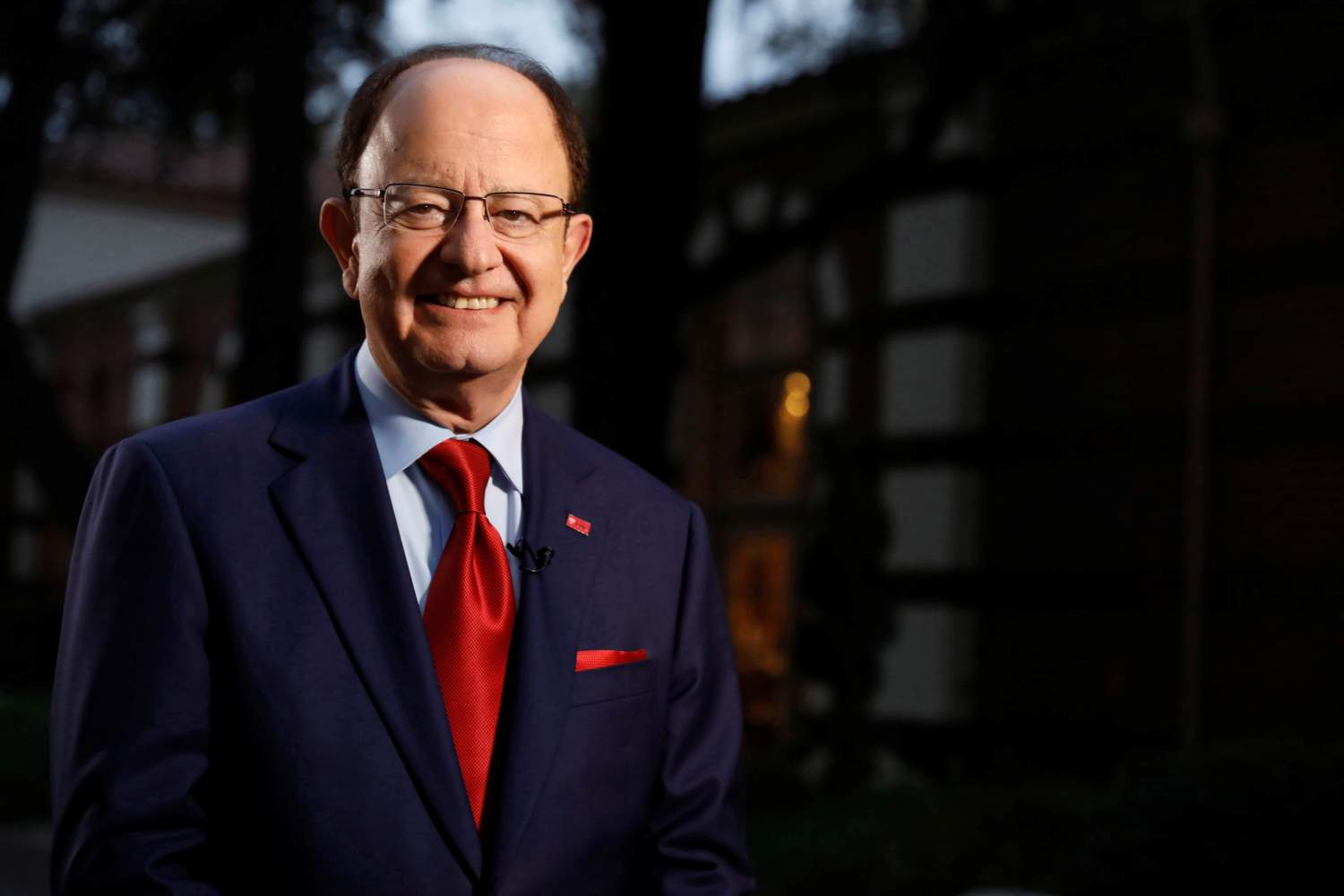
One of the most distinguished Cypriot academics of the diaspora, Max Nikias rose to the highest levels of American higher education, serving as dean, provost and ultimately president of the University of Southern California (USC).
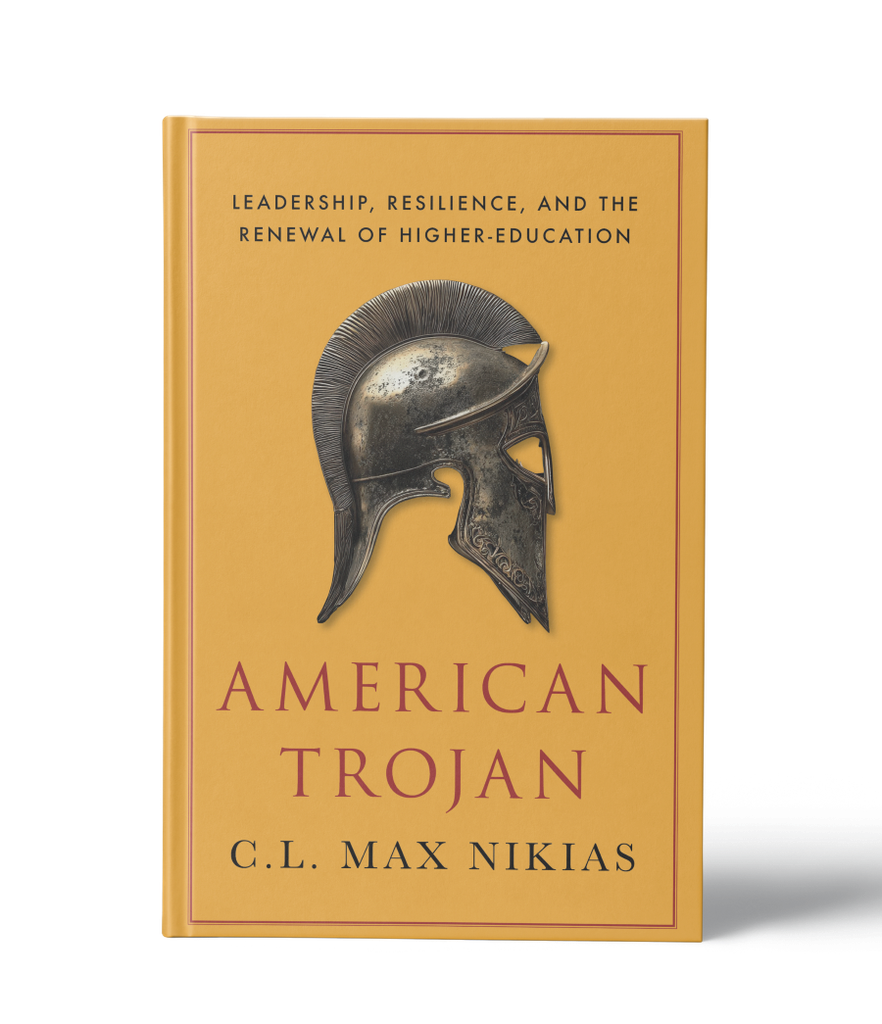
In his book, American Trojan, he tells the personal story behind that journey: his childhood village in the Karpasia peninsula, the devastation of 1974, his experience as a refugee, the ‘American dream’ and the guiding influence that has stayed with him throughout his life – the ancient Greek classics. In a rapidly changing world, these works continue to demonstrate the enduring nature of humanity.
I was born in Komi Kebir. For a young child, it was a beautiful place. Of course, village life was very different back then. We had neither electricity nor running water at home. I remember my mother carrying large clay water jars on her shoulder to the fountain in the village square, filling them and bringing the water home. Those are some of my earliest memories, and I look back on those years with great affection.
My parents placed enormous importance on education, even though they had only completed primary school. They encouraged me to read and do well at school, particularly my mother, who taught me arithmetic and was very strict. But at school, one teacher taught three different year groups, so my father decided to move the family to Famagusta, where the secondary schools were better. They had this deep conviction that education could open doors for us.
Most of the people in our village were Greek Cypriots. There was, however, a small Turkish Cypriot community, and we were all very close. Let me tell you a story that illustrates this. The village barber was a Turkish Cypriot called Kasoumi. Once, a boy three years older than me was about to hit me. Kasoumi came rushing out, rescued me and took me home to my mother.
Someone had painted the outline of Cyprus, divided down the middle by a line, with the word ‘Taksim’ written across it. We saw it on a wall near the Turkish Cypriot school, around 1958 or 1959, as we were walking to church. I was too young to understand what it meant, but I will never forget the terror I saw in my mother’s eyes.
When the coup happened, I was studying in Athens. My wife and I, who had been together since secondary school, had arranged to return to Cyprus, but we planned to travel separately so that our families wouldn’t meet at the airport. Niki left on 14 July, while my ticket was for 15 July. She arrived in Cyprus on the Sunday, and the coup took place on the Monday morning. The airports were closed, and I was stranded in Athens. For at least a week, I didn’t know what was going on. Communications were difficult, and I couldn’t find out where my parents were or whether they were safe.
The night Famagusta fell, I realised we had lost everything. I was walking alone through the streets of Athens, and I felt as though the ground had been pulled out from under me. It was like falling out of an aeroplane without a parachute. There was nothing to hold on to, nothing to stop the free fall. And yet, at the same time, it was a bittersweet experience. In Athens, people were celebrating the fall of the dictatorship and the restoration of democracy. Everyone was out celebrating in the streets. Meanwhile, Cyprus was experiencing a tragedy. “Don’t celebrate, Cyprus is burning,” read the banner held up by Cypriot students demonstrating in Syntagma Square, in front of the Tomb of the Unknown Soldier.
It was difficult to keep my memories alive. That was why, as soon as the crossing points opened in 2003, we flew straight from America to Cyprus. My memories had begun to fade, and I wanted to bring them back, to reconnect with my childhood. I’ve returned to the village many times since then. Each visit helped me recover stories and moments that had lain buried in my memory. But everything was in ruins. The village cemetery had been completely ransacked, yet amid all that destruction, I managed to find the crosses from both my grandparents’ graves. At one point, someone asked me why I was taking so many photographs. I’d remember, for example, that I’d nearly been run over by a car on a particular street. Memories like that would come back to me in fragments, like scenes from a film.
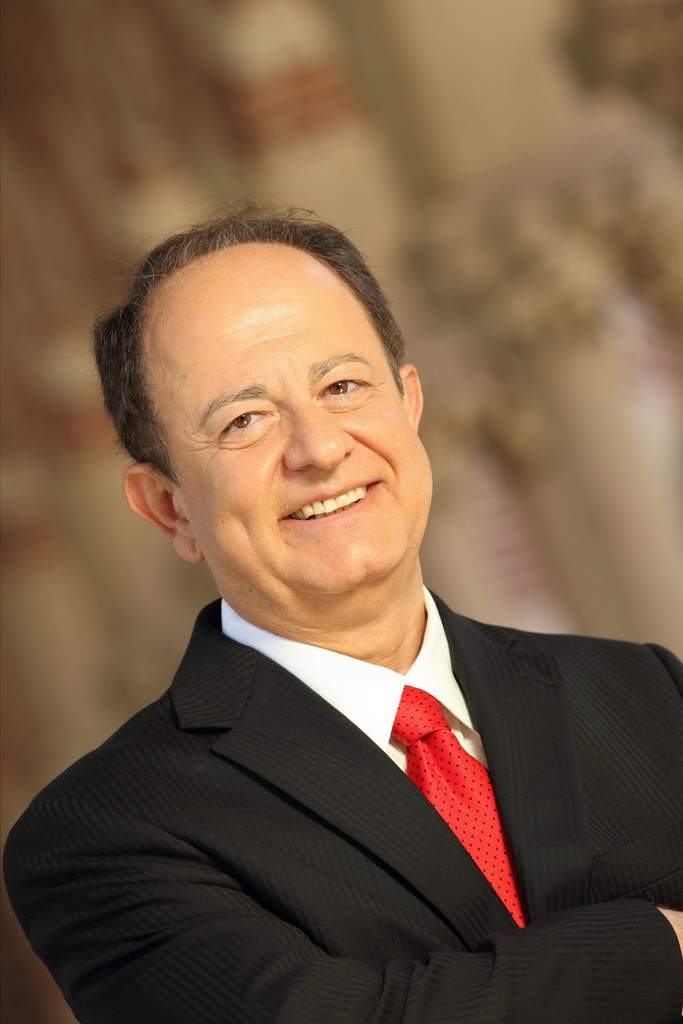
There are certain dates in everyone’s life that shape who they become. For me, there is only one. Everything is divided in two – before and after that summer. But when you’ve already lost everything, you have nothing left to lose. That forces you to take risks. And amid all that tragedy, I felt I’d found an extraordinary strength. It was the human instinct for survival… I wanted to move forward, to create, to flourish. That would be my revenge.
The first time my father telephoned me after the invasion to tell me he was safe, he gave me one piece of advice: don’t come back to Cyprus. He told me we were ruined, that we’d lost everything and that Cyprus was no longer the place for me. I followed his advice. My wife and I first went to London and then to America. It was a new beginning for us. I began as a researcher, became a professor and eventually took on leadership roles in academia. Looking back, the advice I give my students is to keep trying, work hard and have a strong work ethic, but always be prepared to go the extra mile. That’s when opportunities will come your way.
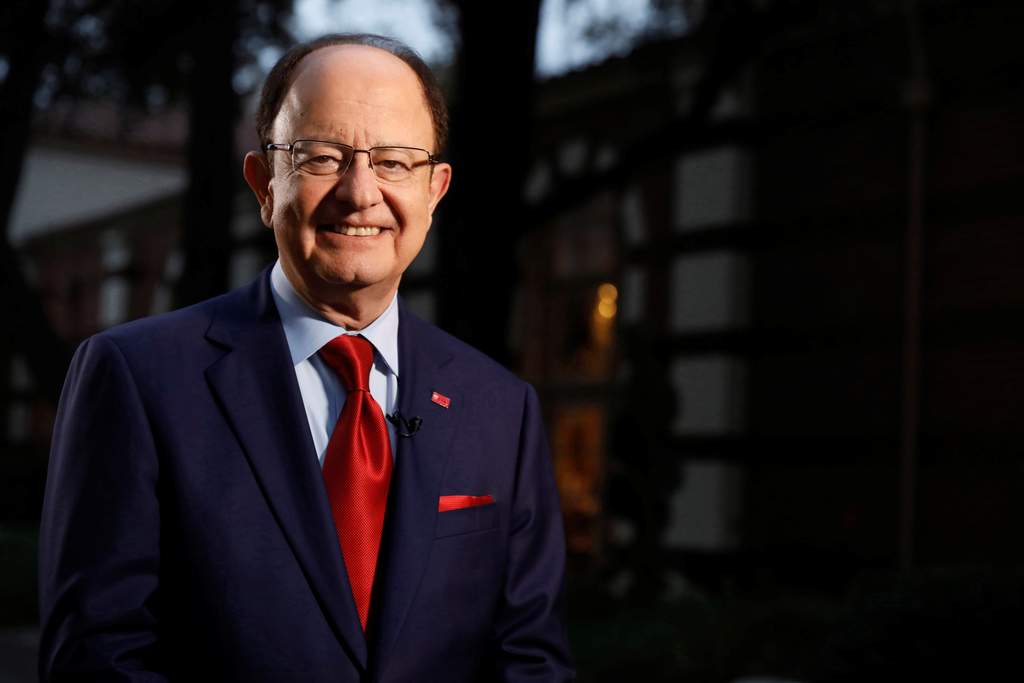
I studied engineering because I was very good at mathematics, chemistry and physics. “You should go to the National Technical University of Athens. It’s the best,” my geometry teacher told me at school. So that’s what I did. Nevertheless, I’d always loved the humanities, and the only prize I ever won at school was in history! All my elective courses at university were on ancient Greece. Even when I wanted to relax in my spare time, I would read the great works of the Greek classics. That’s why, during my time at the university, I placed such importance on the arts and humanities and worked to develop them. Together with the university’s provost, we introduced courses on the Greek classics. In fact, when I was university president, I co-taught a course with the chair of the Classics Department. I taught Sophocles’ tragedies – Antigone, Oedipus Rex and Philoctetes – while he taught Thucydides.
If you want to understand human nature, read the classics. Technology is constantly changing, but human nature remains the same. The way we communicate changes, but our nature does not. Want to learn about leadership? Read Plutarch’s Parallel Lives. “Nothing is more formidable than man,” as Sophocles puts it. And indeed, it’s a reminder that we live in difficult times. Whatever we do, however many medical breakthroughs we achieve, whether to extend life or improve its quality, Sophocles reminds us, as early as the first choral ode, that no matter how great our capabilities become, we remain mortal.
Our society will always need ‘Antigones’ – people willing to stand up to authority, to challenge it and to resist when the principles of justice are violated. When students demonstrated outside my office, I would always say to the vice-president, “These are the new Antigones!” We might not have agreed with many of their demands, but you must always be willing to stand up to authority, guided by your own moral principles and values.
I’m very optimistic about superintelligence, or artificial intelligence, whatever you want to call it. This is a revolution unlike any we’ve seen before. For the first time in history, we have the potential to increase everyone’s productivity not tenfold, but a hundredfold or even a thousandfold. The first step came with Google Search, when we gained instant access to enormous amounts of information. Today, however, we have access to billions of pieces of information, and everyone will be able to multiply their productivity, provided they know how to make use of the technology.
What saddens me is that I’m not 30 years younger, so I could experience the next great revolution. Because what is coming over the next decade will be truly extraordinary. The next big development in artificial intelligence will be robots, both humanoid and non-humanoid. We’re moving towards a world where human intelligence and superintelligence will interact naturally every day. And that coexistence will fundamentally transform the way we live, work and create.
In a world where machines are becoming increasingly capable, the classics are more valuable than ever. They are the source of much of the ethical thinking on which we have built our lives and societies. In the course I teach on the ethics of artificial intelligence, I tell my students to read Aristotle’s Nicomachean Ethics, starting with Book VI, where he examines technical skill, practical wisdom and theoretical wisdom. Technology without wisdom can lead to destruction. And that raises a question that is more relevant today than ever: what are we developing artificial intelligence for? Every technology we create must serve a purpose and, ultimately, serve humanity, making our lives better and easier. So what are we building? Machines that we will serve, or systems that will serve us? That is why the humanities are so important today. They help us ask the right questions about how we use technology and, more importantly, what we use it for.
It was during the Greek-Turkish crisis in 2020. At the time, Donald Trump’s national security adviser was Robert O’Brien, whom I knew from Los Angeles. When Greece’s then ambassador to the United States, Alexandra Papadopoulou, learnt that I knew him, she contacted me. She was very distressed. She had been calling the White House, but kept being passed from one department to another. She couldn’t get through to anyone to put forward Greece’s position. “Mr Nikias, no Greek government would survive more than 24 hours. They’ve entered Greek waters!” she told me. “Ambassador, I don’t even know whether he still has the same number, but I’d be happy to send him a message,” I replied. Twenty-four hours later, he called me. We spoke for 15 minutes. He was aboard Air Force One with the US president. “I’m under no obligation to call her, but I’ll do it as a personal favour to you,” he said. And that’s what happened.
I was at an event with David Petraeus, the former CIA director, when I gave him the first manuscript of my book. He read it over two evenings, and when he came back, he said, “Max, the title isn’t right. It should be American Trojan.” His point was that I’d come to America and hadn’t remained a Greek Cypriot. I’d become an American. And the USC mascot is the Trojan. He was right. He really was. There’s also a wonderful irony in the title, which reminds me of something a member of Congress in Los Angeles said when I became university president: “Finally, a Greek is leading Troy!”
You never forget where you came from. I am the person I am today because of everything I’ve experienced and everything that has shaped me. In the book, the histories of Cyprus, Greece and America are woven together through my own journey. So, in a sense, my personal story is also intertwined with the histories of those three countries.
Yes, I am an ‘American Trojan’. But what is America, really? A country built on Greek ideals. Its Founding Fathers laid its foundations on those principles. And today, I am a citizen of a country founded on those very ideals. How fortunate I am! No one else can say that, unless they are Greek.