


Successive crises in recent years have compounded social problems, particularly for the most vulnerable sections of the population
A job that does not pay enough to live on. A home that is increasingly out of reach. Education and employment that no longer offer a path to a better life. Across Europe, people are taking to the streets to demand better education, affordable housing and improved living standards.
Behind the demonstrations in European cities lies a deeper anxiety: the growing sense that the promise of social progress is slipping away. And when that anxiety is coupled with a belief that governments are not listening, economic insecurity can turn into a challenge to the political establishment and an outpouring of anger.
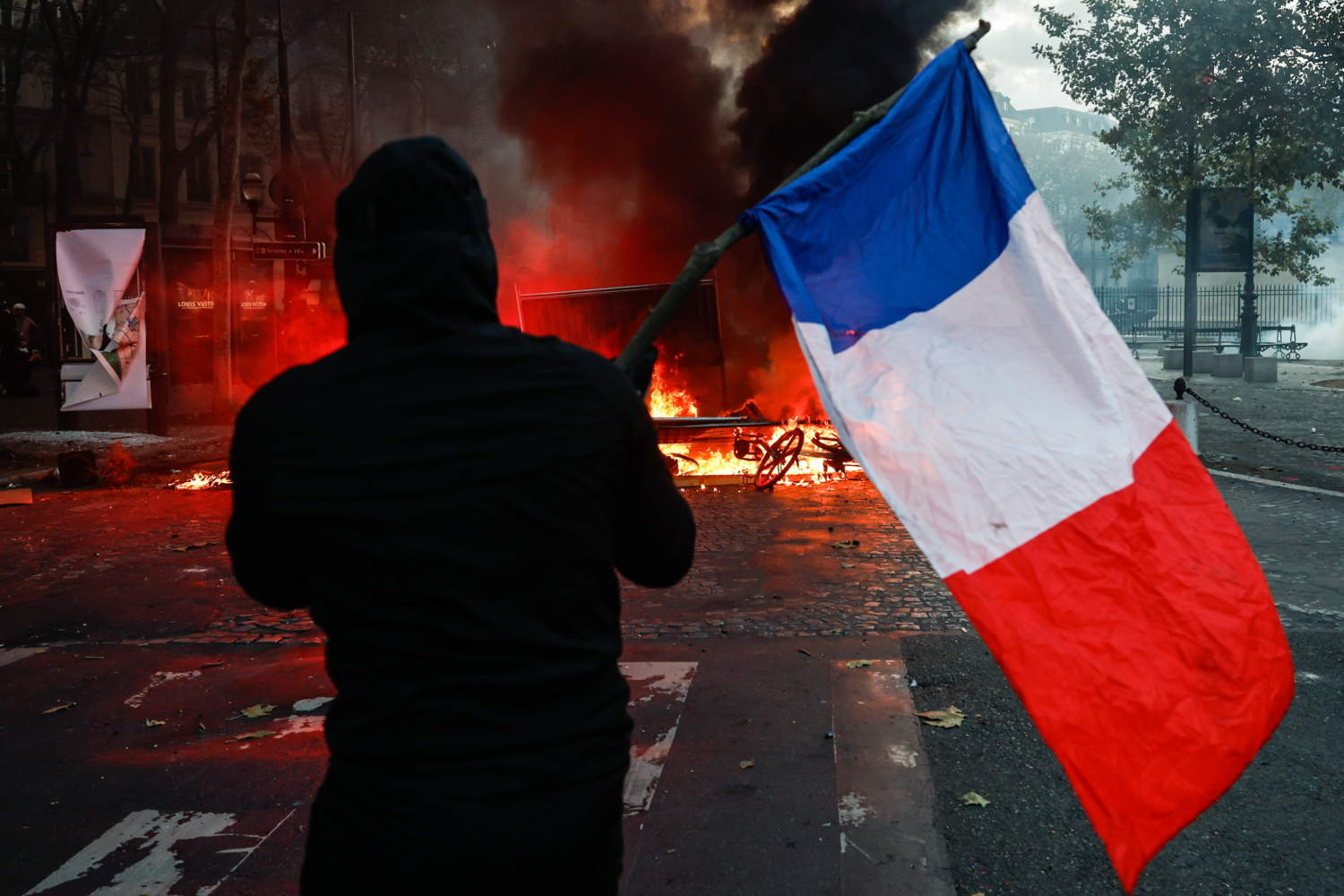
The social unrest seen in several European countries in recent weeks, particularly in France, where demonstrations have descended into violent riots, is further eroding trust in national governments and the European Union itself.
In an interview with Phileleftheros, Andreas Feronas, Professor of Social Policy and Director of the Master’s Programme in Social Policy at the University of the Peloponnese, argues that the protests reflect a deeper crisis of political representation and public trust. He warns that disillusionment with governments could develop into broader doubts about the effectiveness of democratic institutions themselves.
Political forces across the ideological spectrum have been quick to try to capitalise on the demonstrations. “If violence overshadows the underlying social demands, the far right could gain politically and electorally by presenting itself as a force for law and order. Conversely, if the protests retain broad public legitimacy and highlight specific social injustices and problems, the radical left could benefit,” Feronas explains.

There is, however, a serious risk that ordinary citizens will be the real losers if their demands are overshadowed by images of clashes and debate over police crackdowns.
How this discontent develops will depend largely on how governments respond. Feronas argues that restoring trust requires meaningful improvements in incomes, affordable housing, better public services and genuine public participation in decision-making.
The European Union, meanwhile, must turn its social commitments into binding priorities backed by adequate funding.
The challenge for institutions is to demonstrate that they can respond effectively to social demands before disillusionment develops into a deeper crisis of democracy.
Protests across several European countries have different starting points but reveal common concerns about the cost of living, education and housing. Do you see a wider European phenomenon of social unrest and political dissent, or do we risk treating very different situations as though they were the same?
I would say that recent demonstrations across Europe have highlighted a range of shared social problems, including the high cost of living, low wages, housing insecurity, declining standards in education and barriers that prevent people from fully exercising their social rights.
These problems, however, arise and are experienced in different economic, political and social contexts. What appears to connect them is the widening gap between people’s expectations and their actual opportunities, particularly among younger generations.
When employment no longer guarantees a decent standard of living, social inequalities widen and access to quality public services becomes more restricted, dissatisfaction can move beyond criticism of individual governments and develop into broader doubts about whether institutions can effectively respond to society’s needs.
That does not mean these protests can all be regarded as expressions of a single social phenomenon with common causes, demands and political prospects.
They differ in what triggered them, the composition of those taking part, their political and ideological orientation, and the forms of protest they adopt.
In France, protests initially focused on education before expanding to encompass the cost of living and declining public services. In Spain and Portugal, demonstrations have centred on the housing crisis. Elsewhere in Europe, people have mobilised against rising prices, unemployment, corruption, poverty and social exclusion.
It is therefore more appropriate to speak of shared social anxieties and different forms of political and social dissent that could take on a broader European dimension, rather than, at least for now, a single, coordinated social movement.
I would also add that we need to be particularly careful when considering the relationship between peaceful demonstrations and the looting, arson and violent clashes that sometimes accompany them.
Protesters are not a homogeneous group, nor do they necessarily share the same objectives or methods.
For this reason, it is important neither to associate all demonstrators indiscriminately with violent acts committed by particular groups or minorities, nor to downplay the seriousness and destructive consequences of violence.
This distinction is essential if we are to understand the social causes of the protests without legitimising violence or playing down its seriousness.
What lies at the heart of this anger? What happens when people, particularly young people, develop a deeper sense that the political system is not listening to them and cannot offer them a future?
I would sum it up by saying that the recent events reflect a broader crisis of social inclusion, political representation and institutional legitimacy.
Growing sections of the population are experiencing economic insecurity, a sense of declining social status and distrust of institutions, often without effective channels through which to secure representation, pursue collective demands or exert political influence.
What they have in common is that insecurity is distributed unequally, while the promise that education, employment and individual effort will lead to a better life is increasingly being called into question.
A series of crises in recent years has made social problems worse, particularly for the most vulnerable sections of the population. At the same time, these crises have limited governments’ ability to address those problems, as needs increase while public finances and political consensus remain constrained.
These pressures generate widespread social dissatisfaction, which can develop into collective action when people believe their difficulties stem from unfair rules, that institutions no longer work in their interests and that governments make decisions without consulting them.
This is where particular caution is needed. If the protests fail to achieve meaningful results, the consequences could include a complete breakdown of trust in governments, increased support for anti-establishment parties and doubts about the effectiveness of democratic institutions themselves.
Who is best placed to turn this discontent into political influence? In France in particular, where we are seeing a fierce confrontation between the far right and the radical left, who stands to benefit most from violent demonstrations?
That depends on which political force succeeds in offering the most convincing explanation for the causes of the protests, giving them political expression and demonstrating that it can deliver effective solutions.
If violence overshadows the underlying social demands, the far right could gain politically and electorally by presenting itself as a force for law and order.
Conversely, if the protests retain broad public legitimacy and highlight specific social injustices and problems, the radical left could benefit.
In France, Marine Le Pen appears to be gaining an immediate advantage both in shaping the public debate and politically. Images of widespread violence allow her to shift the discussion away from social demands towards law and order, border security and, in particular, the perceived “threat” of immigration.
More broadly, I believe far-right parties across Europe have an advantage when it comes to exploiting violence politically, because demands for law and order can rally voters beyond their traditional electoral base.
Ultimately, however, it is the social demands themselves that lose out when discussion of their underlying causes is overshadowed by disputes over repression and responsibility for acts of violence.
What would it take to turn public anger into meaningful change? What specific measures at national and European level could restore trust before disillusionment develops into a deeper democratic crisis?
Trust in democratic institutions cannot be restored through public relations or repressive measures. It requires tangible results and meaningful responses to society’s needs.
At national level, governments need to make substantial changes to the prevailing policy mix, focusing on genuine improvements in people’s incomes, tackling the housing crisis, protecting workers, improving public education and healthcare, and promoting tax fairness and the social inclusion of vulnerable groups.
At the same time, greater transparency, accountability and meaningful participation by citizens in decisions that affect them are crucial to restoring the legitimacy of democratic institutions.
Particular attention must be paid to the problems facing younger generations and to creating conditions that allow them to plan their futures with dignity and the expectation of a better life.
At European level, there must finally be progress on the social dimension of European integration.
This means turning rhetoric and declarations about combating poverty and social exclusion, safeguarding social rights and strengthening social cohesion into binding priorities backed by adequate funding.
The European Commission has recently announced policy strategies on issues such as poverty reduction and affordable housing, but what matters is their effective implementation and the delivery of tangible results for citizens.
Public trust in the system can only be restored if the system demonstrates that it is capable of change and can provide an institutional means of addressing social demands.
At a time when people face so many pressures, including the cost of living, the housing crisis and energy prices, how likely is it that we will see similar unrest spread to other countries?
It is difficult to predict future developments with any precision.
Protests are likely to continue because social problems have been accumulating for years and are shared by many countries.
I believe, however, that the intensity and form of these protests will vary considerably, given the significant differences between countries in their institutions, welfare systems, political cultures and the strength of civil society.
The crucial question is how governments respond or, as I noted earlier, whether they are capable of addressing people’s demands effectively.
If their response is effective, tensions may gradually subside.
If, on the other hand, their response is repression, we could see successive crises, insecurity becoming a permanent feature of everyday life and a complete breakdown of trust in democratic institutions.
A wave of anger sweeps across Europe
Europe is facing widespread social unrest, with demonstrations over the high cost of living, housing and education erupting into violent clashes with police.
The protests have different origins, organisers and demands, while the intensity of unrest varies considerably from country to country.
The large numbers of school pupils and university students taking part nevertheless highlight the concerns of a generation struggling to secure access to education, employment and affordable housing.
France
What began as protests over teacher shortages and conditions in schools has, within a matter of weeks, developed into a movement expressing widespread dissatisfaction with rising prices, social inequality and the policies of President Emmanuel Macron.
The protests escalated rapidly. University students, teachers, trade unions and parents joined the movement, broadening its initial demands to encompass an increasingly wide range of grievances.
On 17 October, the protests took on a new dimension as hundreds of thousands of people demonstrated against the rising cost of living.
Widespread disturbances broke out in Paris, where 855 people were detained, according to police.
One demonstrator died after suffering a cardiorespiratory arrest in Paris, a 17-year-old girl lost an eye in Mulhouse, and a 17-year-old boy had his hand amputated in Saint-Étienne.
In Limoges, the historic town hall was almost completely destroyed. Across France, at least 1,500 businesses sustained damage.
Italy
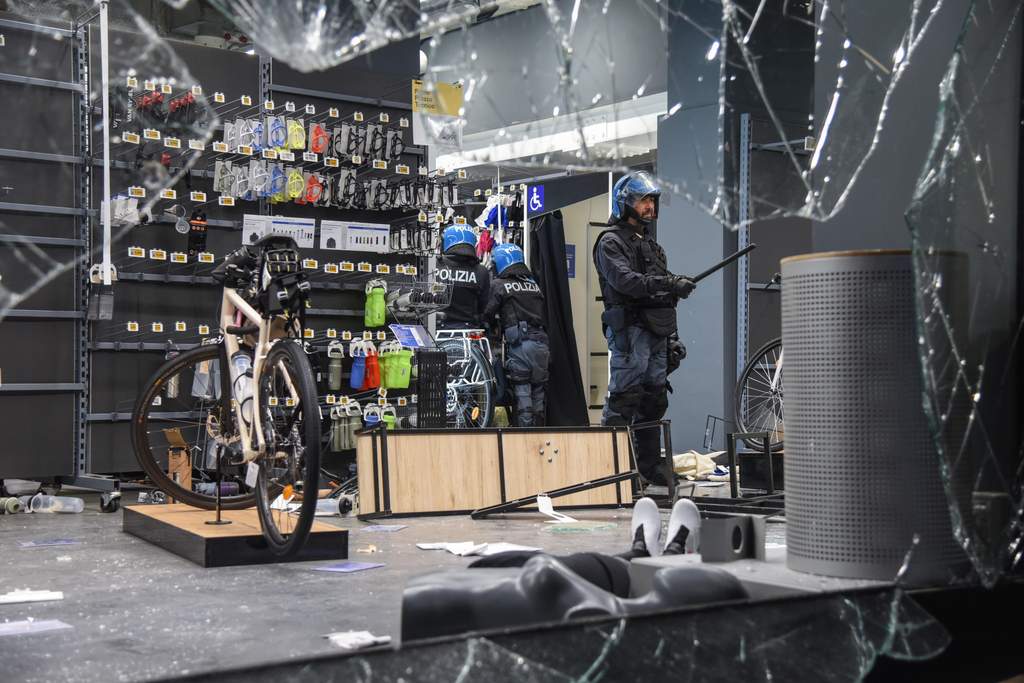
Large anti-government demonstrations involving school pupils and university students have erupted in several Italian cities, accompanied by assaults and violent clashes.
In Milan in particular, protests last weekend left more than 100 police officers injured, while shops were looted in the city centre.
The demonstrations have been fuelled by anger over rising fuel and energy prices and high rents.
Protesters are also voicing concerns about low wages and the state of public services.
Police took 271 young people in for questioning, many of them minors.
Portugal
Thousands of demonstrators have taken to the streets in Lisbon and Porto to protest against the worsening housing crisis, soaring rents and the rising cost of living.
The protests appear to have been influenced by those in neighbouring Spain, with housing also a major concern in Portugal, particularly among young people.
Following the demonstrations, protesters set up makeshift camps with tents in central public squares.
The gatherings were overwhelmingly peaceful and were attended by leaders of both the Socialist Party and the Left Bloc.
Spain
Spain is heading towards parliamentary elections in November because of the housing crisis.
Against this backdrop, hundreds of thousands of people have taken to the streets in recent weeks, demanding immediate measures to halt rising housing costs and make evictions more difficult.
Albania
Protests in Albania have continued for more than ten days, with Prime Minister Edi Rama’s calls for dialogue so far going unheeded.
The demonstrations have been driven by demands for better university conditions, anger over corruption and calls for Rama’s resignation.
Protesters have clashed with police during the unrest, resulting in hundreds of arrests.
Belgium
Protests have also taken place in Belgium, led mainly by young people and university students concerned about rising education costs and reforms they fear will make higher education less accessible.
Marches were held in Brussels and Liège last weekend, during which demonstrators clashed with police.

