


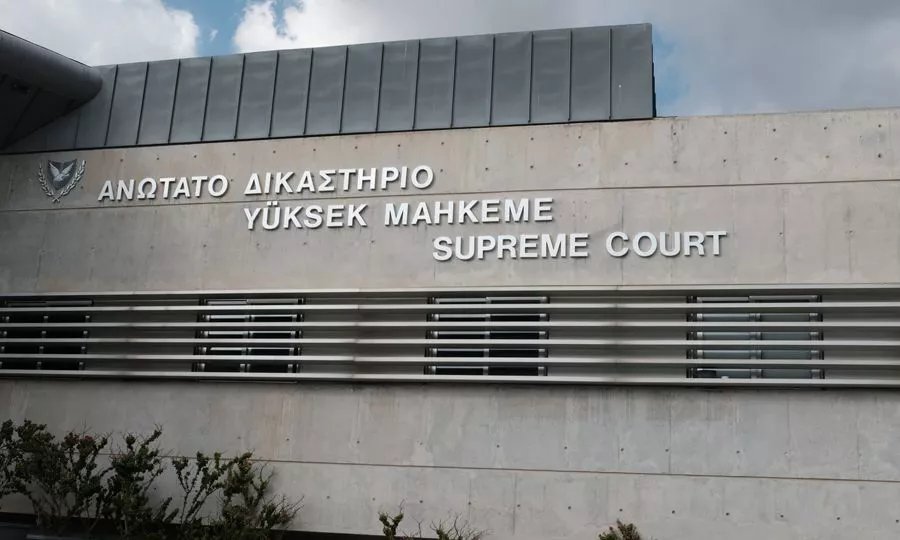
Judges in Cyprus are being forced to carry out the duties of ushers, stenographers and clerks because of a shortage of support staff, the heads of the country’s two highest courts told the House Finance Committee.
Supreme Constitutional Court President Antonis Liatsos said there were bound to be delays when judges had to spend half their day on non-judicial work. He and Supreme Court President Katerina Stamatiou called for substantial state support during the committee’s discussion of the judiciary’s 2027 budget.
“You cannot have judges doing the work of ushers, stenographers and clerks,” Liatsos said. Higher-grade staff on salary scale A16 were being used for the duties of A7 and A4 employees, he added, stressing that judges needed to focus on their own work.
Stamatiou said there were only seven stenographers for 26 judges and three Criminal Courts. She hoped technology would provide solutions and said the iJustice system would be completed in 2030.
Administrative courts
Each Administrative Court judge handles about 900 cases, Liatsos told the committee, and at least two more judges must be appointed. He said the outcome of an effort to transfer cases involving detention and deportation orders for asylum seekers to the International Protection Court was still awaited.
More than 6,500 appeals are pending at the Administrative Court of International Protection. Four additional judges’ posts have been approved and are being filled, but the court’s building remains a problem, and Liatsos described it as completely unsuitable. The new judges will be housed elsewhere temporarily and travel to the court for hearings.
There is also a major problem with numerous pending cases involving Syrians, he said. An internal arrangement is expected that would allow rulings to be issued as guidance for handling the rest.
It was humanly impossible to eliminate delays at the Administrative Court through procedural changes alone, without substantial state support, Liatsos added. He cited a Fiscal Council report showing that public spending on the courts in Cyprus is proportionally the second lowest in the EU.
At the Administrative Court of Appeal, all revisional appeals filed up to 2021 have been dealt with. A few from 2022 and about 800 from 2023 to 2026 are pending. Since September 1, 2026, the court has operated two panels of three judges each.
Liatsos also called for requests for the judiciary’s financial autonomy and for its internal order of precedence to be dealt with immediately, linking them to judicial independence and the institutional role of the judiciary.
Backlog and appointments
About 75 per cent of the backlogged cases included in the action plan under the Recovery and Resilience Plan have been cleared, Stamatiou said. However, difficulty finding suitable judges for vacant posts was adding to the burden on serving judges, who face heavy caseloads.
Twelve District Judge posts and two Court of Appeal judge posts have been advertised, with the process expected to be completed by the end of 2026. Two additional Family Court judges are to be appointed, and there will be one full-time judge in Famagusta, two in Paphos and three in Limassol.
Stamatiou said changing needs made it hard for judges to specialise. Civil cases had risen during the stock market and financial crises, while criminal cases are now increasing.
The Admiralty Court has been operating since October 5, 2026, despite housing and infrastructure problems, she said. A Commercial Court would require suitable infrastructure, support staff and interest from lawyers with relevant experience.
Budget
The judiciary’s spending for 2027 is projected at 64,185,289 euros, up about 5.6 per cent from 60,802,818 euros in 2026, according to figures submitted to parliament. Salaries for judges and staff account for 43,704,605 euros, or 68.09 per cent, and operating and other costs, including stenotyping, security checks and court guarding, for 15,791,074 euros, or 24.6 per cent.
A further 3,926,000 euros, or 6.12 per cent, is earmarked for legal aid, interpreters’ fees and witness compensation. Development spending stands at 763,610 euros, or 1.19 per cent, including 400,000 euros towards part of the cost of building the new Nicosia District Court.
Digital upgrades
The second phase of the iJustice upgrade is expected to go live around May 2027, covering the third-instance jurisdiction of the Supreme Court and the Supreme Constitutional Court. Audio recording of proceedings with AI-powered speech-to-text transcription, remote hearings and the display of evidence on screens are also being explored.
Stamatiou said the effective implementation of the new Civil Procedure Rules required a broader change of culture among everyone involved in the judicial process.
Independent Judicial Service
The committee also discussed the planned Independent Judicial Service, a new structure for administering and managing the courts that aims to better organise registries, staff and resources and relieve judges of administrative duties.
Liatsos questioned whether the scope of its responsibilities had been clarified. He said its impact on staff, who say they are worried because their duties will have to change, must be taken into account.

