


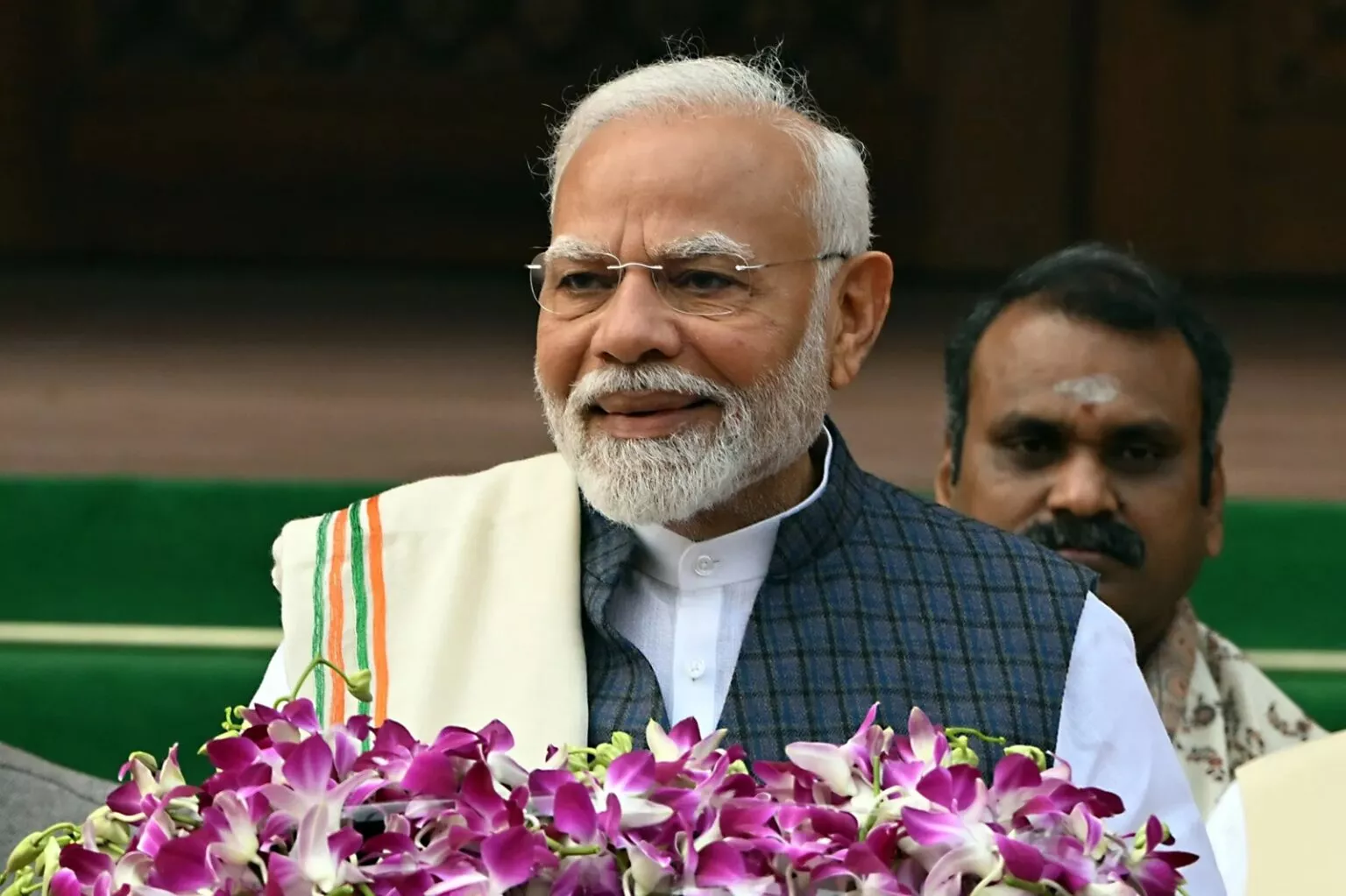
The historical depth of relations between Cyprus and India is set to connect with major opportunities opening for both countries through Narendra Modi’s visit to the island.
New Delhi chose to give this visit a resounding significance by linking its announcement to the recent India-Pakistan crisis and the Indian position that Turkey was involved.
Modi selected Cyprus as his first foreign trip following the recent Indo-Pakistani crisis, en route to Canada and the G7 summit.
According to a Philenews report by Andreas Bimbishis, both Cyprus and India face Turkey as a negative factor.
Nicosia must confront Turkish aggression manifested through the continued occupation of part of the island, while New Delhi has to deal with Ankara as a close Pakistani ally, with bilateral cooperation between the latter, repeatedly used to damage Cyprus.
Strategic Significance of Today’s Visit
Modi’s first international trip following the Pakistan crisis gives Cyprus strategic weight that extends beyond the solidarity between the two countries throughout their history and coexistence.
Cyprus strengthens its position as India’s strategic partner within the European Union through this visit, ahead of Cyprus’s EU presidency in the first half of 2026. A visit by Nicos Christodoulides to New Delhi during that critical time might also be on the cards.
India, as demonstrated through Modi’s trip coverage this week, views Cyprus as an institutional bridge to Europe and a sphere of influence unaffected by conflicting interests.
Agreements to be Signed
Modi and Christodoulides will sign a joint declaration including multiple sector cooperation pillars between India and Cyprus.
The two leaders will have opportunities during both private one on one talks and delegation meetings to discuss international and regional issues while evaluating bilateral relations and updating joint initiatives.
India’s Objectives
Under Modi’s leadership, India increasingly strengthens its strategic international presence. It promotes a multipolar foreign policy model, achieving close cooperation with both the United States and the European Union as well as the BRICS group (Brazil, China, Egypt, Ethiopia, Indonesia, Iran, Russia, South Africa, and UAE).
Modi is heading to Canada for the G7 summit of the world’s seven strongest economies.
New Delhi’s priorities include energy security, strategic raw materials (rare earths), technological advancement, and maritime security.
Convergence and Prospects
India is pushing for strategic convergence with three countries: UAE, United States, and Israel. This convergence is promoted through the I2U2 initiative (India, Israel, USA, UAE) focusing on economic and strategic cooperation amongst the four nations.
The IMEC economic corridor represents an element that further connects India-Cyprus relations. For New Delhi, IMEC constitutes a strategic objective, which is why Modi will also stop in Croatia on his return from Canada, as India considers it part of this corridor.
IMEC (India-Middle East-Europe Economic Corridor) is an economic plan aiming at forging a corridor from Mumbai through to the Arabian Peninsula, the Middle East, and the Mediterranean to Europe, connecting Asia, the Arab world, and Europe economically.
Regional developments following the Gaza war post the October 7th, 2023 Hamas terrorist attack have put on hold the development of a new 3+1 cooperation format involving Cyprus, Greece, Israel, and India. Developments are expected in the near future given the strong desire of all parties involved.
Additional Significant Aspect
Indian media emphasised Modi’s island visit as a response to Turkey, considering Ankara’s role against New Delhi on Kashmir by openly supporting Pakistan militarily. Turkey’s behaviour on regional issues critical to India has not gone unnoticed by New Delhi.
For Cyprus, relations with India have historical depth dating to the Republic’s establishment in 1960. India’s new foreign and economic policy places Cyprus in a strategic position with a significant role, bringing bilateral cooperation to a new level.
Highlighting Cyprus’s strategic role in the Eastern Mediterranean spells bad new for Turkey’s Erdogan always striving for regional hegemony, an ambition India and other countries appear unwilling to concede.
As an Anti-Turkish Alliance
Ankara considers anyone opposing its plans as an enemy, interpreting Modi’s Cyprus visit as an anti-Turkish alliance. The Turkish newspaper Sozcu recently wrote that “India decided to support Turkey’s opponents in the region.”
The Turkish paper noted that “New Delhi decided to invest in Greece’s defence sector, particularly in Hellenic Aerospace Industry and Hellenic Defense Systems.”
As military cooperation between the two countries has picked up pace in recent years, Indian defence companies have expressed readiness to invest in Greece, which considers “Turkey as its biggest regional rival.”
These issues will be discussed at length during Modi’s Nicosia visit, with Athens, having received European funding for defence industry development, expecting “a large check from Modi.”
Past Visits
The first visit was by Archbishop Makarios in 1962.
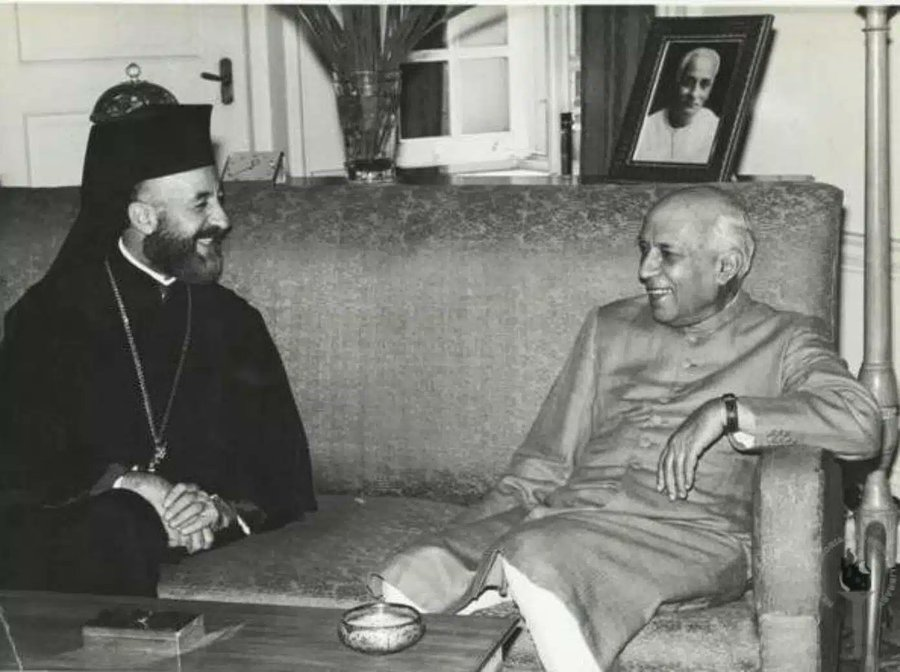
This is only the third visit by an Indian Prime Minister to Cyprus in over four decades. In 1981, Prime Minister Indira Gandhi stopped over in Cyprus, followed by an official 1982 visit.
The next Prime Minister to visit was Atal Bihari Vajpayee in 2002. Presidents Pratibha Patil and Ram Nath Kovind visited in 2009 and 2018 respectively, along with Foreign Minister Jaishankar in 2022.
President Tassos Papadopoulos travelled to India in 2006 and Nicos Anastasiades in 2017.
Official Itinerary
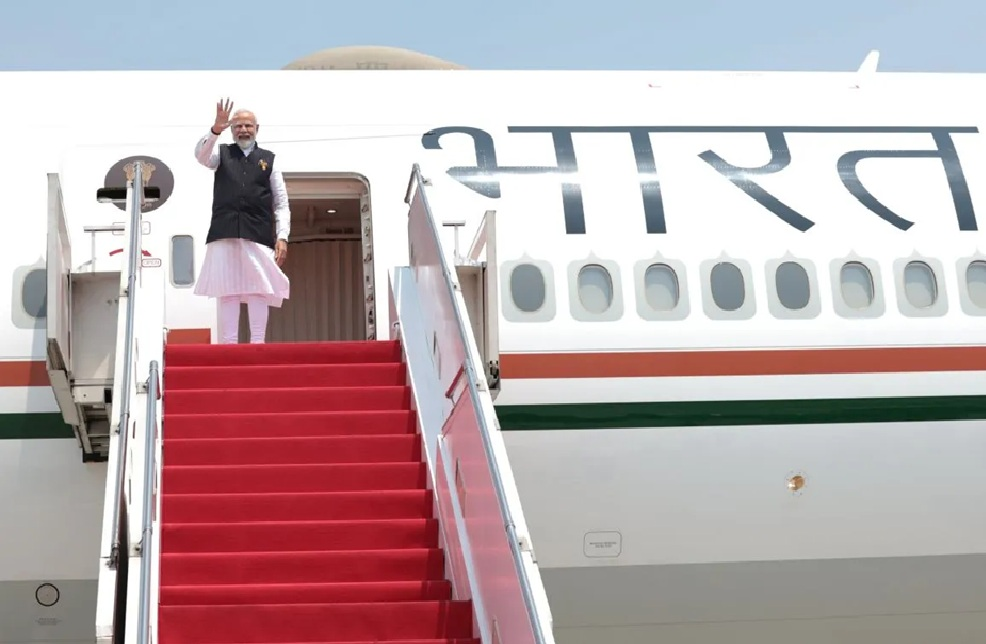
According to Thursday’s official announcement, the President will meet with India’s Prime Minister during his two day official Cyprus visit, following a Nikos Christodoulides invitation.
President Christodoulides will receive Prime Minister Modi at Glafkos Clerides International Airport in Larnaca, then proceed to Limassol for a business roundtable with entrepreneurs from both countries, followed by an informal working dinner.
Tomorrow, June 16, the Indian Prime Minister will receive an official reception at the Presidential Palace, followed by private meetings with President Christodoulides, who will honour him with the Grand Cross of the Order of Makarios III.
Expanded talks between delegations will follow, followed by media remarks.
Discussions will extensively cover bilateral relations and strengthening cooperation in economy, trade, infrastructure, and investment.
EU-India relations, the India-Middle East-Europe Economic Corridor (IMEC), Middle East and South Asia situations, as well as the latest Cyprus developments will also be addressed.
The leaders will then visit Nicosia Municipality and tour along the ceasefire line. President Christodoulides will host an official lunch for the Indian Prime Minister at the Presidential Palace before Modi’s departure.

