



A new era in public order begins following the announcement that Cyprus will establish a Directorate for Combating Organised Crime (DCOC), quickly dubbed the “Cypriot FBI.” Marios Hartsiotis made the announcement just before the President publicly confirmed his decision to transfer the Minister from Justice and Public Order to the role of Presidency Commissioner. Standing beside the Greek Minister of Citizen Protection, Michalis Chrysochoidis, Mr Hartsiotis spoke of a “battle” against organised crime that demands constant vigilance to achieve the best possible results.
The reality remains that organised crime—the underworld, put simply—has grown completely brazen in recent years. We now witness cold-blooded murders in the middle of the day, brazen shootings in neighbourhoods full of children, teenagers, and unsuspecting citizens, along with daily arson attacks on vehicles or other acts intended as clear warnings.
These circumstances make a more targeted action essential. But how does the equivalent Greek service operate, and what will determine the new directorate’s success in Cyprus? F of Sunday explores these questions and more. Former Minister of Justice and Public Order, Nicos Koshis, offers his view on how the new strike force must establish itself, while legal expert Christos Clerides explains why he considers Hartsiotis’s statement about creating a Cypriot FBI an unfortunate choice of words.
Hartsiotis and Chrysochoidis Make the Announcement
The two Ministers, Marios Hartsiotis and Michalis Chrysochoidis, announced the DCOC during joint statements. Mr Hartsiotis stressed that the DCOC will base itself on the effective model already established by Greece’s Directorate for Combating Organised Crime. The Minister noted that organised crime preoccupies all European Union member states and remains a top discussion topic at EU Councils. He observed: “The DCOC is being created with the guidance and support of Mr Chrysochoidis and his staff, and we expect it will be particularly helpful for both Cyprus and Greece”.
Mr Chrysochoidis expressed his satisfaction with the cooperation with Mr Hartsiotis, emphasising that security forms a valuable asset and a constitutional right for every citizen. The Greek Minister of Citizen Protection stressed that organised crime remains an international issue, requiring cooperation for its dismantling. He highlighted the Greek service’s effectiveness, stating it had made 1,500 arrests and 550 pre-trial detentions in just one year. Mr Chrysochoidis also underlined the importance of police training and technology in fighting crime. He declared that “Lifelong police training remains critical for officers to be effective and fighting fit,” while noting the need to exchange information and expertise between the two countries.
Both Ministers agreed that cooperation between Cypriot and Greek authorities happens daily, including the exchange of information and know-how. Mr Hartsiotis stressed that the new Directorate will rely on three fundamental pillars:
-The legislative regime that will provide the legal tools to work without distraction in its effort to strike at organised crime.
-The building infrastructure.
-The staffing with the right personnel.
Mr Chrysochoidis noted that the two countries’ services already cooperate daily, having established a “live hotline” between the Chiefs of the two police forces and critical services.
Responding to a question on the implementation timeline, Mr Hartsiotis clarified that no schedule exists. He stressed that: «Ένα τέτοιο χτύπημα πιστεύω ότι θα δοθεί μέσα από τη δομή και την οργάνωση αυτής της Διεύθυνσης, οπότε χρονοδιάγραμμα δεν υπάρχει, αντίθετα αυτό που υπάρχει είναι προσπάθεια να στηθεί το συντομότερο δυνατό και με τον καλύτερο δυνατό τρόπο, γιατί καμιά φορά δεν είναι μόνο ο χρόνος, πάνω από όλα είναι ο τρόπος να στηθεί σωστά» [“I believe such a strike will be delivered through the structure and organisation of this Directorate; therefore, a timeline does not exist. Instead, we strive to establish it as quickly and effectively as possible, because sometimes the method of setting it up correctly matters more than just the speed”]. He expressed hope that the DCOC would significantly contribute to tackling organised crime in Cyprus.
The Example of the ‘Greek FBI’
On 8 October 2024, the presidential decree establishing the so-called “Greek FBI” was signed and published in the Greek government’s Gazette. The Greek DCOC formed part of the decisions to restructure the Hellenic Police. It is based in Attica, enjoys administrative independence, and reports to the Hellenic Police Headquarters. The Chief of the Hellenic Police oversees, coordinates, directs, and controls it. Since its establishment, Major General Fotios Douitsis has served as its Commander, while the crucial services are staffed by the most experienced Security police officers, boasting years of experience in their positions.
The Directorate exercises public security police responsibilities in the area under its jurisdiction. Its responsibilities include:
–Dismantling criminal organisations, both domestic and cross-border.
–Investigating money laundering from criminal activities.
–Monitoring the evolution and trends of serious and organised crimes, and studying the scientific and technical methods for combating them.
–Cooperating with law enforcement authorities in other countries.
–Providing expertise and training to personnel from competent regional police services for more effective serious and organised crime fighting.
–Cooperating with other locally competent Hellenic Police services or other authorities and services, particularly the Independent Authority for Public Revenue, the National Transparency Authority, the Anti-Money Laundering Authority, and the Financial Crime Unit.
–Cooperating with EUROPOL, INTERPOL, and co-competent authorities and services in the country, other EU member states, and third countries.
–Utilising information from all public security police services in the country.
It is structured into six Sub-Directorates:
1. Drug Enforcement
2. Crimes Against Life and Property Enforcement
3. Combating Human and Goods Trafficking and Trade
4. Financial Crimes Enforcement
5. Combating Organised Sports Violence
6. Information and Special Operations
The “Greek FBI” may undertake investigations into serious crimes following approval or an order from the Chief of the Hellenic Police.
The Real Challenge Runs Through the Prisons
The creation of the new Directorate for Combating Organised Crime undoubtedly marks a significant departure for Cyprus. However, as attractive as the announcement sounds with the unofficial name “Cypriot FBI,” the real challenge remains singular: finding the right people to staff this new service. The current situation with organised crime in Cyprus remains terrifying. The crucial question asks if the state can find individuals possessing the integrity, guts, and nerve to clash with an underworld that, for years, has shown it fears no one.
In Cyprus’s case, tackling organised crime must also pass through the Central Prisons. This is the place where, just days ago, prison guards sounded a danger alarm for their own lives. This is where one murder plot after another is organised. This is where officials have lost count of how many times they officially flagged the need for a mechanism to prevent mobile phones from operating within the correctional facility.
It remains to be seen whether the state will find the people who can make a difference. And if they do not exist… the state must create them so that the recent announcement does not simply become another showcase pledge intended for domestic consumption.
Nicos Koshis (Former Minister of Justice and Public Order): Infiltrate Crime with Agents
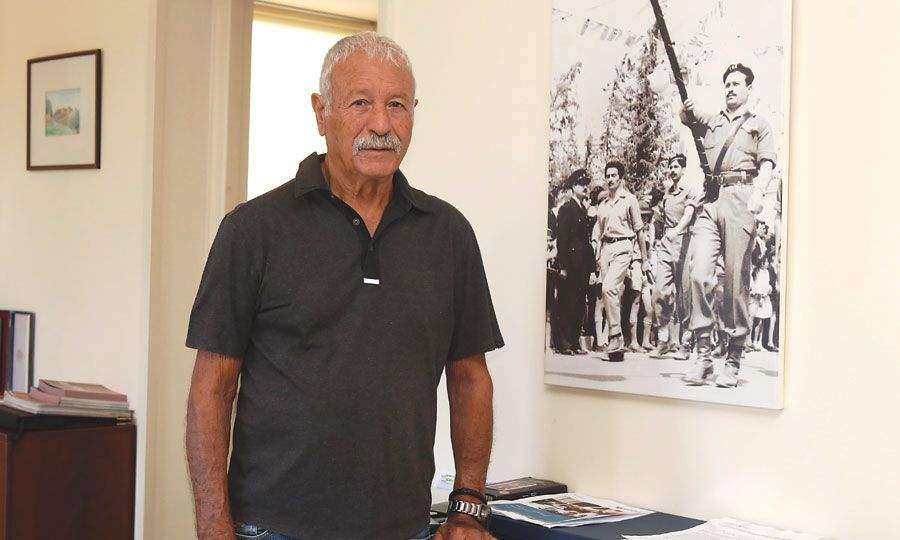
“My view is that the Ministry of Justice and Public Order and the President of the Republic acted correctly in establishing the so-called ‘Cypriot FBI’, following the Greek FBI, which appears to have positive results”.
It was time to move forward with establishing this unit; I would suggest we also establish contacts with other European countries that have similar units and have successfully limited organised crime. We are a small state; everyone knows everyone, and we have an organised crime problem whose extent is unjustifiable.
Therefore, establishing the “Cypriot FBI” is necessary. It must be an independent, small unit led by a commander who possesses all the necessary qualifications for such a post. The team supporting the commander should not exceed 30 people, and its members should not necessarily operate publicly.
This team must have its own intelligence network, its own specialised financial investigators, and receive information from MOKAS, the Cyprus Intelligence Service, and the Police. A reliable team must evaluate all this information; the commander of the “Cypriot FBI,” in collaboration with the Chief of Police, will appoint its members. For operations, the unit can utilise special police sections, such as the MMAD (Rapid Response Unit) and the E.A.O.
Everything we have mentioned above only yields results if we manage to infiltrate organised crime with our own agents. Only in this way will the “Cypriot FBI” achieve the desired results.
Christos Clerides (Lawyer): Hartsiotis’s ‘Cypriot FBI’ Statement Was Unfortunate
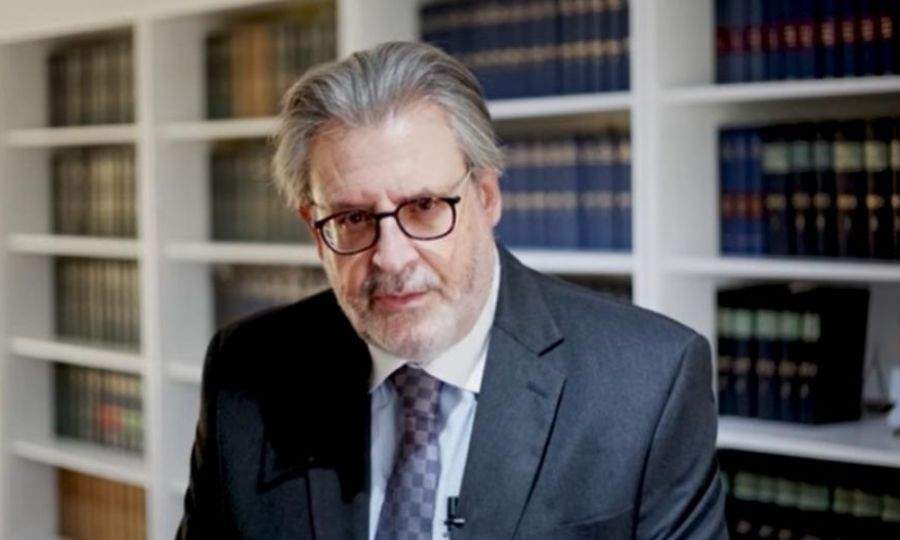
The need for the Police to modernise and upgrade remains a given. Furthermore, both the Police leadership and the Ministry of Justice have recently stated this and announced measures aimed at this purpose.
However, I consider the former Justice Minister’s statement, if accurately reported, that the goal is to create an FBI (Federal Bureau of Investigation) in Cyprus to be unfortunate. America has its own specific circumstances and history, and the FBI constitutes a federal organisation that meets the federal government’s needs for fighting crime and gathering intelligence for the federation’s security and, generally, for maintaining order at the federal level.
Of course, Cyprus has no federation. We have a unified state currently under occupation. The FBI actually acted very negatively in the 1950s, launching a manhunt against suspected communists or leftists with tragic results and consequences. However, it also achieved successes in fighting “gangsterism.”
I recommend we focus on modernising the Police, drawing helpful elements from Europe, America, and other countries to help us fight organised crime and, more generally, address crime connected to immigration issues. We must look at the substance, not the titles and big names, starting with the very simple actions, which are, of course, patrols, particularly in cities and areas showing a surge in crime. Patrols can involve police vehicles, but, crucially, must involve pairs of police officers who, in my opinion, must walk the streets. This will also increase public confidence in the Force and the rule of law.

