


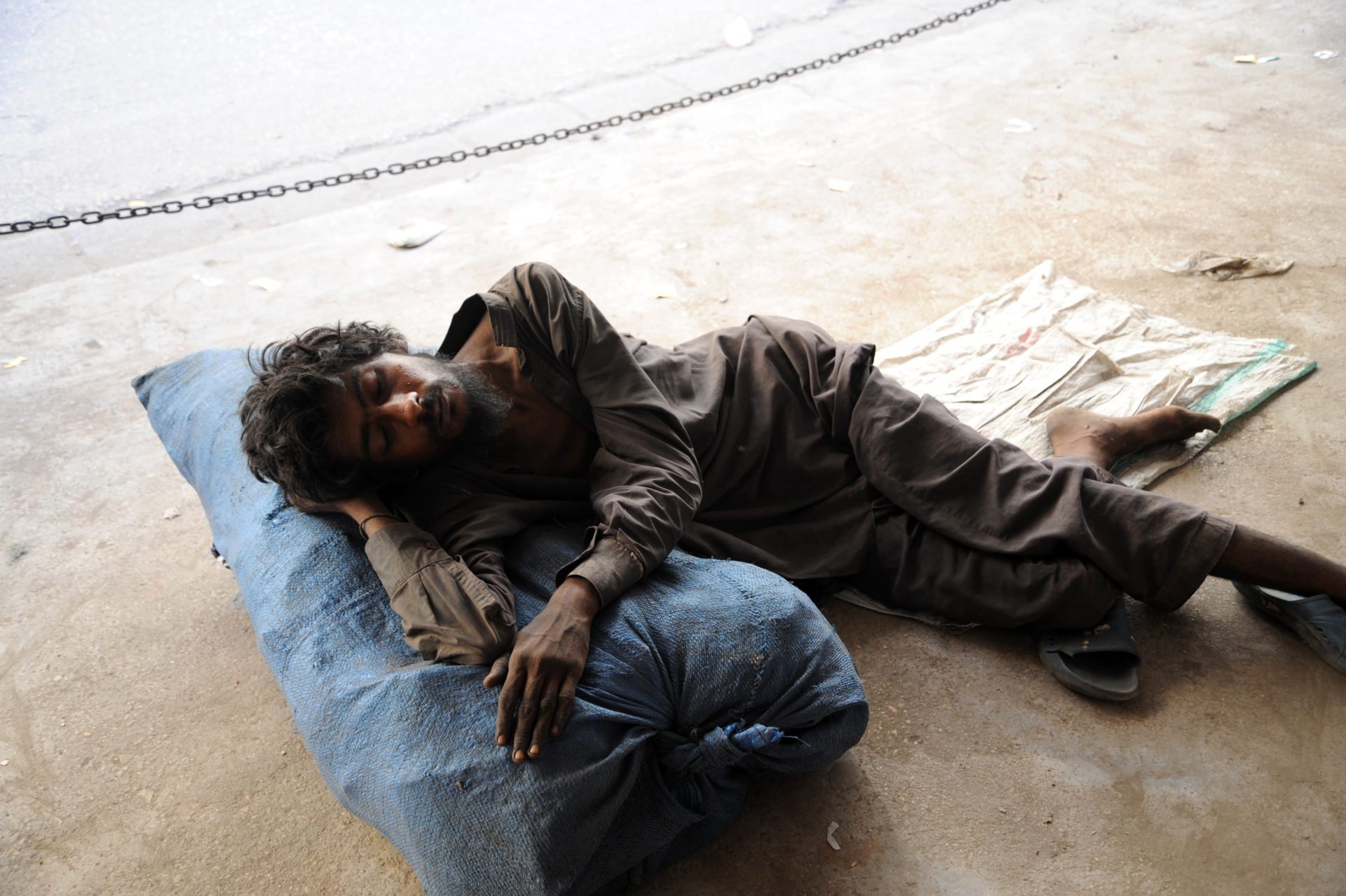
Promises of well-paid jobs and a better future. Online traps. Lures targeting minors. Human trafficking is one of the most widespread crimes in the world, including the European Union.
It encompasses various forms such as sexual exploitation, forced labour, organ trafficking, and child exploitation. Victims of human trafficking often come from countries outside the EU, but also from member states, and often belong to vulnerable groups seeking better life opportunities.
Human trafficking is a structured “industry” with close ties to organised crime and billions of euros in turnover. In an interview with Phileleftheros, Diane Schmitt, EU Anti-Trafficking Coordinator, spoke about the alarming dimensions of human trafficking, which is a cross-border crime affecting all EU member states.
Diane Schmitt referred to Cyprus’ efforts to combat human trafficking. The island is considered a destination country, with the most prevalent forms of trafficking being sexual exploitation and forced labour.
Through the European Strategy and the recently updated Directive, the EU aims to effectively tackle human trafficking, focusing on prevention, victim protection, and perpetrator punishment, while emphasising victim protection, assistance, and legal aid.
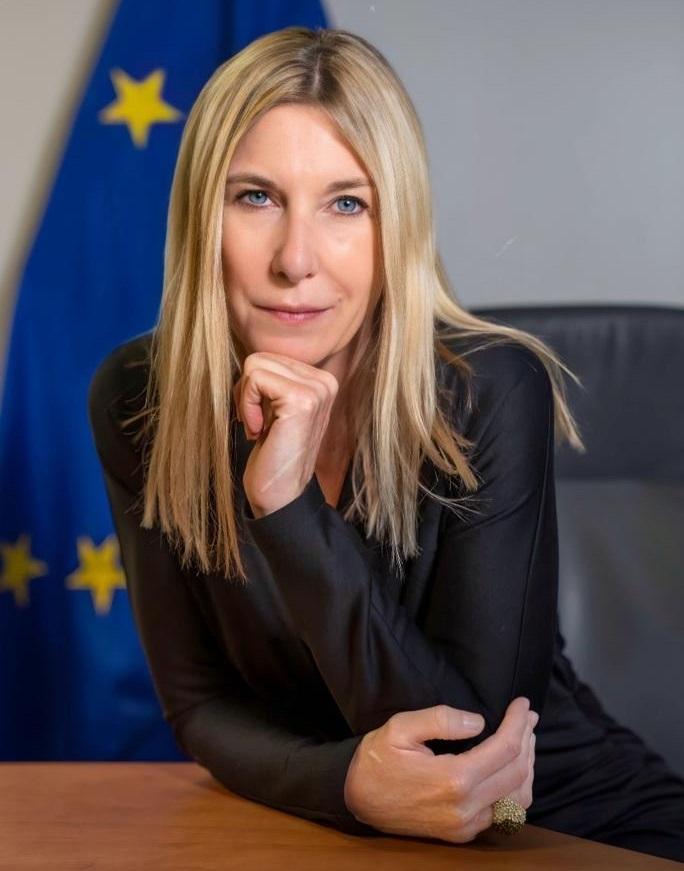
What is the situation on human trafficking in the European Union? Approximately how many are the victims, in what ways are they entering the EU and through which routes? What are the demographics of trafficking victims (age, nationality, gender, profile of victims and vulnerabilities)?
Trafficking in human beings is a complex criminal phenomenon. Not everyone is aware that it is happening in the European Union, including in Cyprus. Traffickers abuse the vulnerable situation of individuals to gain profit. Victims are often exploited in other countries than their own and traffickers, who are frequently of the same nationalities as their victims, are active across borders.
In 2022 more than 10,000 victims were detected and registered in the EU. The real number is much higher, as many victims remain undetected.
We noticed a change in the trends. While in the previous years, most of the detected victims were EU citizens, in 2022, 63% of the identified victims in the EU overall were non-EU citizens, mainly from Nigeria, Ukraine, Morocco and Bangladesh. We also noticed an increase in victims from Latin America. Some arrive legally and are exploited once in the EU, others are exploited on their way to the EU.
The majority of victims are women and girls (63% in the EU) trafficked for sexual exploitation. However, the number of men and boys is increasing.
Sexual exploitation remains the main form of trafficking during the last few years; however, we see an increase in labour exploitation, which might be linked to a better detection of this form of trafficking and a stronger involvement of labour authorities. In 2022, trafficking for labour exploitation represented 41% of all registered victims of trafficking within the EU, the same percentage as sexual exploitation. This does not mean that sexual exploitation decreased. It is often ‘hidden’ in private locations and online.
Other forms of exploitation increased also (18%) and include forced begging, forced marriages, illegal adoption, forced criminal activities, involving minors and adults in vulnerable positions.
Several factors increase the vulnerability of people to trafficking, including gender inequality, poverty, social exclusion, ethnicity and discrimination, which traffickers take advantage of, in particular, in high-risk sectors. For example, in the case of sexual exploitation, prostitution, escort services, massage parlours, bars and nightclubs are high-risk environments, whereas, in the case of labour trafficking, such environments can include the agricultural sector, construction, transport, hospitality, cleaning sector, domestic work, food manufacturing.
Migrants, in particular unaccompanied migrant children, are particularly vulnerable to traffickers as well as persons with disabilities and people from ethnic minority backgrounds, such as those belonging to Roma communities.
Can you talk to us specifically about child victims of human trafficking?
Child trafficking is a severe form of human exploitation. It also represents a major societal problem with victims exposed to short- and long-term physical, mental, psychological, and other profound development problems.
Child trafficking is also a heinous form of organised crime, which steadily evolves and becomes increasingly sophisticated and violent.
In 2022, child trafficking represented 15% of all victims of trafficking within the European Union, with an increasing number of victims remaining undetected. Children in the EU are trafficked for all forms of exploitation, mainly sexual exploitation and forced criminality but also for forced begging, forced marriage and labour exploitation. Criminal gangs are using young vulnerable boys (mainly with a migration background) to serve as drug mules, work on cannabis plantations, sell drugs, commit robberies or even shootings and other violent acts.
Digitalization, in particular the use of social media has led to a worrying increase in cases of underage prostitution leading to sexual exploitation, including online. In many cases, these are young children, who are very active on social networks and attract the attention of traffickers.
How effective is the EU Strategy on Combatting Trafficking? What are the key priorities and goals? What more should the European Union do to effectively tackle human trafficking?
The EU Strategy on combatting trafficking in human beings provides for a comprehensive response to the crime – from prevention through protection of victims to prosecution and conviction of traffickers.
The Strategy lays down overarching policy and operational and legal initiatives to combat human trafficking in a coherent and wide-ranging manner along the identified priorities. It sets concrete actions at the EU level coordinated by the EU Anti-Trafficking Coordinator, and at the same time invites Member States to carry out actions and aims at involving a multi-disciplinary and multi-agency approach with diverse stakeholders.
The Strategy focuses on four areas of action; 1. reducing demand that fosters trafficking for all forms of exploitation, 2. breaking the business model of traffickers, online and offline, 3. protecting, supporting and empowering the victims as well and 4. the international dimension of the crime.
Awareness-raising campaigns on the risks of trafficking are important means to detect and prevent crime. The European Commission launched a wide awareness-raising campaign last year to make the general public and employers aware of the risks of trafficking in human beings. The campaign targets also victims and those who are at risk of becoming victims, so that they recognize the signs and who to turn to for help. National helplines are published online.
Moreover, in line with the Strategy, the Commission evaluated the Anti-Trafficking Directive of 2011 and assessed the need for a modernisation of the legal framework to better address new challenges. As a result, a new revised Anti-Trafficking Directive was adopted last month, on 13 June 2024. As one of the major improvements, it makes it mandatory for all Member States to criminalise the knowing use of services provided by victims of trafficking. This is an important measure towards stepping up demand reduction across the EU and clearly shows that such conduct cannot be tolerated.
To tackle the culture of impunity, the new rules introduce a robust criminal justice response, enhancing law enforcement and judicial cooperation across borders encourage systematic training of law enforcement and judicial practitioners on detecting and addressing trafficking in human beings.
Another important area of the Strategy is protecting, supporting and empowering the victims. The role of civil society is crucial in implementing this area of action. The Strategy seeks to improve the early identification of victims and their referral for further assistance and protection, strengthen victim empowerment programmes and facilitate re-integration. Based on the new Anti-Trafficking Directive, formal Referral Mechanisms became mandatory in all EU Member States to better support victims. This will improve early identification and referral for assistance and support for victims, which will also create the basis for a European Referral Mechanism by the appointment of a single national focal point to ensure cross-border cooperation.
One of the main challenges raised in the last few years, an area that could be further reinforced, is the online dimension. Social networks and other platforms become more and more the preferred method for the recruitment and control of the victims, but also for their exploitation. The ‘lover boy’ method, by which traffickers try to make their victims fall in love with them to manipulate them, is moving for example more and more online. Also, fake job advertisements attract future victims who are looking for work and are trapped in exploitation.
The different actors involved in the combat against trafficking have to adapt to the digital dimension of their way of operating in terms of prevention, detection of victims and investigations. This includes adequate training and new capacities as well as the right legislation. The new Directive introduces an aggravating circumstance for sexual exploitation online with more severe penalties.
Additionally, operational cooperation between law enforcement and judicial authorities of EU and non-EU countries with the involvement of EU agencies such as Europol and Eurojust is essential. For example, joint actions, called hackathons, allow to identification of platforms on which trafficking is happening, criminals and victims who need help. Cooperation with online platforms is also key. These platforms have a clear responsibility. Dialogue and cooperation with online platforms are taking place in the EU Internet Forum to address the online challenges.
What is the turnover of human trafficking? What other forms of organized crime human trafficking is related to?
Trafficking in human beings is a serious form of organised crime, often committed by polycriminal and well-structured criminal networks, operating also internationally.
Trafficking in human beings is also still a high-profit, low-risk crime.
At a global level, the International Labour Authority estimates illegal profits to US$236 billion annually, representing almost US$10,000 profit per victim. Although, there is no breakdown for the EU as such, for Europe and Central Asia the profits per victim are the highest and bring 21 284 US to the perpetrators.
Europol reports that 55 of the most threatening criminal networks engage in trafficking in human beings as one of their main activities. Sexual exploitation is the sole core business for 18 criminal networks, labour exploitation of 13 networks and 5 networks specialised in other forms of trafficking.
Moreover, numerous criminal networks combine human trafficking with other crime areas, such as drug trafficking, organised property crime and migrant smuggling. Document and identity fraud often facilitates human trafficking activities.
The risks for perpetrators remain too low. According to the 2022 data, there is a 16,4% decrease in detected suspects compared to 2021. Prosecutions and convictions for trafficking offences went also down. 17% fewer convictions than in 2021. In some countries, sentences are too lenient. If traffickers are not sanctioned or the penalties are too low, they will simply continue their ‘business’.
To strengthen prosecution and break the business model of criminals, together with Eurojust we established a focus group of specialised prosecutors to reinforce the judicial aspects of trafficking and provide a common forum to discuss the common challenges of the prosecution. The third annual meeting took place last week.
High profits confirm that financial investigations are extremely important. They can contribute to gathering evidence which would contribute to increased prosecutions and convictions.
What is your assessment of the current human trafficking situation in Cyprus? Do you have data on Cyprus and the turnover of human trafficking?
Cyprus is predominantly considered to be a destination country for trafficked persons.
Most of the victims are women and girls (75%). The number of child victims represented 13% in 2022.
During this period there was a significant increase of human trafficking cases for forced criminality. It was also observed that labour exploitation took place in most of the cases in the agriculture sector and sexual exploitation in private apartments and in the domestic sector.
One of the challenges that Cyprus has to face, like all Member States, is the detection and identification of victims. Persons coming into contact with a victim do not always recognise the signs and sometimes the victims themselves are afraid to ask for help. Therefore, training for professionals likely to come into contact with victims, including law enforcement, judiciary, labour inspectors, immigration and asylum officers, border guards and social workers, is crucial to promptly assist, support and protect victims of trafficking in human beings. Once they are detected victims have to be referred immediately to the competent services for protection. Awareness raising also contributes to preventing the crime from happening, detecting, identifying and helping victims as well as stopping traffickers and bringing them to justice. Cyprus has launched several awareness-raising campaigns in the last years.
As mentioned before, the online dimension is another challenge and at the same time an opportunity to collect e-evidence. Information and communications technologies and social networks become more and more the preferred methods of recruitment and control of victims. They have also an important role in the investigation process as well as in different prevention activities. Therefore, cooperation with online platforms is key.
What initiatives has Cyprus implemented to combat human trafficking, and how effective have these measures been? And on the other hand, what measures should have been taken and were not taken? What should Cyprus do to effectively deal with human trafficking? Do you have any recommendations to make?
To combat trafficking in human beings effectively, a comprehensive approach is needed, which involves many actors, including civil society organisations, and requires good coordination, the right legislation and adequate human and financial resources.
One of the priorities for all EU Member States will be the transposition and implementation of the new Directive.
Cyprus will have to introduce new forms of trafficking foreseen in the revised EU legislation, exploitation of surrogacy, forced marriages and of illegal adoption, in case it is not yet in the national legislation.
As already mentioned, EU countries are required to establish Formal Referral Mechanisms, enhancing early identification and assistance of victims. Cyprus has already an established referral mechanism, including services such as social welfare services, acting as the first response authority and also coordinating all procedures for support to victims, the police, the asylum service, medical services and psychiatric services for medical support, labour department.
Moreover, the known use of services provided by trafficking victims becomes now a criminal offence for sexual and labour exploitation. Cyprus legislation provides already for the criminalisation of the use of sexual services and has a first concrete case which led to a conviction.
Furthermore, another new measure under the new Anti-Trafficking Directive is the mandatory establishment of National Anti-Trafficking Coordinators and the adoption and regular updates of National Action Plans. In Cyprus, there is a multidisciplinary co-ordinating group. Moreover, Cyprus adopts regularly national action plans with the last one covering the period 2023-2026, aiming at strengthening the prevention and reduction of risks for victimization, suppressing crime and protecting the victims.
Like in some other Member States, the prosecution and conviction of traffickers remains also a challenge in Cyprus. Close cooperation between law enforcement and judicial authorities with the support of the EU agencies in the context of operational actions, is important to bring criminals to justice. Adequate training, specialised units and prosecutors at the national level with the necessary capacity and resources and exchange of best practices can contribute to the prosecution and conviction of traffickers and effective dissuasive penalties.
How does Cyprus coordinate with other EU member states and both foreign and local NGOs in its anti-trafficking efforts?
Combatting trafficking in human beings effectively, involves many actors, including civil society organisations and requires good coordination. Member States must work together as well as with non-EU countries of origin and transit of victims and traffickers.
The National Anti-Trafficking Coordinators come together twice a year in meetings, which I chair as EU Anti-Trafficking Coordinator. Civil Society Organisations also participate in those meetings through the EU Civil Society Platform against trafficking in human beings. Moreover, the two networks meet online regularly when needed. For example, when the military aggression against Ukraine started and so many women and children arrived in the EU, we reacted very quickly to mitigate the risks of trafficking. Through dedicated meetings with the National Coordinators and the EU Agencies, we developed the Common Anti-Trafficking Plan to address the risks of trafficking in human beings and to support potential victims.
The EU also facilitate joint coordinated investigations and prosecutions. The EU agencies, including Europol, Eurojust, Frontex, and the European Labour Authority, provide operational support, which results in concrete results, the identification of suspects and victims as well as in the confiscation of criminal assets. A recent example of good coordination and cooperation across sectors and actors is the joint action days against trafficking in human beings which took place at the beginning of June, involving 39 countries, including Cyprus, from across the globe, Europol, Frontex and INTERPOL. It resulted in the identification of over 1,374 victims, including 153 children, in the arrest of 219 persons and the seizure of 2 074 criminal assets.

