


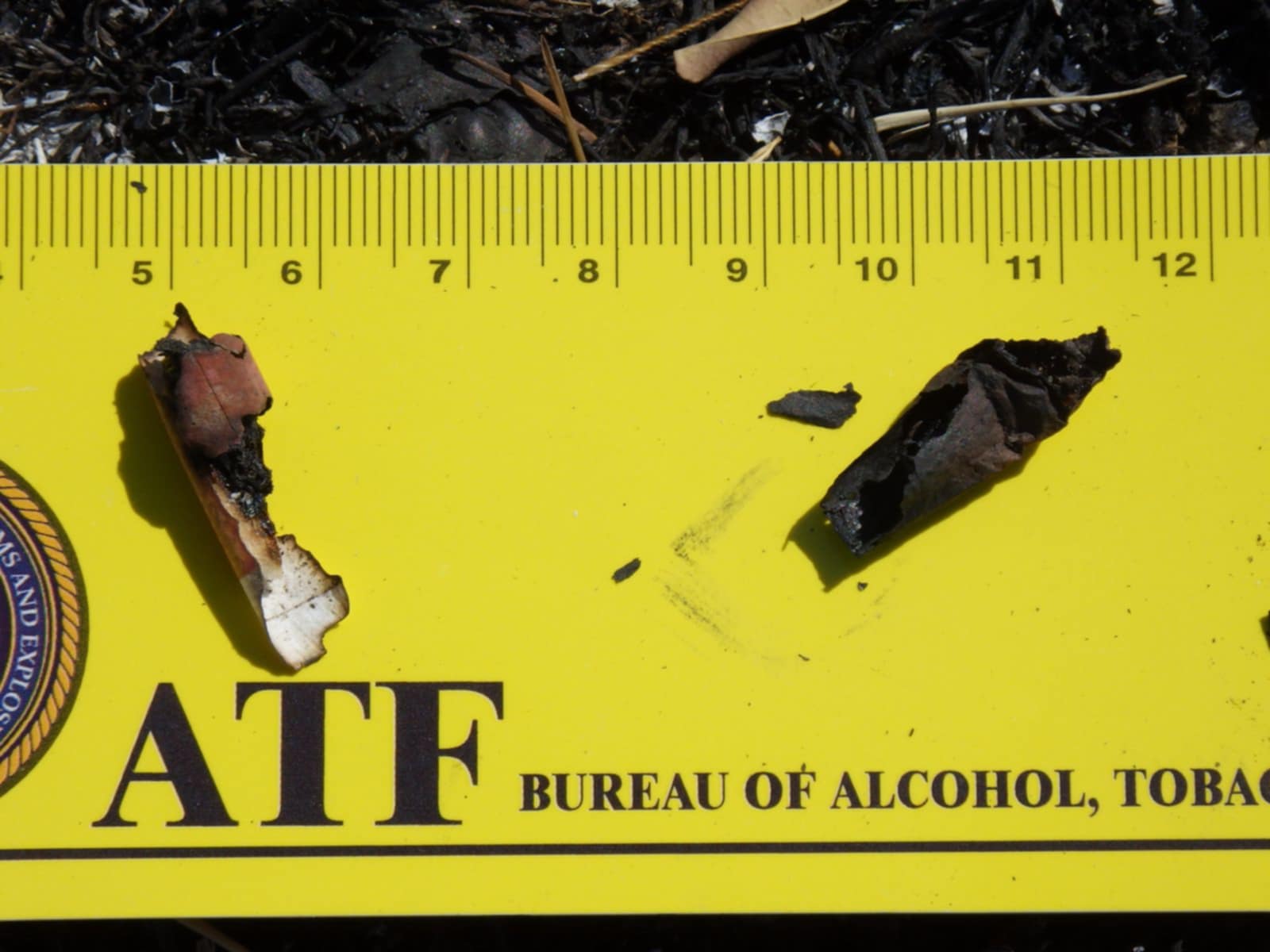
Two discarded cigarette butts caused the mountain fire that burned through Limassol on 23 July, American investigators have concluded in their investigation report.
The cigarette butts, discovered by fire investigators at the ignition point, have been handed to Cypriot authorities for DNA analysis in hopes the genetic material survived the blaze. Officials will cross-reference any recovered DNA with the Republic’s database for potential identification.
The Bureau of Alcohol, Tobacco, Firearms and Explosives (ATF) team pinpointed the fire’s origin to a precise 30cm by 30cm area beside the Malia-Arsos road, where they found multiple cigarette butts. Two showed thermal damage indicating they were the ignition source.
“The ignition point was limited to an area of exactly 30×30 centimetres at the edge of the Malia-Arsos road,” the report states. “Cigarette butts were located at the point, two of which showed thermal alterations, indicating they constituted the ignition source.”
DNA analysis underway on cigarette evidence
Following systematic on-site investigation, witness testimony analysis, video and photographic evidence review, and meteorological data evaluation, investigators determined the fire began on the eastern side of the road connecting Malia to Arsos. After excluding other potential causes, they attributed the blaze to careless cigarette disposal that contacted dry vegetation.
The investigation categorised the incident as an “accident” rather than deliberate arson. Cyprus authorities are now attempting to extract DNA from the cigarette evidence, though success depends on whether genetic material survived the fire’s intense heat.
Fire spread at 60 metres per minute in extreme conditions
The fire’s rapid development demonstrated the extreme danger posed by the prevailing conditions. At 1:26pm, witnesses reported a single fire source measuring approximately one metre high and three metres wide. Within 17 minutes, by 1:43pm, flames had already spread across 1.5 hectares. By 1:55pm—just 29 minutes after the first report—the burned area reached two hectares and fire had invaded the Malia settlement.
The region’s topography proved catastrophic, allowing flames to spread in all directions regardless of primary wind direction. Strong winds combined with local terrain patterns created spread rates of 60-63 metres per minute, multiplying intensity and danger.
Weather conditions on the day created 100% ignition probability: temperatures reached 39°C, humidity dropped to just 19%, following prolonged drought, with winds reaching Force 9 on the Beaufort scale.
The ATF team comprised leading specialists across multiple disciplines who collected evidence from the ignition point using documented scientific methods. Their information came not only from service reports but through interviews, collected materials and on-site investigations to ensure the most substantiated recording of all events and data.
Investigators cross-referenced electricity supply interruption sequences from the Electricity Authority as one method to calculate the fire’s spread progression with measurable time points, comparing this against service reports and other evidence.
The first emergency call was made to police and fire services when flames erupted beside the road between Malia and Arsos villages. The fire ultimately burned approximately 10,117 hectares before being brought under control within two days of outbreak.
One witness, a furniture maker travelling from Lofou to Arsos, spotted the small fire source on the Arsos-Malia road and called the fire service at 1:26pm. He reported the fire’s height at approximately one metre with a three-metre spread, expanding rapidly north and south along the road into dense vegetation.
The first response came from Pachna Fire Station with two firefighters. One told investigators that upon arrival, flames had already spread into the valley east of the road and reached approximately halfway up the opposite ridge. The fire quickly approached Malia, burned through the village and continued southward.
Parliamentary inquiry continues into disaster response
The parliament continues its joint committee session today, examining the disaster response. Approximately 130 invitees are expected, including 89 ministers and heads of involved departments and services. The 26 committee members have prepared around 140 questions sent to those involved following the initial 5 August session.
Read more:

