



Significant safety hazards are developing across municipal road networks due to poorly maintained pedestrian crossings, where worn and severely faded markings often become completely invisible to drivers, particularly in areas lacking adequate vertical traffic signage.
The deterioration of road paint affects all local authorities to varying degrees. High-traffic thoroughfares naturally experience accelerated wear, meaning the breakdown of visible boundary lines is most pronounced on central arterial roads.
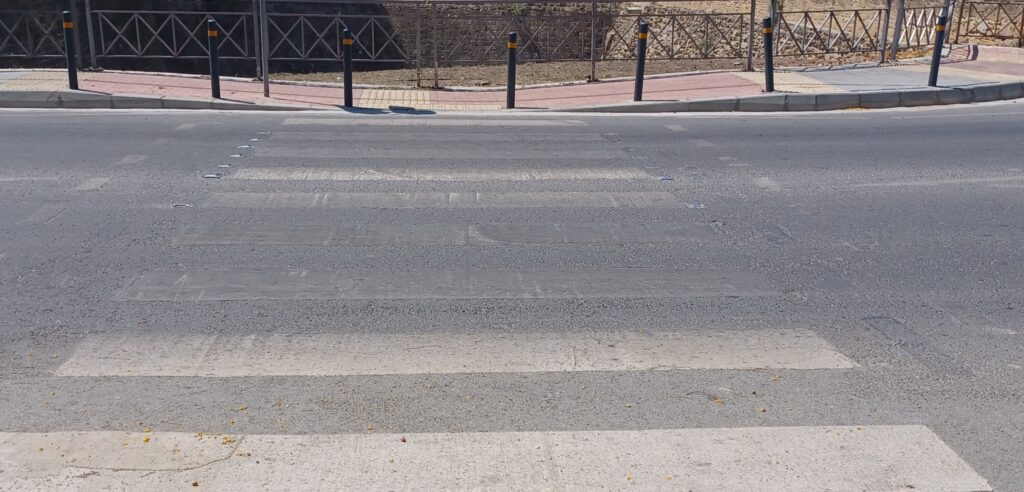
In response to inquiries regarding municipal maintenance schedules, a Nicosia Municipality official stated that regular upkeep is carried out, explaining that absolute priority is given to crossings located near educational institutions. Consequently, these specific markings are systematically refreshed between late August and early September to ensure optimal visibility prior to the start of each new school year.
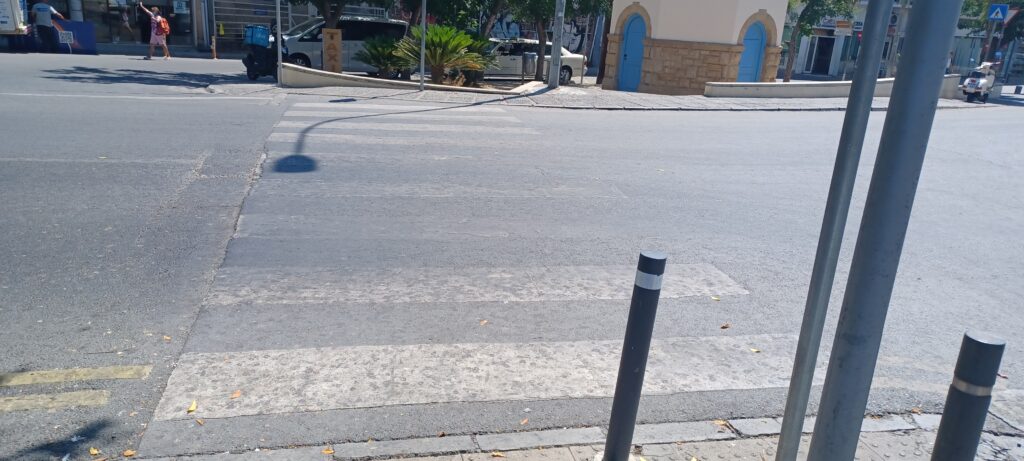
The municipal official further explained that the summer months are not suitable for application because extreme heat causes accelerated degradation of the paint, making mid-summer applications highly counterproductive.

Conversely, periods characterized by exceptionally low temperatures are also technically unsuitable for road marking operations. Inspections of the network reveal that the damage is not limited to uniform fading; in many instances, large fragments of paint physically peel away from the asphalt, rendering the crossings completely unidentifiable.
Refurbishing these essential traffic control markings demands substantial financial resources. In the municipality of Nicosia alone, annual maintenance costs exceed €100,000, illustrating the recurring fiscal burden placed on local budgets each year to sustain basic infrastructure visibility.
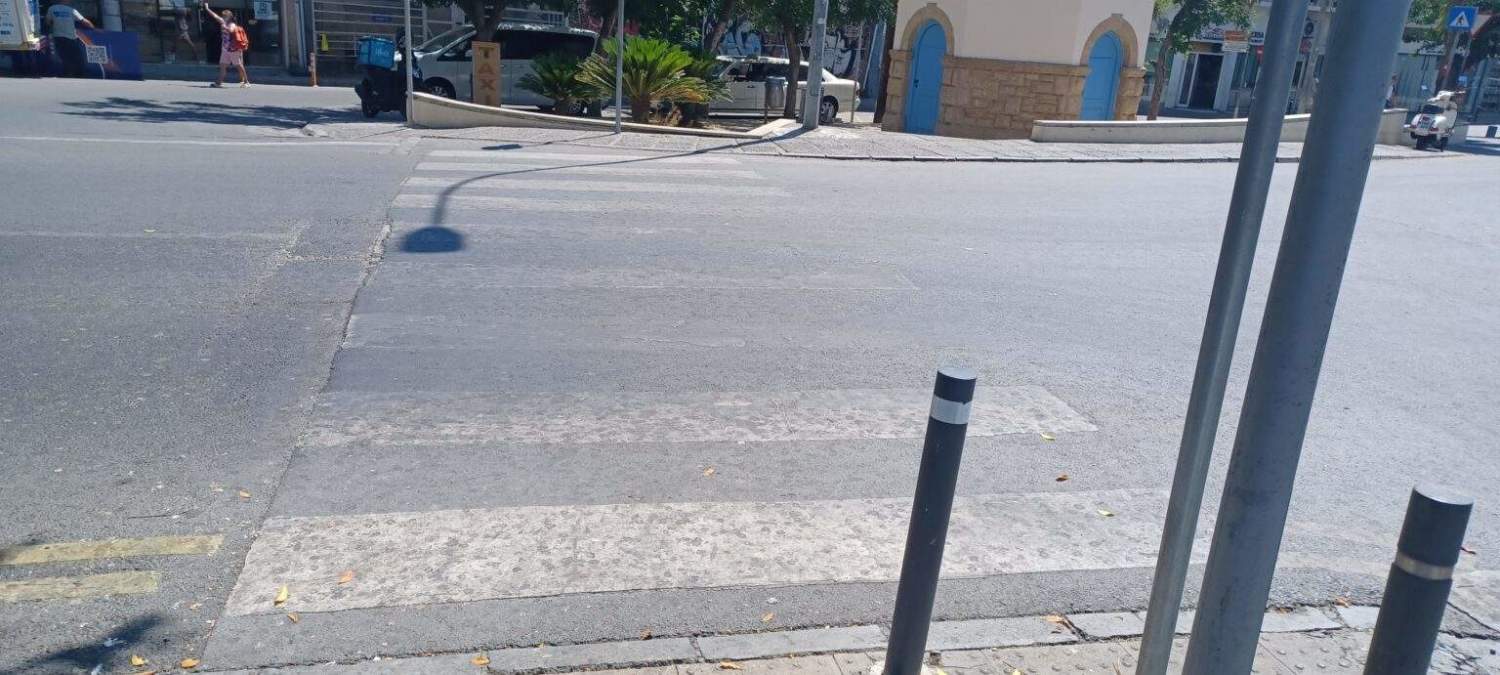
The legal obligations governing these duties are explicitly delineated under Article 42(1) of the Municipalities Law. The statute mandates that municipal councils must direct and regulate all local affairs to protect, develop, and continuously improve the interests and quality of life of the local community as a whole, alongside the natural and built environment, as prescribed by the laws of the Republic.
Furthermore, regarding development and infrastructure sectors, the legal framework dictates that local authorities are responsible for executing studies for the construction, maintenance, cleanliness, lighting, and general use of roads, bridges, pavements, pedestrian paths, and cycle lanes falling within municipal boundaries. They are also legally empowered to control the construction, alteration, closure, or redirection of these pathways while preventing any form of obstruction that hinders free public passage.

The legislative framework additionally stipulates that municipalities must ensure the maintenance, cleanliness, illumination, and unobstructed use of primary arterial roads situated within their administrative territory, explicitly excluding national motorways from their jurisdiction.

