


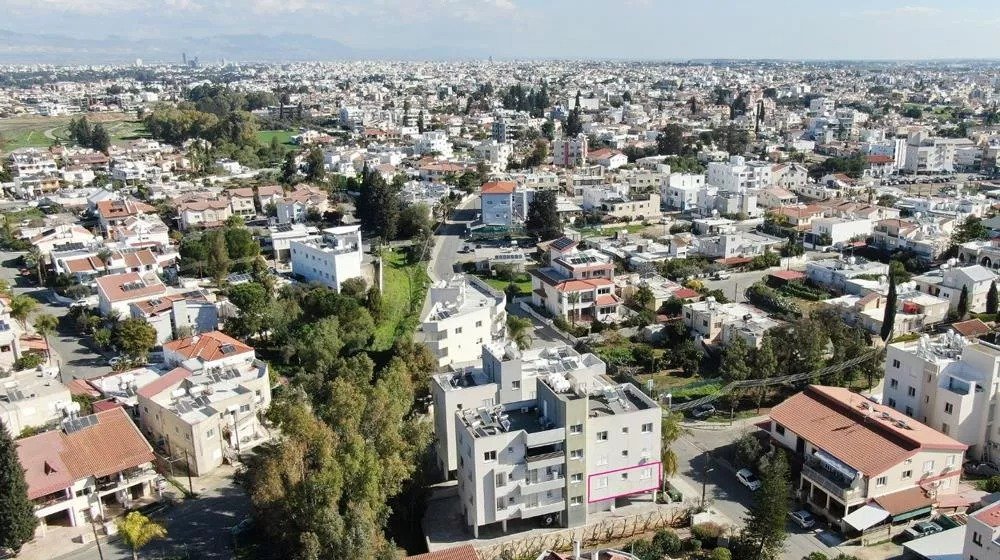
Apartment blocks in Cyprus could collapse and kill people in a minor earthquake, requiring urgent regulation of dangerous buildings, the general secretary of the Cyprus Scientific and Technical Chamber (ETEK) warned parliament.
Andreas Theodotou, a civil engineer and the chamber’s general secretary, addressed the House Interior Committee during discussion of a legislative proposal by MP Marinos Moushiouttas aimed at regulating the dangerous buildings problem.
The issue must be resolved as quickly as possible, Theodotou said.
“We must understand that public safety in general is very important, so we must find a way to ensure it, because the situation is very difficult,” Theodotou told the committee.
Problem most severe in Nicosia and Limassol city centres
The problem is primarily observed in Nicosia and Limassol, particularly in their city centres, though dangerous buildings exist in other areas and cities as well, according to Theodotou.
The chamber has raised the issue of regular building inspections over time and believes the measure must be implemented at some stage, he said.
Theodotou suggested that support and restoration of dangerous buildings could begin with communal properties, where more people reside compared to individual buildings.
Regarding fines proposed in Moushiouttas’s legislation, Interior Ministry representative Kyriakos Kouros supported imposing €2,000 for fencing dangerous buildings and €1,000 for sealing them when owners do not undertake the required work themselves.
Legislation on communal buildings stalls over jurisdiction dispute
Meanwhile, discussion of legislation to regulate communal buildings, where nearly half of Cyprus’s population resides, ended inconclusively, with the bill now in limbo.
The discussion stalled because the Interior Ministry assigned responsibility for handling the matter and general supervision of communal buildings to the District Local Government Organisations without consulting them or approving resources to hire staff to handle cases.
“We became the scapegoat,” said Nicosia District Organisation president Constantinos Yiorkadjis. He noted that responsibility for dangerous buildings issues, previously held by local authorities, was also transferred to the organisations without consultation.
Yiorkatjis observed that fees provided for monitoring management committees and communal buildings generally are disproportionately small relative to anticipated expenses. “Our position is negative,” he said.
District organisations object to new responsibilities without resources
Larnaca District Organisation president Angelos Hajicharalambous echoed these concerns. “We took on dangerous buildings as well, also without secured compensatory fees, whilst we were assigned many other responsibilities we must meet,” he said, adding that the organisations should not continually face fait accompli situations.
Interior Ministry representative Efi Savvidou noted that when the issue was discussed last November, a district organisation official raised no objection to the bill’s provisions.
Committee chair MP Damianou questioned whether the ministry considered one official’s position last November as constituting consultation with the organisations, especially given that two provincial organisation presidents had just clearly disagreed with transferring responsibility for communal buildings.
MP Moushiouttas, who initially supported regulating the matter, observed that issues must be resolved because citizens will be served.
The committee chair said AKEL would not vote for the bill if the issue is not resolved, granting time until 23 October for the ministry to consult with the provincial organisations to clarify the entire matter.

