


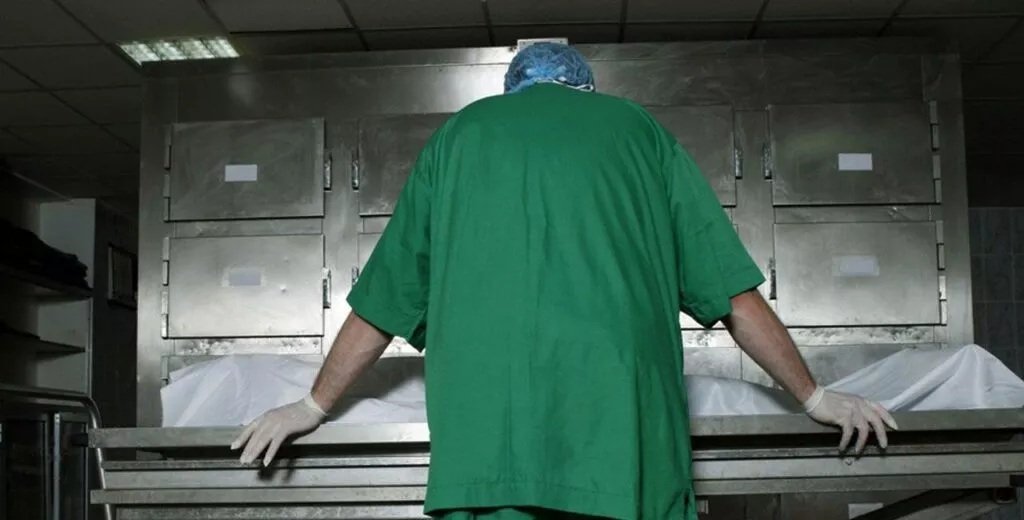
A British man’s body was found under another person’s name at Nicosia General Hospital on Wednesday, about a month after the Audit Office warned of shortcomings in the controls used to track bodies.
The Audit Office set out the risks of misidentifying bodies in a report published about a month ago. “The way the state treats the dead is a measure of civilisation, dignity and respect,” the report said.
Its officials had visited the mortuary at Paphos General Hospital after a fault in its refrigeration unit, when bodies were moved to Limassol General Hospital. They found several weaknesses in the forms used to receive, transport and hand over the bodies. They concluded that there were shortcomings in the controls for tracking them, creating a risk that the places where bodies were kept would be recorded incorrectly and making them hard to find when needed.
In the case of the British man, a wheelchair user who died after landing in Paphos on 9 September, the error appears to have been made in Paphos. An internal inquiry is under way to establish where it occurred.
Measures need to be taken, mainly in Paphos district. No member of staff at Paphos General Hospital records the bodies that enter and leave it, Phileleftheros understands, and the task has been taken on by a funeral home.
Identification problems are compounded because all bodies are taken to the Nicosia mortuary, including both patients who die in hospital and cases handled by forensic pathologists. As a result, bodies get mixed up and are difficult to identify. Phileleftheros understands that this is because forensic pathologists refuse to travel to mortuaries in other towns to carry out post-mortems.
The decision by the health and justice ministers to open the mortuaries in Limassol and Paphos is set to resolve this.
Health Ministry spokesman Dimitris Konstantinou called the mix-up a very serious mistake and said the ministry would examine whether there were gaps in its procedures. Speaking to Omega, he said it involved one body, not two, and that the correct name had not been placed on the body.
Asked whether understaffing might have caused the error, Konstantinou said he would not attribute this case to a lack of staff. He said he would be lying if he claimed the wider issue of how bodies are handled was not a concern. “It concerns us greatly,” he said. He added that legislation concerning the State Forensic Service is being prepared.
The body could not be found at Nicosia General Hospital until checks using the man’s passport photograph showed that the chamber where it was kept carried a tag with a different name. Police had been involved, but ended their investigation once the body was found.
The man had lost consciousness as he was being taken off the plane by a special lift. He was taken by ambulance to Paphos General Hospital, where he was pronounced dead. A post-mortem at Nicosia found that he had suffered a heart attack.

