


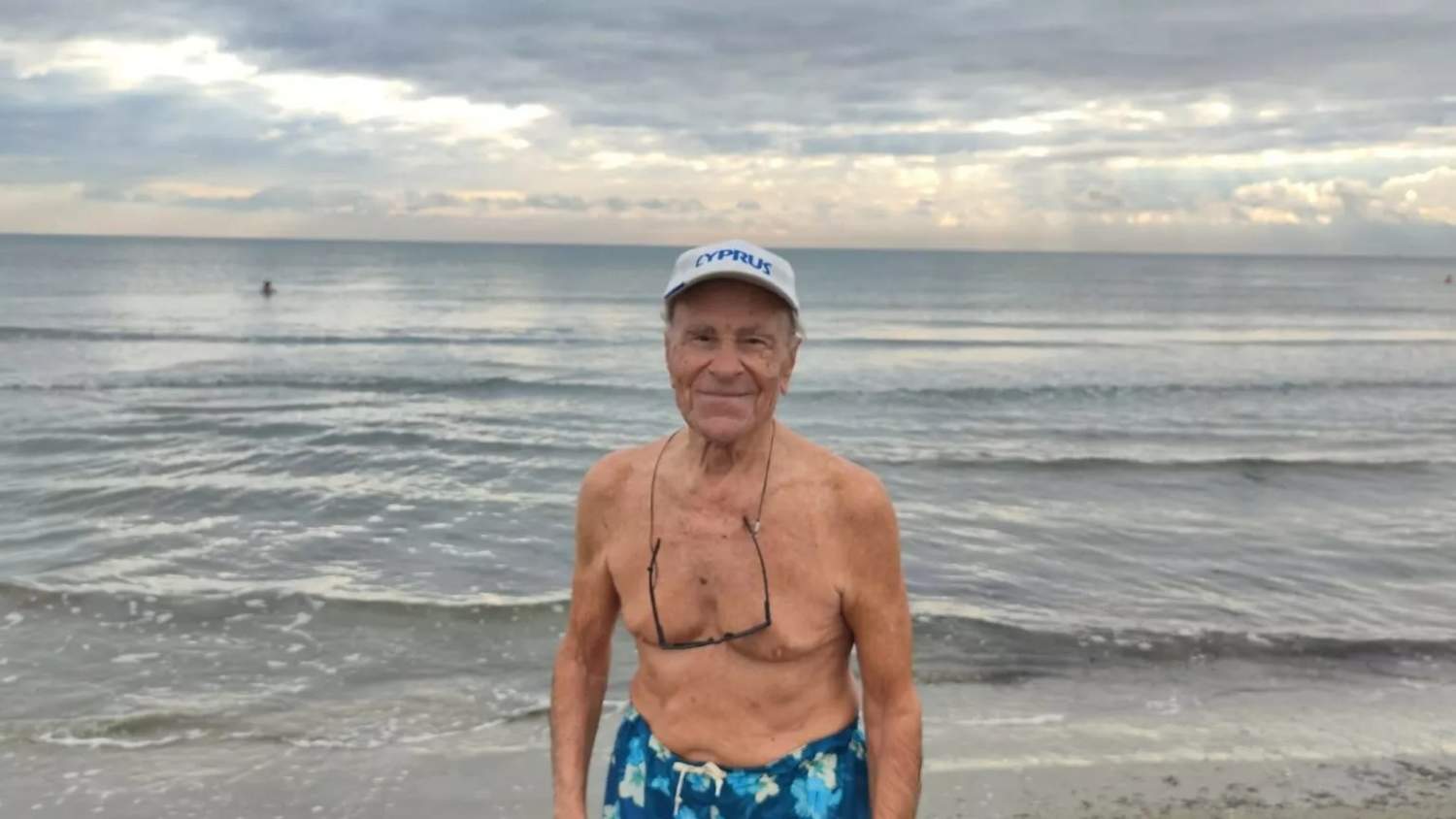
It was 8.30 in the morning and the temperature had barely crept above ten degrees — bitterly cold by Cypriot standards. As I stood there trying to warm up, I spotted a figure moving slowly out of the sea and started taking photographs.
The closer he got, the more convinced I was that I had the wrong person — he looked at least twenty years younger than he should have. I was already rehearsing my apologies when he stepped out of the water and I realised: I had the right man after all.
Andreas Lambrou is 93 years old. He is the oldest winter swimmer at Mackenzie Beach and one of the most recognised and respected faces of its morning life.
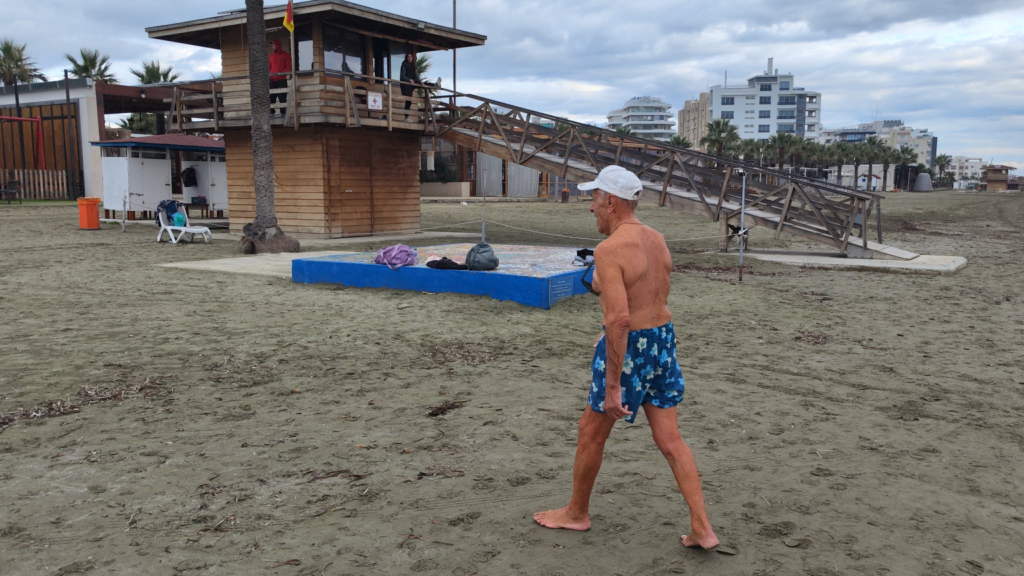
I had seen him once before at a winter swimmers’ event, and several people had urged me to seek him out, saying he was someone worth listening to.
During our conversation, I came to understand that it is not only his years that command respect, but a wisdom that flows from his positive outlook on life and his belief in the supreme values of peace, love and friendship.
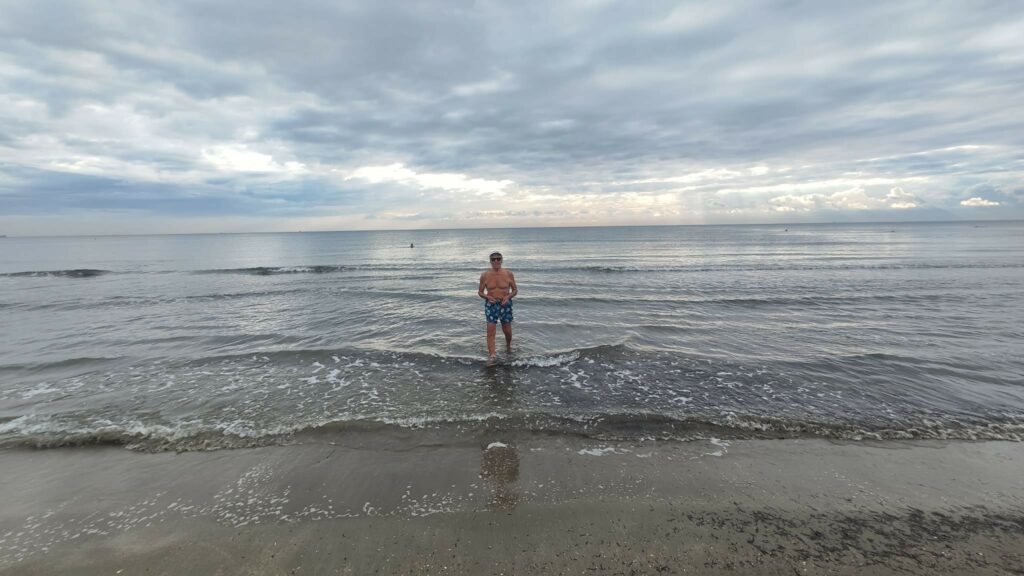
He was born in Deryneia in December 1932 and grew up in occupied Famagusta, where he worked as manager of a trade union pharmacy.
After the invasion, he found himself in Larnaca, and together with his beloved wife Elli — who passed away seven years ago — he established the Larnaca-Famagusta trade union pharmacy on Ermou Street 93.
Alongside their work, the sea was their great shared love: going out in a small boat to fish, or swimming in the clear blue water.
“I’ve been swimming since I was ten,” he told me. “I taught myself — there were no teachers back then. I swam in Deryneia, and later at Golden Beach in Famagusta, the best beach in Cyprus. In Larnaca, we used to go to the sea some mornings and then open the pharmacy. But from the first day of my retirement — thirty years ago now, I remember it was the 1st of January 1996 — I have come to Mackenzie every single day.”
He is a founding member of the Larnaca Winter Swimmers Club, which now has 300 members. His routine is precise and unhurried. The night before, he packs his bag: water, a banana and two breadsticks.
“The banana has magnesium and vitamin B6 — it helps the muscles and the mind,” he explained. In summer he arrives at 7am; now, at 7.30 or 7.45. When he gets home, breakfast is milk and oats. “Milk helps because it has calcium.”
He hears often — even from doctors — that he looks far younger than his age. He puts it down to exercise and a balanced diet. “Swimming constantly and being in the sea every day has certainly played a positive role in keeping me well, physically and mentally. Sometimes I even run along the beach. And every afternoon, as the sun goes down, I walk for another half hour.”
He eats almost everything, he said, but not in large quantities — protein mainly from dairy and meat. He does not drink alcohol because he simply does not like it, though occasionally someone pours him a little zivania. He has never smoked. He tried a cigarette at sixteen and did not smoke more than forty in his entire life.
“Happiness means being well in body and mind”
I told him he seemed to have found the meaning of life, and asked him what happiness really is. His answer was a lesson for all of us.
“Happiness is not having a luxury home and inviting your friends over to show it off. Happiness means being well in body and mind. Facing life with a positive spirit, because life is short. You must always enjoy it in the spirit of dignity, honesty and humanity. You must live, as much as possible, without enemies — make friendships, and love the people around you. They say that friendship and love are twins: they give life value and meaning, and a thousand reasons to be glad. That is why we must all love one another. Life is small and short — let us never forget that.”
“Peace must exist both outside and inside us”
At some point our conversation turned, inevitably, to everything that has been happening lately — in Cyprus and beyond. To that torrent of bad news that has darkened so many souls. He said it reminded him of the period before the Second World War broke out.
“When you hear all this, you think: where are we? Where are we heading?” He is against war, he said plainly. “I say that in one hand we hold the flag of love and friendship, and in the other — held even higher — the flag of peace. Without peace, we have no love — or if we do, it is a broken one — and no friendship either. Peace must exist both outside and inside us.”
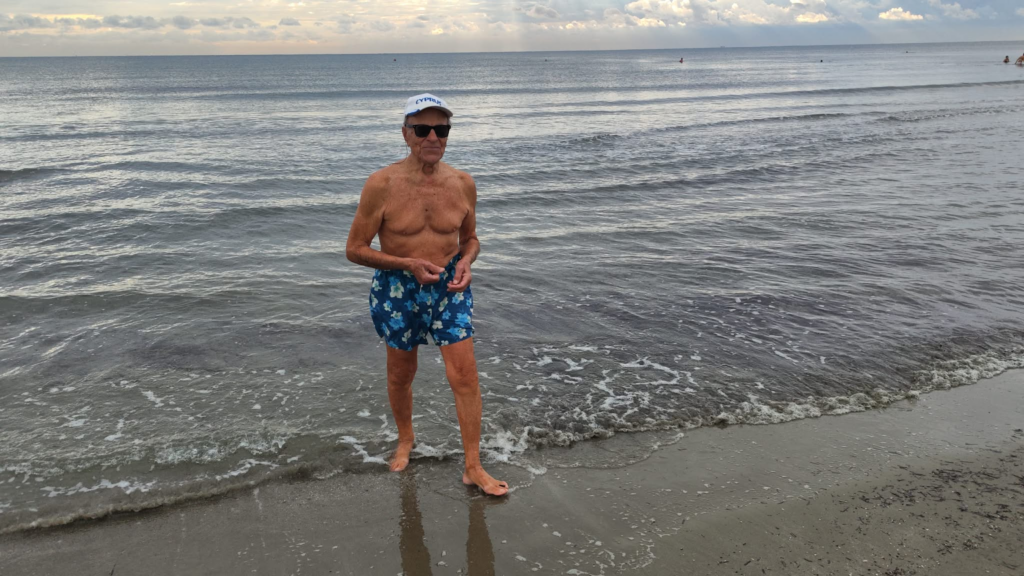
He paused. There was something, he said, that he wanted to share — something that had marked his childhood and was, in all likelihood, the seed of his deep aversion to war.
“Something happened that made me see the world differently. In 1939, when I was in the first year of primary school, the Second World War began and many Cypriots went to fight. I was outside when someone told me: ‘Your father has gone to war too, Andrikko.’ I went home, said nothing to my mother, stood behind the door — and I think a tear fell. I kept hearing that Hitler was killing soldiers. I thought: everyone will have a father, and I won’t. I still remember that. My father fought on various fronts and came back in 1945, when the war ended.”
He went on to graduate from the English High School in Famagusta. He had wanted to study economics in Britain, but life required him to earn a living and he went straight into work.
Along the way he completed a Business Administration diploma by correspondence. He is an excellent user of the Greek language, and also speaks English, French and some Italian.
“I first worked in a shop selling motorcycles, then at a food import company. Then the trade union pharmacies came along and the PEO — of which I was a member — suggested I work in one as an accountant and cashier. A girl I knew from school came to the pharmacy to train as a pharmacist. That was Elli, whom I married in 1959, after she had completed her degree in chemistry. Then the war came, and we left in a rush — with two children, aged nine and twelve — and came to Larnaca. Larnaca received us very well, and that is something I always say. We had a wonderful life together, my wife and I. She was a very good person.”
In this strange and disorienting time — one that seems determined to trample on the most fundamental human principles and drive us away from what matters most — words from people like Andreas Lambrou carry a particular weight.
They carry it because they come from the healthiest part of Cypriot society, and that is a part we owe it to ourselves to listen to.

