


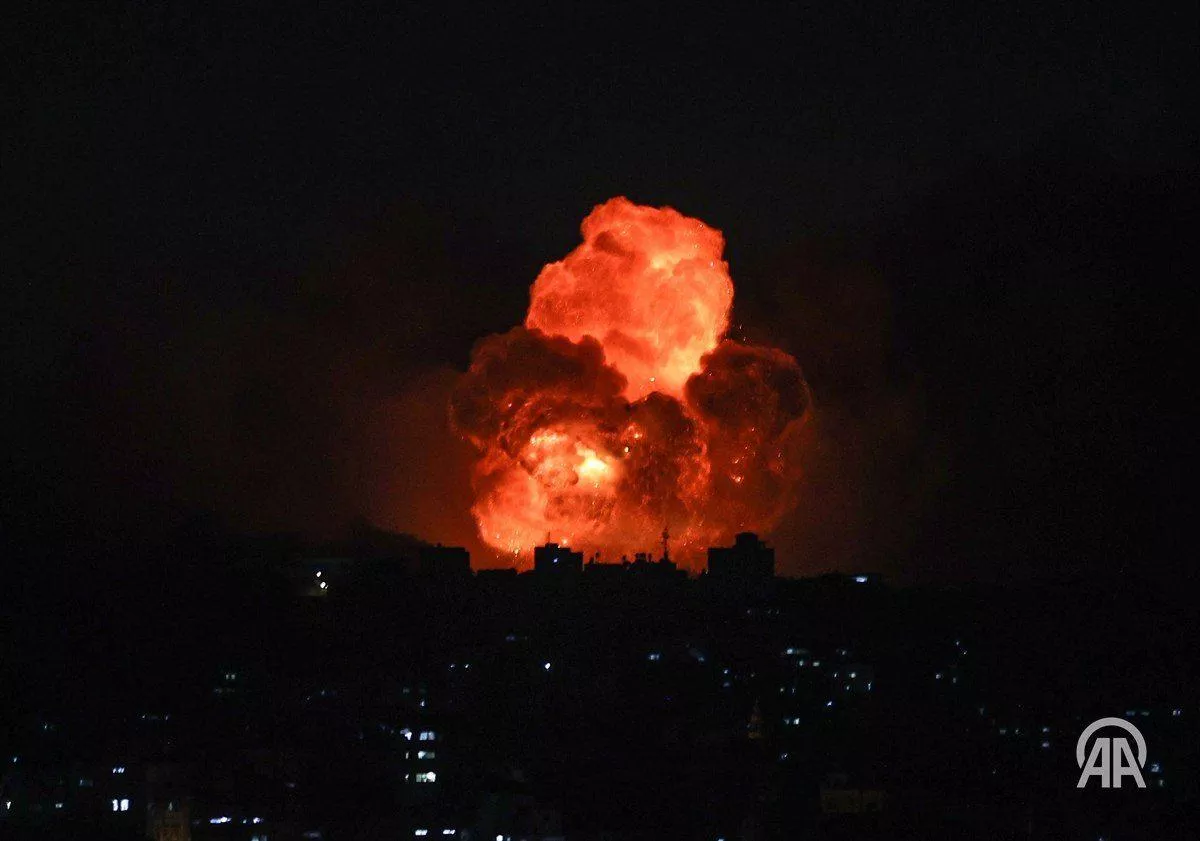
The Israeli attack near the presidential palace in Damascus was only the beginning, as western and Arabic media report widespread bombardment across many areas of Syria over the past 24 hours.
The strike in close proximity to Al Sharaa’s seat of power was the most unequivocal warning yet to the country’s nascent Islamist authorities on its readiness to escalate military action in the name of the country’s Druze minority, who were targeted over the past few days.
The Syrian government referred to the bombing as a “dangerous escalation” amidst escalating animosity between the neighbouring states.
Since the attack, Israeli assaults have shown no sign of dissipating.
Israel has intensified its military operations within Syria since rebels ousted Bashar al-Assad in December, conducting widespread bombings across the nation and deploying ground forces in the southwest, while concurrently demanding that Syria remain decentralized and isolated.
Israel “Forbids Deployment of Syrian Troops South of Damascus”
The strike constituted “a clear message to the Syrian regime: We will not permit the deployment of (Syrian) forces south of Damascus or any threat to the Druze community,” Israeli Prime Minister Benjamin Netanyahu and Defense Minister Israel Katz declared in a joint statement.
“Israel does not desire peace. Nor is it concerned with the groups it purportedly protects by bombing others,” Syrian Foreign Ministry spokesperson Razan Safour wrote on X, adding that Israel had never bombed near the palace when Assad was in power.
“We don’t need Protection”
Late Thursday evening, leaders from the Druze community and Syrian government officials convened in Sweida in an attempt to de-escalate tensions.
Their concluding statement affirmed that the residents of Sweida would safeguard their province as part of Syria’s internal security forces and rejected “division, separation, or secession.”
“Syria is our mother nation; we have no alternative country,” Sheikh Laith al-Balous, a prominent Druze leader present at the meeting, stated in an interview with Syrian television when questioned about whether Israel’s strikes in Syria were intended to protect the Druze. “We need no one’s protection.”
Involvement of Turkish and Russian Fighters
Websites specialising in conflict zones initially reported that Israeli warplanes targeted the outskirts of the city of Satha in Syria’s Hama province.
Specifically, they selected camps belonging to the Sultan Murad Division and the Suleiman Shah Brigade in the Hama countryside.
Both factions constitute part of the Turkish-backed Syrian National Army (SNA). Essentially, they originated from groups equipped by Turkey, with a significant number of Turkmen or individuals of Turkic origin among their ranks.
Subsequently, Israeli fighter jets struck an air defense battalion in the Jabal al-Sara area of Latakia. This prompted Russian warplanes to scramble from Khmeimim Air Base in Latakia, coinciding with the Israeli air raids in the region.
Turkish warplanes were observed flying over Latakia while the aerial assaults by Israeli fighter jets were underway.
Pro-government media outlets in Syria report that Turkish warplanes issued warning signals and were obstructing Israeli aircrafts, though the specifics of this obstruction remain unclear.
An Israeli air raid targeted the 41st Regiment near the Harasta military hospital in the Damascus countryside. Multiple strikes occurred in that area.
Israeli warplanes also targeted Mount Qasioun in Damascus, a total of eight missions, also targeting radar installations.
Appeals are being made as a significant need for blood has been declared, particularly for the Mezzeh city hospital in Damascus.

