


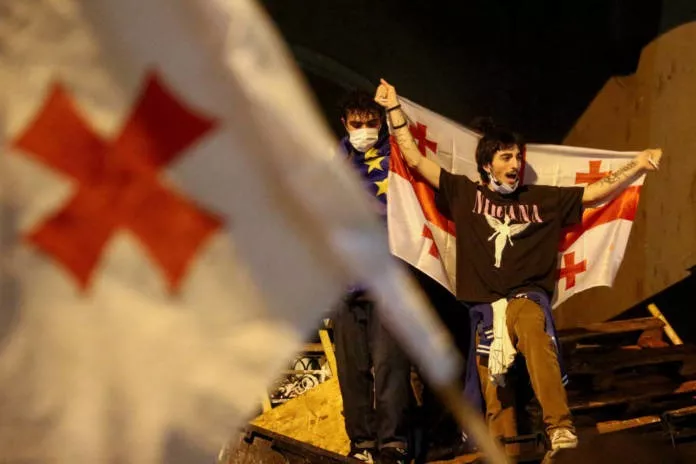
Georgia’s ongoing political crisis is expected to intensify today with the anticipated election of the far-right former footballer, Mikheil Kavelashvili, as president. Kavelashvili, a staunch ally of the government, is set to be chosen by the Electoral College, controlled by the ruling party, despite a boycott by the opposition.
A rally has been announced this morning in front of the parliament, where Kavelashvili, the sole candidate, is expected to be elected in a vote that the opposition is boycotting. The opposition refused to take their seats in parliament after the controversial October parliamentary elections and has not put forward any candidate for the presidency.
Kavelashvili, 53, has been accused by protesters of being a puppet of billionaire Bidzina Ivanishvili, who amassed his fortune in Russia, founded the Georgian Dream party, and has been secretly governing Georgia since 2012.
Previously, Georgia’s president was directly elected, but in 2017, the Georgian Dream party amended the constitution to allow the Electoral College, composed of parliamentary and regional representatives, to determine the winner.
The Georgian Dream plans to hold Kavelashvili’s inauguration ceremony on December 29.
The former Soviet republic has entered another period of turmoil since the ruling party declared victory in the October 26 parliamentary elections, and the government decided last month to suspend EU accession negotiations until 2028.
In the capital, Tbilisi, the main anti-government protest has gathered thousands of people outside the parliament every night for the past three weeks.
The current head of state, Salome Zourabichvili, who has limited powers but is in conflict with the government and supports the protests, has declared that she will refuse to hand over power until new parliamentary elections are held. In a press conference on Friday, she described the current presidential election as a “mockery,” calling it “unconstitutional” and “illegal.”
In Georgia, the president’s powers are largely symbolic, but this has not stopped Zourabichvili, a 72-year-old former French diplomatic service official, from becoming one of the voices of the pro-European opposition.
Last night’s protest outside the parliament in Tbilisi took place peacefully, without the violent clashes that marked the first ten days of protests that began on November 28.

