


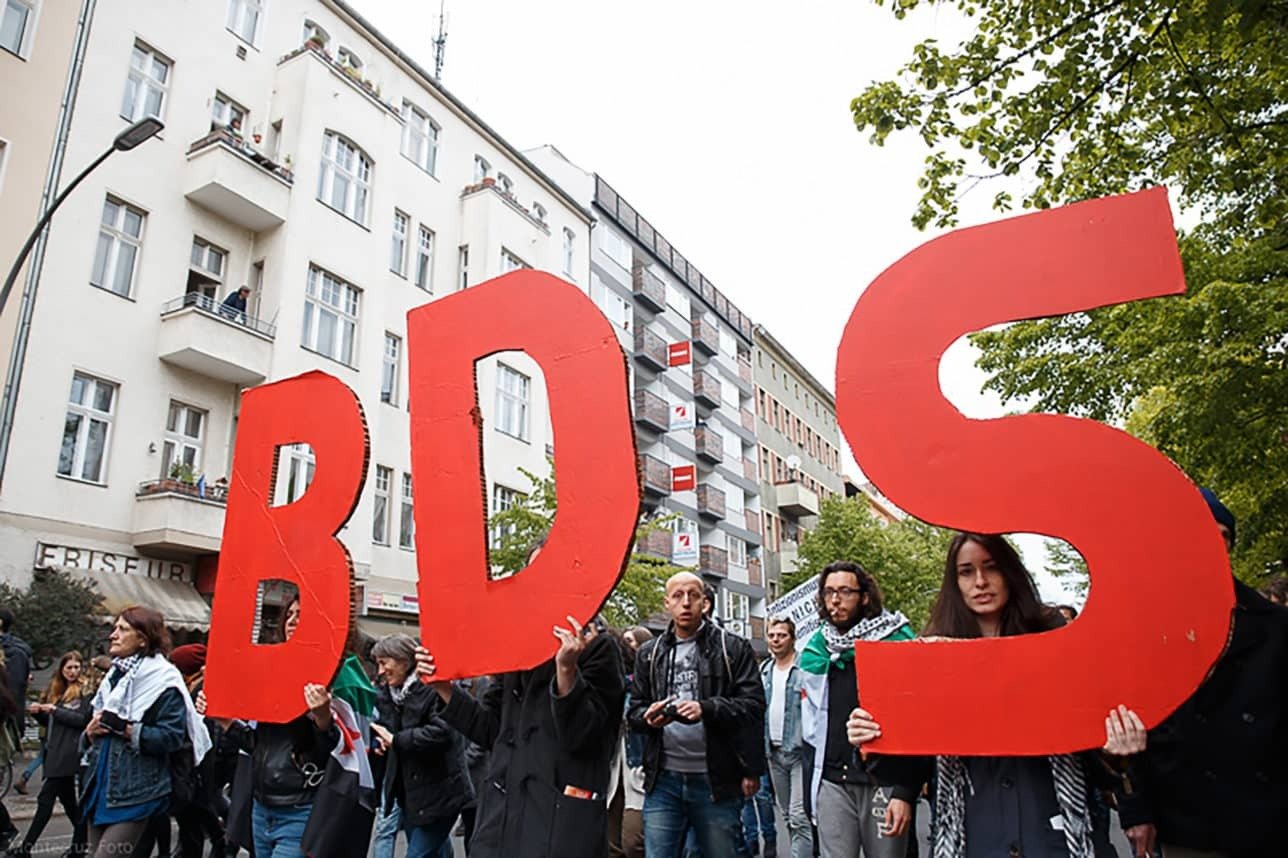
Representatives of the Palestinian BDS National Committee (BNC) visited Cyprus in May, to engage with local groups and advocate for the Boycott, Divestment, and Sanctions (BDS) movement.
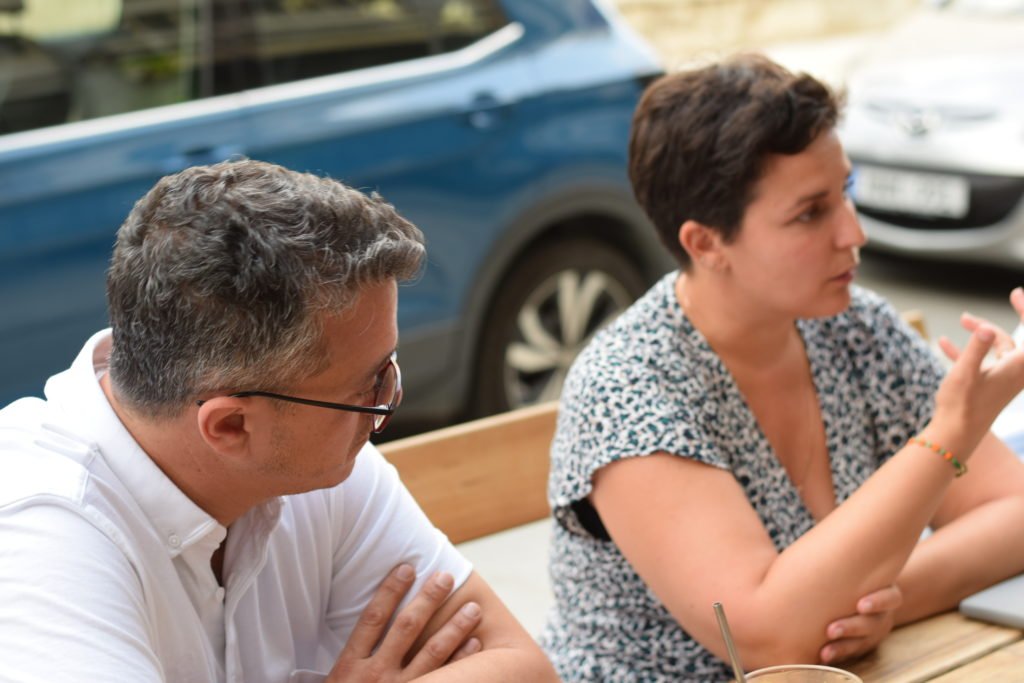
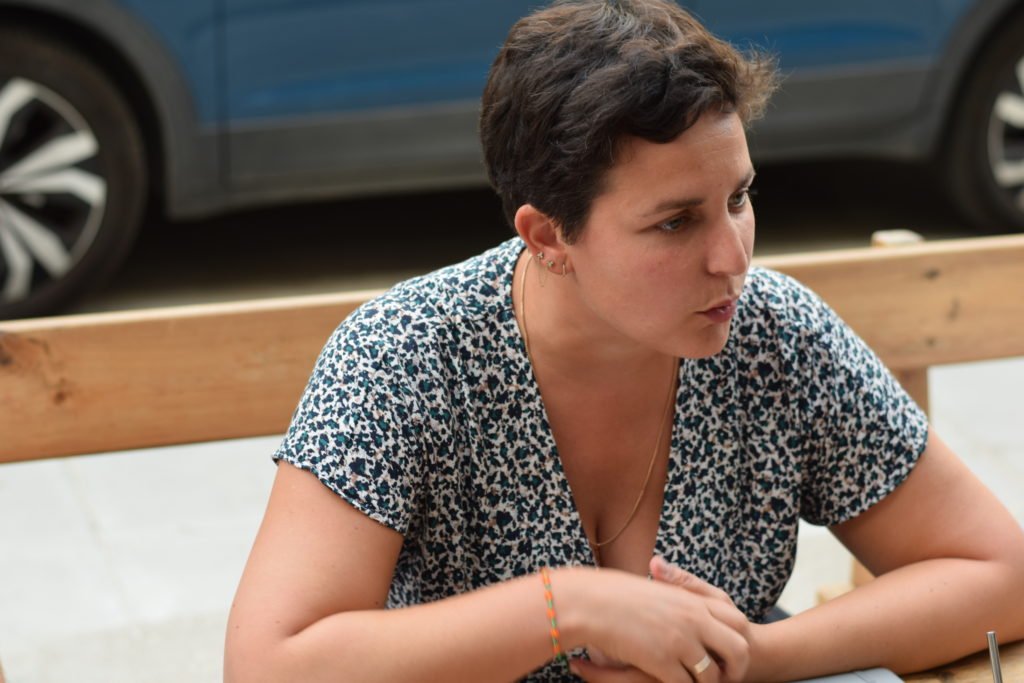
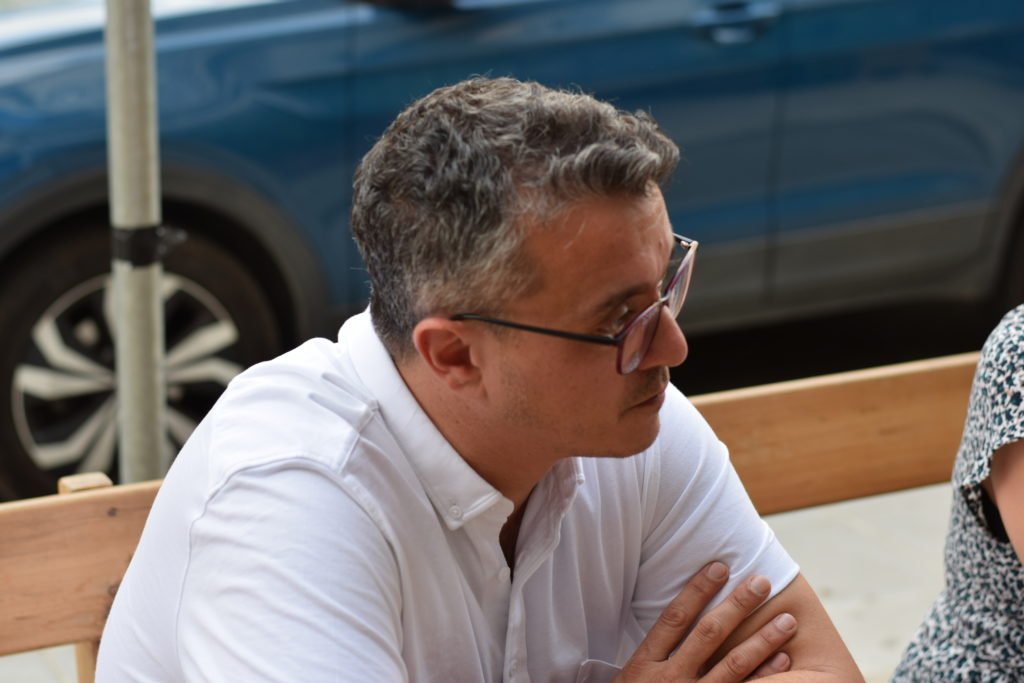
Saleh Hijazi, the policy coordinator at the Palestinian BDS National Committee (BNC), and Fiona Ben Chekroun, the Europe co-coordinator at the BNC spoke with in-cyprus about the movement and talked about Cyprus’s role in the region as Israel’s ally.
Saleh Hijazi, a Palestinian born and raised in Palestine, explained that the BNC is the largest coalition in Palestinian society, comprising unions, federations, grassroots organisations, and NGOs. He described the BDS movement as a global, anti-racist, and anti-colonial initiative grounded in international law, working to end complicity with what it describes as Israel’s regime of settler colonialism, apartheid, and genocide.
Fiona Ben Chekroun, whose role focuses on building and supporting the BDS movement in Europe, added that the movement is made up of BDS groups, trade unions, and political parties worldwide. Their visit to Cyprus was at the invitation of BDS Cyprus, aiming to meet with grassroots groups, political parties, trade unions, academics, and lawyers to discuss ending the Cypriot government and institutions’ alleged complicity with the Israeli regime.
What is the strategic rationale behind specifically choosing boycotts, divestments and sanctions within the BDS movement?
Fiona Ben Chekroun: The BDS strategy is inspired by decades of often non-acknowledged popular resistance; the Palestinian popular resistance, the anti-apartheid South African struggle, the US struggle for civic rights, and other anti-colonial struggles, like in India or in Ireland. It’s applying a strategy that has been used in the past, but to the specific context that is Palestine. The idea, the theory of change, of the BDS movement, is to strengthen people’s power; to build the power from the grassroots level all the way up, and to change the balance of power, and pressure States, corporations or institutions to comply with international law and to end complicity with the Israeli regime.
Saleh Hijazi: The movement is anchored on three main pillars. One is the indivisibility of justice, which means that if an injustice exists somewhere, injustice exists everywhere. This is greatly inspired by the South African struggle against apartheid. Nelson Mandela has said that ‘our freedom is incomplete without the freedom of the Palestinians’, and we say that ‘our freedom is incomplete without the freedom of people anywhere fighting for freedom, justice and equality’, whether that is queer groups fighting their rights, to labour movements fighting for workers, or people, fighting for their self determination.
The other pillar is the intersectionality of struggle; our struggle for freedom, justice and equality also intersects with all other struggles for freedom, justice and equality around the world.
And the third pillar, which is really at the core of our strategy, is the ethical obligation of ‘do no harm and let no harm be done in your name’. For example, in Cyprus, Cypriots have an ethical duty to ensure that they are not contributing to the harm that is being done to Palestinians, and that their government is also not using their names to contribute to the harm.
If a BDS branch wants to open in a country in which it is not active, what is the process?
Saleh Hijazi: It has to happen in coordination with the BDS movement. What is most important is that any group that wants to use the name and work for the purposes must subscribe to the anti racist, anti-discrimination and non-violent ways of the BDS movement. These are the three main principles.
We don’t tolerate any kind of discrimination or racism, but that includes also sexism, misogyny, and any other form or discrimination. It devises nonviolent strategies and tactics to build pressure from the bottom up and effect the changes we want to see at the policy level. As long as the groups subscribe to these guidelines and policies, they’re able to use the name.
How do you measure the effectiveness that a boycott can have?
Fiona Ben Chekroun: The BDS movement is turning 20 this year. We can see a major shift over the years, and through the last one and a half years of genocide against Palestinians in Gaza. I think the measurement of its impact can be quantitative in terms of the amount of corporations that decided to end contracts or divest from Israel.
Among them you have Puma, that decided to end its partnership with the Israeli Association Football Association, you have the Norwegian pension fund that is one of the major pension funds in the world that decided to divest from several Israeli companies.
Colombia decided to stop exporting coal to Israel. Malaysia has decided to close its ports to Israeli ships.
South Africa brought Israel before the International Court of Justice. We are building a mass movement around the world that is putting pressure and changing the positioning of States that have not yet imposed sanctions and not yet ended the complicity, but feel the pressure.
Canada, the UK, and France have declared that they will consider sanctions. For now, this is nothing but words, but what brought us here is people adding pressure to their governments.
Saleh Hijazi: Where you can also quantitatively measure this, is in the establishment of new BDS groups; the movement is continuously growing.
I say another crucial measure is how much we’re able to influence the analysis of the situation in Palestine. Palestinians have, since the 60s had an analysis of Israel as an apartheid regime that is intrinsically linked to the apartheid regimes of South Africa, Zimbabwe and Namibia.
But there was a gap in this analysis until the emergence of the BDS movement in 2005. Over the years, we were able to mainstream the analysis of Israel as an apartheid regime, leading to major human rights organisations like Amnesty International, Human Rights Watch, but even the UN itself now recognising that Israel is an apartheid regime.
All of this led to the International Court of Justice finding Israel guilty of apartheid in the ruling in July 2024. We see this as a direct effect of the discourse that the movement has been trying to push, and it’s directly tied to our work, as it’s grounded in international law.
Once a regime is recognised as committing a crime against humanity of apartheid or genocide, that means there are responsibilities and obligations on states and corporations to ensure that they are not complicit.
The BDS movement is facing considerable opposition, most notably from Israel itself. Can you tell us more about what kind of opposition the movement is facing?
Saleh Hijazi: We are facing severe repression. In Israel, but also elsewhere; particularly in the Global North. Recently, Germany has taken action against the BDS movement by declaring it an enemy of the Constitution. This is a way to repress effective solidarity with Palestine.
However, the point to be made here is that what BDS is, as a form of freedom of expression, is protected in constitutional law, particularly in democracies, and it’s protected under human rights law. By taking action to repress BDS, which is freedom of expression, you’re attacking the Solidarity movement with Palestine, but you’re also attacking the constitutional rights of your citizens.
When Germany, for example, says that it criminalises the BDS, it’s criminalising free speech, which means it is first and foremost attacking the protected rights of its citizens.
Israel is the reason for this repression because for many years, it has considered the BDS a strategic threat. But what Israel is saying with that is that human rights, freedom of expression, freedom of peaceful assembly, are a threat to Israel.
Does the movement face other notable restrictions legally, or is it prohibited formally from operating in certain countries?
Saleh Hijazi: There have been attempts. France, for example, has attempted to criminalise the BDS, and it was shut down by the European Court for Human Rights.
Germany right now is trying to shut down BDS. That will be challenged in courts. In previous instances where there were restrictions on BDS activities in Germany, German courts have taken action against the restrictions. This is protecting freedom of speech. In the US, BDS was made illegal in several States.
There are always attempts to repress us, but because the movement is grounded in international law and we are an expression of human rights, until now, these attempts have failed.
Israel has an anti-boycott law. It’s not yet criminalised, although Israel has moved to criminalise civil society, like human rights organisations, this is essentially an anti-BDS law. It’s a civil tort law which allows people to take up cases against those who call for boycotts if they can prove damage. So it is a stepping stone towards the criminalisation of BDS.
However, it’s important to note that the large majority of Palestinians under Israeli control are in the occupied territories, and they’re ruled by military orders, so the criminalisation of civil society and human rights organisations can happen without legislation.
You do have organisations like Boycott from Within that are in Israel. You have other organisations that are anti Zionist, but the vast majority of Israeli society is very much right-wing. Israel can carry out the genocide right now because mainstream society, including media, academia, and the cultural institutions, actually supports and enables genocide.
This is all rooted in a very racist view of Palestinians, that they’re subhuman, that they don’t deserve to live, they don’t have the same rights, and this, unfortunately, is mainstream in Israel.
How was the reception of the movement in Cyprus?
Fiona Ben Chekroun: We participated in a BDS conference at Yalla in Nicosia. I was there with a colleague, Shir Hever, who is a military embargo campaign coordinator; we tackled Cyprus’s complicity in terms of military cooperation, export, import, and transfer of military materials to and from Israel. Someone from BDS Greece explained how they’re organising and reaching some success.
That was followed by several internal workshops on what type of campaign can be built in Cyprus, in Nicosia and Limassol.
With Saleh coming from Palestine directly, we had several meetings with political parties and trade unions that showed an interest in having more information, to join the ongoing campaigns and participate, in the work of BDS Cyprus and other groups on the ground to end complicity.
Saleh Hijazi: The International Court of Justice, which is the highest judicial body in the world, has made very clear that third States like Cyprus must take measures to ensure that they’re not complicit in genocide, and that they work to prevent genocide and hold Israel accountable for it.
The International Court of Justice has also made clear that Israel’s occupation is illegal, that it is practising apartheid, and that third States like Cyprus have an obligation not to recognise an illegal situation and not to render aid and assistance through it.
And this is what we’re trying to show to Cyprus’s political parties, the government, civil society and the media. There is complicity in Cyprus, and this complicity must end. Those responsible will be held accountable or found criminally liable for this role. In the case of illegal occupational apartheid, there is an obligation, again, to ensure that you don’t render assistance.
And complicity takes many forms. There’s the alliance with the US and Israel in the three-plus-one. There is the transfer of weapons and dual-use items, including for energy. The imports of weapons and dual use from Israel, the import of other agricultural products, for example.
The court’s decision, the advisory opinion, was also adopted by the General Assembly, in which Cyprus voted, for the end of Israel’s illegal occupation, to impose an arms embargo, and to impose trade sanctions on Israel. This is what we’re pushing for here in Cyprus.
I think what is very important, including for the media to play a role here, is to continually question Cyprus’s role in what is happening in Palestine, because it contravenes its obligations under international law.
What was the reception of the BDS from political parties?
Saleh Hijazi: What was most surprising is that there is a lot of education that is needed on international law and obligations under international law. We’re bringing forward what the ICJ has said, and what that means for States like Cyprus.
The second thing is that there seems to be a lack of transparency; the government is not being, perhaps, as democratic as it claims to be. People are not made aware of Cyprus’s role, and they are not able to question, for example, the use of Cyprus’s territorial waters, its ports, and its airspace. This is all information that should be publicly available, particularly when you’re talking about the crime of genocide. How come people are not able to ask these questions? How come that details of the three-plus-one alliance are also not available to the public, to the media, to parliament?
The questions, for example, in parliament are not framed using the language of international law. We would like to see more of that happen, where MPs of whichever political party would ask how much Cyprus upholds its obligations under the Genocide Convention? Cyprus ratified the Genocide Convention in 1968.
The Genocide Convention has become national law, and individuals could be prosecuted for violations of the Genocide Convention, including for complicity. There’s a positive response to it, but there needs to be more done. What’s surprising to us is that it has not happened already, that we’re 20 months into the genocide, and until now, there’s not a serious reckoning in Cyprus about its role in Israel’s genocide.
Why do you think Cyprus is assisting Israel?
Fiona Ben Chekroun: The massive threat of the US-Israel genocidal axis is to bring a new paradigm and shift in the ‘might makes right’ era to become a reality. And so, this not only applies to a small nation like Cyprus. If this prevails, then international law will no longer protect States. The biggest countries will be able to then force what they want.
And so, I think this is something that needs to be mainstream as well in Cyprus; understanding what the role of Cyprus and the government is, and that by opening a wide door to investors, by opening a wide door to making the island a military base for the US and Israel in the region, this creates a grave danger. Not only for Cypriots, but in general, for everyone everywhere.
Saleh Hijazi: I think that there’s a differentiation between the government of Cyprus and Cypriots. There is a massive amount of influence from the US and Israel. The US is Israel’s main supporter. The genocide in Gaza is a US-Israel genocide.
There are different levels of complicity and assistance. There’s those who are in full partnership with Israel, the US, Germany and the UK, and those who are supporting the genocide by being complicit in it; particularly countries from the Global North, and those who are enabling genocide.
Historically, though, Cypriots have been firmly in solidarity with the Palestinians. And this is something that we very much still feel today.
Governments that are either authoritarian or have authoritarian tendencies like to be in a good relationship with Israel, because what Israel is good at is the violent control of a civilian population.
They’ve built a brand of the country as basically a producer of tools and weapons that do that. Surveillance technologies, crowd control technologies, weapons that can attack in urban settings like the quadcopters the drones.
There’s this emergence of interest between those who are acting against the rule of international law and human rights that have been built since the Second World War, really coming together with Israel.
How does the current situation in Gaza reinforce or alter the urgency with which the BDS movement is operating and its campaigns?
Fiona Ben Chekroun: We need to stop this genocide; there is nothing more urgent right now. There is complicity, there is a flow of military supplies that are going to Israel, there is a flow of dual-use items, including a few that are used to bomb Palestinians in Gaza. There is a siege that has been imposed for months on Palestinians who are starving to death right now.
And so there is an emergency, and it has created, among people with a conscience, a lot of rage, of sadness, of grief, that the BDS movement tries to channel into effective solidarity. Into Boycotts, Divestments and Sanctions.
Every day the genocide continues, and every day there is a way to organise and mobilise people across the globe that for more than 20 months have been taking to the streets, boycotting products, pressuring banks, financial institutions, protesting in front of ports and airports, pressuring as part of trade unions, as part of political parties, asking parliamentary questions.
We are here today in 2025 with the genocide against Palestinians, because of impunity. Because the world has let Israel continue without any form of accountability. And so what the world is saying now is that it has to stop.
Saleh Hijazi: You see, at least in rhetoric, that European countries are beginning to speak the language of sanctions. France, the UK and Canada are threatening to sanction Israel. The UK has suspended its negotiations on a free-trade agreement with Israel. There are more countries now that are calling for the review and the suspension of the EU-Israel Association Agreement, something which Cyprus is standing against.
Perhaps we’re coming to a turning point, not only because people are pressuring, but also because now, for the first time, we’re unprecedentedly hearing from the close allies of Israel, the language of sanctions.
The government supports that Cyprus, as a small country needs protection. It is very close to Turkey, and they’re saying that we must align ourselves with the US and Israel, and they’ll give us protection and weapons. How would you respond to this, and why is it important to prioritise ethics over this kind of thinking?
Saleh Hijazi: This is not only about ethics, it’s also about international law. As a small nation, Cyprus has to reckon whether it is on the side of the rule of international law that was put in place after the Second World War to ensure that the horrors of the Second World War, including genocide in Europe, are never seen again.
What Cyprus is doing is allying itself as a small nation with the order of ‘might makes right’. If I have the power, I’m able to do whatever I want. And for a small nation, you have to reckon with this, because what happens if you are faced with something that you feel is oppressive from a big power? The response is that you need to be on the right side of history.
Beyond an immediate ceasefire, what long-term solution, aligned with the BDS movement’s principles is necessary to ensure justice and the rights of Palestinians?
Saleh Hijazi: The sanctioning against Israel; a full military embargo. And what we mean by this is no export of weapons, no import of weapons, no transfer of weapons, and no military cooperation with Israel. The cancellation of free-trade agreements, the suspension of the EU-Israel Association Agreement, which is relevant to Europe. Also, an energy embargo.
We need to ensure that there’s a rule of law and that there’s nobody who is set above the law. Israel is put above the law. There needs to be a ceasefire now, absolutely. To stop the killing of Palestinian people, lift the siege, and allow the UN and other humanitarian organisations to be able to reach everybody.
But long-term, it is really about accountability; ensuring that if you commit crimes, you’re held accountable. This was really at the core of the system set out at the Nuremberg trials after the fall of the Nazi regime. This is what was set out. If the world fails Palestine now, it’s failing this entire safeguarding system.

