


Anger is pervasive across Israel. Almost a year after the massacres of 7 October 2023, Israelis primarily want to live safely in their country.
The emotions of anger and frustration are evident in the words of ordinary people who saw their lives change overnight. A year later, they still don’t know what the future holds. For the average Israeli, this is not a political or diplomatic issue—it’s a matter of survival.
They are not interested in political discussions or diplomatic negotiations. For Israelis, things are much simpler than they may appear from a global perspective, especially from Europe. Whether they live near the Gaza border or in northern Israel, their priority is the same: creating conditions where they can live in safety, without the fear that another terrorist could replicate the horrors of 7 October, or that any group could launch rockets to destroy homes and lives.
No matter how you look at it—whether you’re speaking to someone who survived the massacre or narrowly escaped a missile attack from Lebanon, or analysing the situation academically—the bottom line is the same: security.
Last week, I (along with a small group of journalists and academics from other countries) visited neighbouring Israel to see first-hand the areas where the terrorist group Hamas slaughtered and raped hundreds of people. We heard the harrowing stories of survivors—how they managed to escape and how their relatives, friends, and neighbours were not so fortunate.
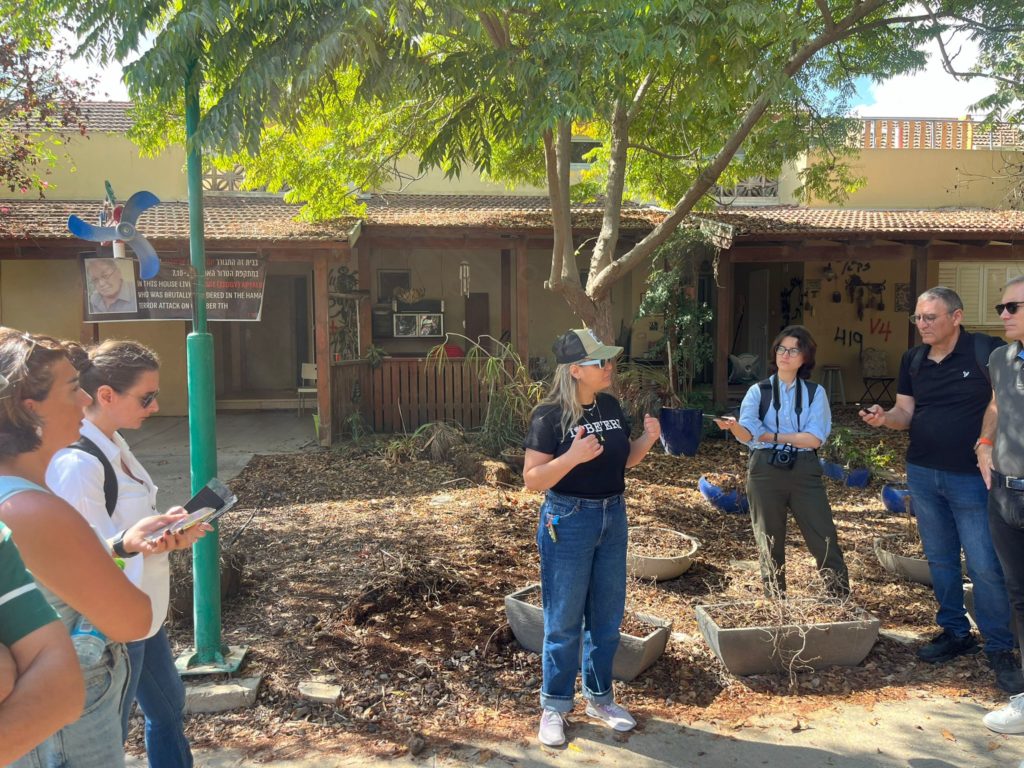
In the kibbutz of Be’eri, time has stood still since 7 October 2023. Just a few kilometres from Gaza, which is visible from the balcony, no one enters anymore, and the kibbutz’s heavy yellow gate opens only for those with a permit. An eerie silence hangs over the place, with destroyed houses everywhere. A year later, the signs of unprecedented brutality are still visible. Outside every home, banners remind us of who lived there until 7 October.
Our guide at the kibbutz, Miri Gad Mesika, stands in front of each house and shares the stories of the people who lived there. She knew each family personally. She tells us how she survived the terrorists that day. In the nearby cemetery, just metres outside the kibbutz, preparations are underway for memorial services to be held on 7 October, marking a year since the massacre. The ceremony will be private, she tells us. Survivors don’t want to see government representatives. For the people of Be’eri, no official has a place at the memorial because no one was there to protect them when they needed it most.
Anger and bitterness run deep. The state failed to protect them, and just as they survived on their own, they will now remember the dead on their own.
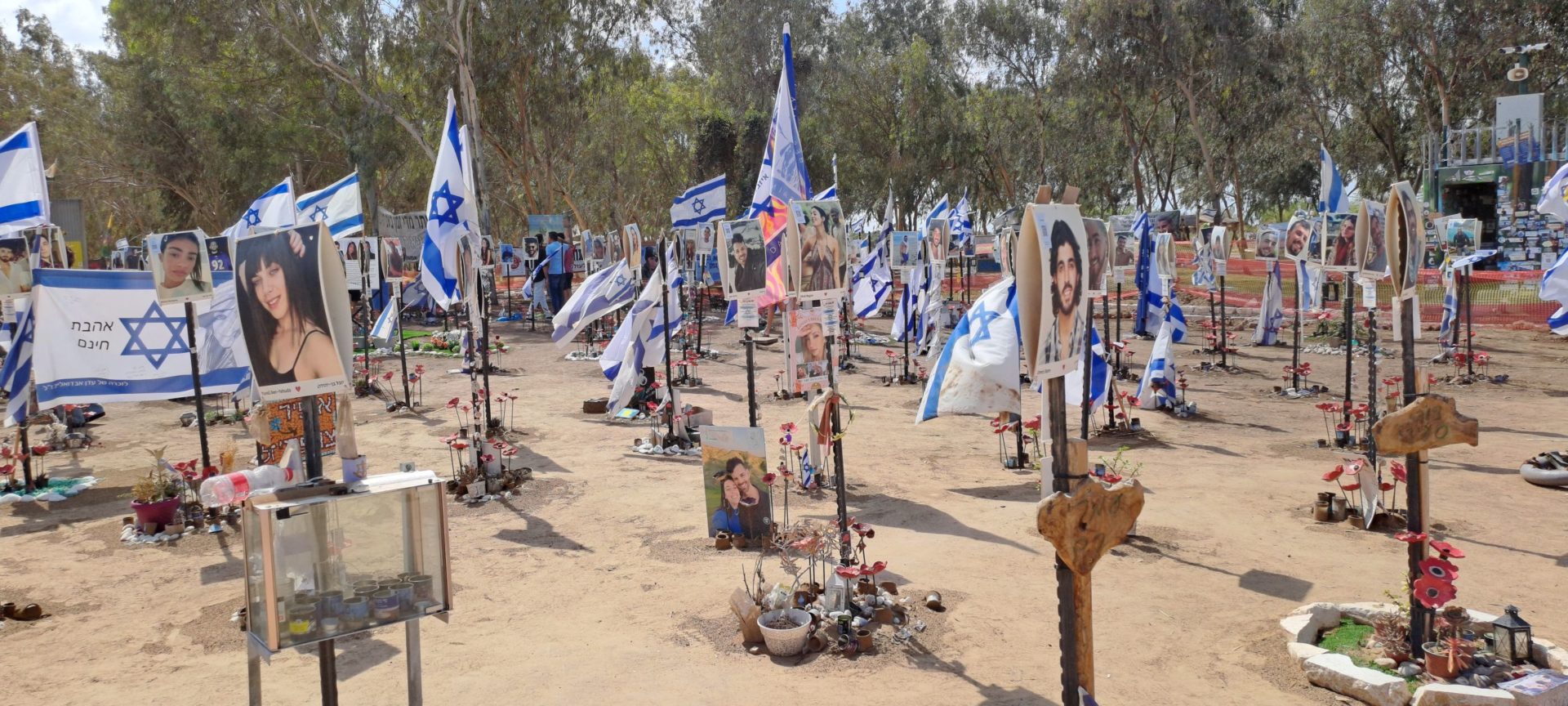
From there, we travel to the site of the Nova Festival, where the largest massacre took place. Thousands of young people were enjoying themselves until the early hours of 7 October. Among them was Amit Musai, who greets us with the ease of an experienced guide (his profession), leading us to the spot where he and three friends were that day. A place of celebration was turned into a vast graveyard, with photos of the 400 or so dead displayed everywhere. These were young people whose only “crime” was attending a festival, as youth do across Europe, America, and many other parts of the world.
Amit recounts in detail what he went through, from the moment he left his house to the moment he returned 18 hours later.
We leave the forest of Be’eri to visit a shelter on Route 232, now known as the “Death Migunit.” Amit steps off the bus, but cannot go any further. It’s the road he took to escape, and he hasn’t been back since. Two family friends, who were on their way to meet him at the festival that day, died in that shelter.
In Sderot, we hear stories of survivors and their attempts to rebuild their lives. The small town is trying to regain its former self while looking to the future.
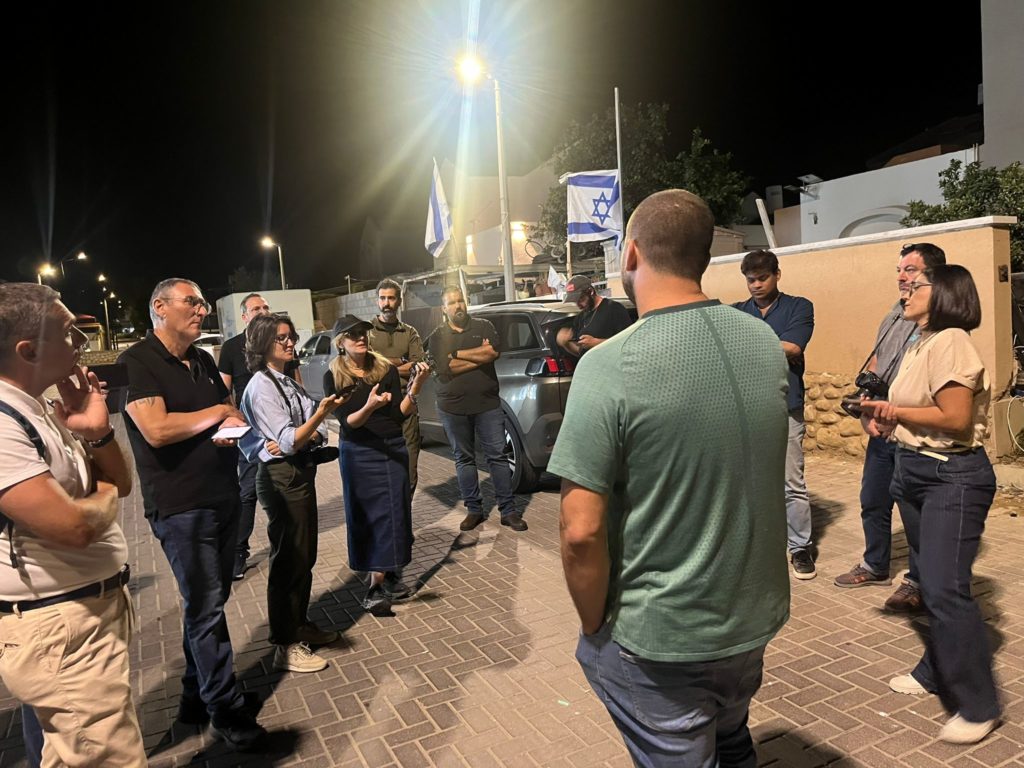
That evening, we arrive in Ofakim, where Mazi Deri shows us a neighbourhood that became a battleground between the villagers and the terrorists. Soon, others join Mazi to tell their stories. It’s important to them that someone is there to listen, to hear their voices, and to learn about their heroes—those who fought the terrorists, who somehow knew where they would strike. When we ask how they knew, the answer suggests where we should look for clues about what happened beforehand.
Most of those who entered Ofakim had previously worked there, coming from Gaza. They knew that the neighbourhood’s houses and small apartment buildings (similar to social housing in other countries) lacked shelters. There was only one shelter for the entire neighbourhood, and they knew exactly who had the key, waiting for him to arrive so they could kill him.
The stories never end, nor can they easily end. The wounds of that day are many, as is the anger of those who survived. The 1,200 dead are not strangers. Everyone knows or is connected to one of the victims. And every time they remember, their anger grows—not just towards those who committed the massacre, but also towards those who should have protected them and didn’t.
Every second counts
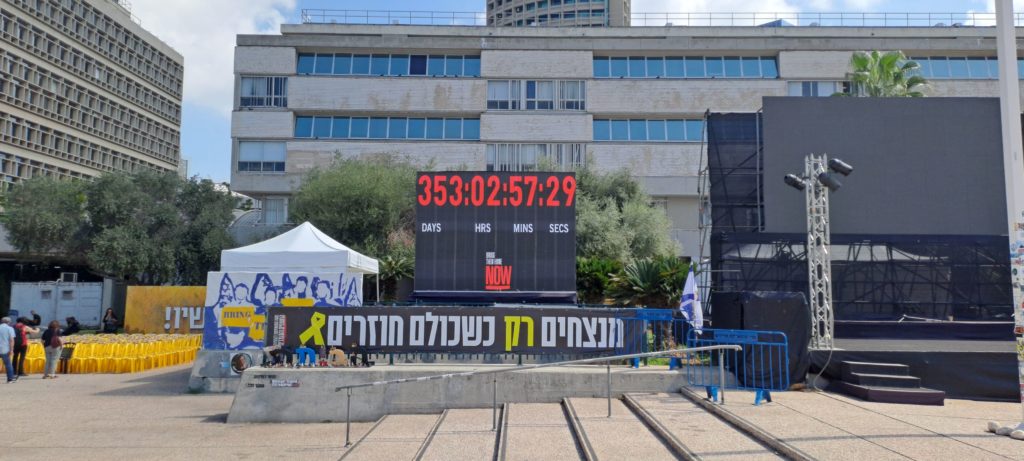
It’s almost a year since terrorists entered the Gaza border area, known to Israelis as Otef Aza. In Tel Aviv’s Hostage Square, an electronic board counts every second since the first hostages were taken by Hamas. People gather there, and at the nearby offices of the organisation created to support the hostages’ families. They feel abandoned because no one has been there to support them. Volunteers at the centre and the square do everything they can to help, vowing not to stop until the last hostage returns to Israel.
A ground offensive to the north is inevitable
Our time in Tel Aviv coincides with various diplomatic efforts in New York, where foreign leaders are trying to prevent the war from spreading to Lebanon. In recent days, there has been much talk about foreign leaders’ efforts to prevent a new Israeli military operation in Lebanon.
However, speaking with Israeli officials and experts, it becomes clear that a ground offensive towards Lebanon is considered inevitable. It seems to be a matter of days (at least until Thursday afternoon) before it begins. For the government in Jerusalem, the goal is clear regarding Lebanon. This is also what residents of Kiryat Shmona and other northern Israeli communities, who have been forced to flee, demand. Fear of new massacres has driven the government to decide that residents of northern towns and villages near the Lebanese border must move to safer areas.
Speaking with people from Kiryat Shmona, now living near Tel Aviv, we hear their demand: the government must take all necessary steps to ensure their safety and put an end to their daily exposure to Hezbollah’s rockets.

