


By Aslan Muhsin
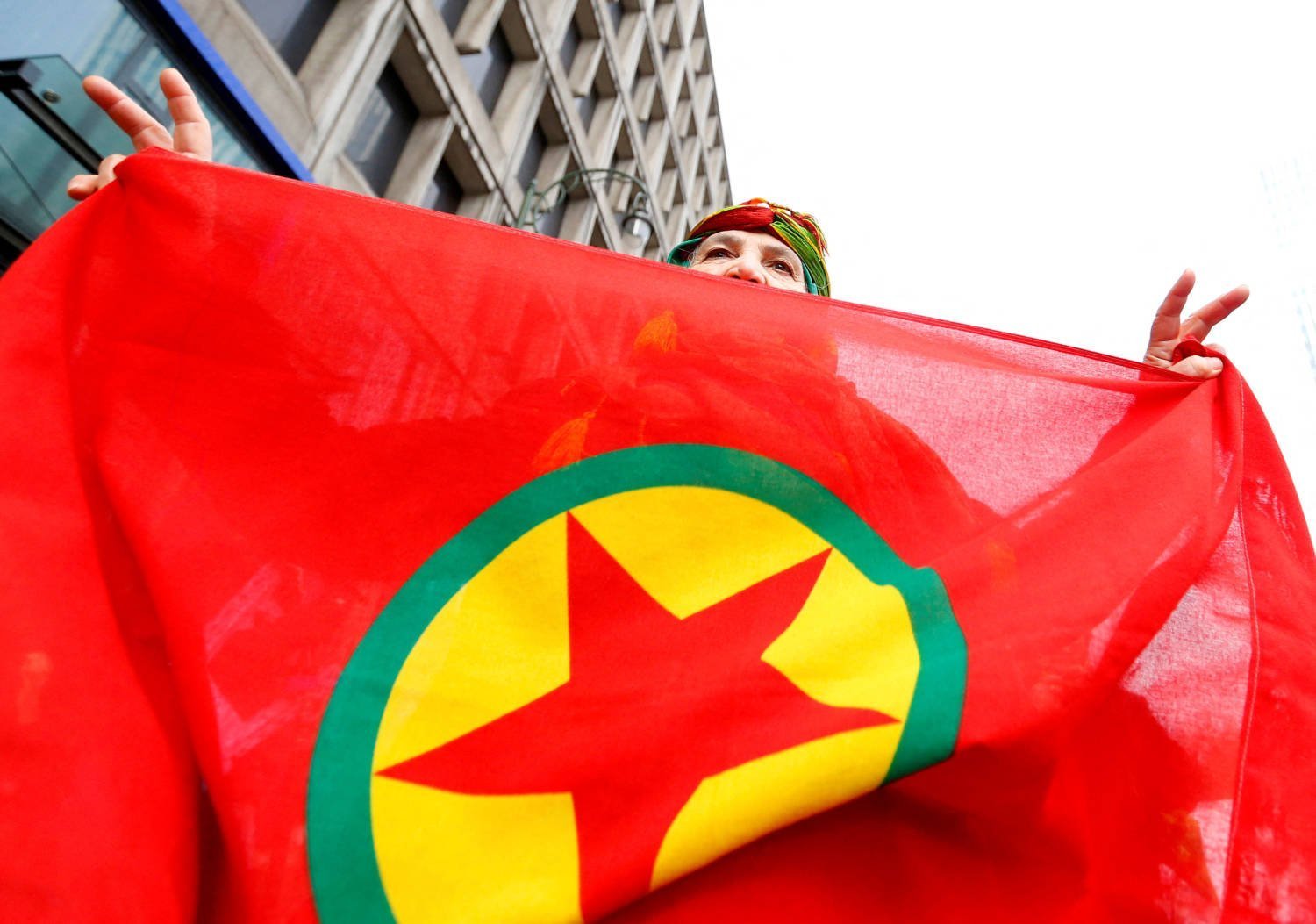
The disbanding of the PKK’s armed presence signifies more than the resolution of the Kurdish issue—it marks an identity crisis for Turkish nationalism itself. Like a god who loses its devil, a state ideology deprived of its enemy must now confront itself.
The need to deify and demonise
Throughout history, every religion, every regime, and every hegemonic power has felt compelled to glorify its god and create a devil to oppose it. Because without a devil, a god cannot be exalted. Without an enemy, power cannot justify itself. This mechanism operates as a strategic construct even in modern states.
During the Cold War, the West declared the Soviet Union the “enemy of freedom.” Communism was demonised, while NATO was elevated to the level of a sacred liberator. This dichotomy was not limited to foreign policy—it shaped domestic structures as well. Paramilitary entities like Gladio were presented as holy warriors fighting the enemy. Turkey, as both a participant in and a product of this ideological framework, reformulated its own historical traumas through this lens.
Turkishness grew by choosing its devils
In Turkey, the politics of producing “devils” operated on multiple levels. First came the Armenians—demeaned, cursed, and dehumanised as “bastard offspring.” Hatred of Armenians became a metric of identity: the more you despised them, the more “Turkish” and “Muslim” you were considered. Then came the Greeks: the 1974 Cyprus operation morphed into a nationalistic frenzy of anti-Greek sentiment, with Archbishop Makarios vilified as the face of treachery. Each demonised identity served to sanctify Turkish and Sunni identity.
Over the past 50 years, Kurds were placed at the center of this chain of hatred. The armed presence of the PKK allowed the state to criminalise all Kurdish demands. Under the guise of “counterterrorism,” the state concealed its injustices. Any form of dissent was labeled as “terrorist sympathising.” Mafia networks, street gangs, and extrajudicial killings were all portrayed as part of this “holy war.”
The end of the PKK: A turning point?
Now, as the PKK’s armed presence seems to be ending, this is not merely a security issue—it is the beginning of an ideological collapse. Turkish nationalism, which has long defined itself against this “devil,” faces a crisis: without a devil, the god loses meaning.
The AKP will no longer be able to accuse the CHP of “taking orders from Qandil.” The CHP won’t be able to discredit the government with “secret talks with the PKK.” The narratives of “CH-P-KK” or “AK-P-KK” will collapse. Politicians can no longer swing the “terrorism” stick at one another. A new discourse must emerge.
Nationalism loses its enemy
Turkish nationalism has, for decades, built not just a security policy, but a collective identity based on the PKK threat. Now, that foundation is disappearing. From Pan-Turkists to Islamists, from Kemalists to left-nationalists, all strands of nationalism internalised opposition to the PKK as a core reflex. That reflex is now ungrounded.
So, where will this energy go? Most likely, inward. Cracks are already visible: nationalist factions are accusing each other of not being “nationalist enough.” When anger can’t be directed outward, it implodes. A god without a devil consumes itself.
A bew beginning: A window of hope for Kurds
For Kurds, this rupture might represent an opportunity. Their struggle can now be defined by dialogue, not arms. The retreat of the PKK creates space for Kurdish political and civil actors to emerge stronger. A democratic, egalitarian, and united future becomes more imaginable.
Challenges remain, but the path ahead is clearer—if we’re willing to read it right.
A State without an enemy, a society in search of itself
Every people once demonised will eventually speak their truth. Turkish nationalism is now facing that mirror. The era in which the state aligned itself with street mafias is closing. The “patriotic ritual” of stoning devils is ending.
Can this fate give rise to a new social contract?
That depends on whether we replace the devil with truth

