


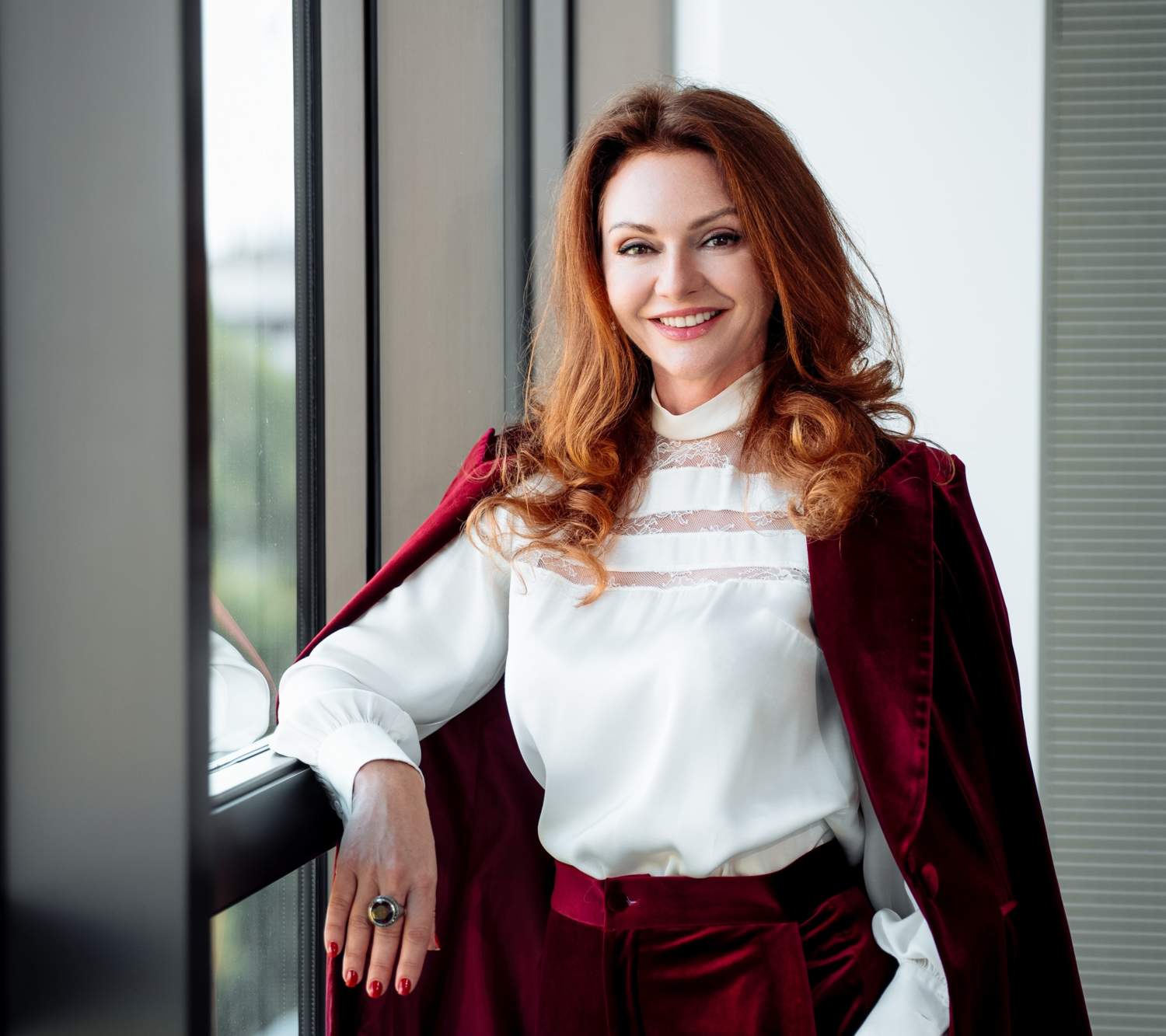
Legal career served as the foundation of a three-decade journey for Natalia Reisman, who explained in an interview with Forbes Cyprus that her professional path was never a straight line or one restricted by narrow boundaries.
Speaking to the publication, Reisman said law provided a stable basis for her career without suppressing her curiosity or enthusiasm to explore the world.
Studies, travel, art, yoga, music, and various fields of knowledge formed part of a broader personal journey that shaped how she thinks, works, and understands people and challenges.
For the next generation of women, Reisman said success does not mean changing who you are to meet external expectations, but having the freedom to build a life that is truly your own.
As Chief Legal Officer at Freedom24, how has your leadership journey evolved, and which experiences have most shaped the way you approach decision-making in a highly regulated and fast-moving financial industry?
I chose law when I was seventeen and started my career as a lawyer in 1997. I have spent it in-house, largely in banking, investment banking and capital markets, so my understanding of leadership has developed very much from inside the business rather than alongside it.
Early in my career, being a good lawyer meant mastering the law, understanding the risks and giving sound advice. With experience, I realized that this is only part of the job. In-house legal leadership is also about understanding what the business is trying to achieve, what the client needs, where the real risk sits, and how to make all of those realities work together.
The last five years at Freedom24 have accelerated that evolution enormously. The company, and the Freedom group more broadly, have grown quickly in scale and ambition. As the business becomes more sophisticated, the expectations of Legal naturally change too. What works at one stage of growth may simply not be enough at the next.
That has probably been the biggest shift in my own leadership: from focusing mainly on how we solve individual legal matters to thinking about how the function itself should be designed for a larger, faster, and more complex business.
The Freedom24 Legal function was rated highly internally, which is encouraging, while colleagues wanted more coordination from us across functions, risk management, and support for strategic decisions. To me, that meant expectations had moved to a different level.
Today, I think much more in terms of architecture: who owns what, what can be standardized, where the business can operate autonomously within clear boundaries, and where Legal needs to be involved early.
The real test of legal leadership is not how many issues your team can personally handle, but whether you can build a system that lets the business grow with clarity, consistency, and control. In a fast-moving regulated industry, you cannot eliminate risk, nor should you try to. Good decision-making is about understanding which risks matter, which can be managed, and where the line cannot be crossed.
For me, the next stage is making sure the legal function evolves at the same pace as the business and stays close enough to understand not only the risks, but where the company is going.
What are some of the most significant challenges women still face when advancing into senior leadership positions in finance and technology, and what changes do you believe would make the greatest difference?
I think one challenge women still face is the expectation that they must prove themselves on several fronts at once.
We are encouraged to be ambitious, but not too ambitious. Confident, but not intimidating. Decisive, but always accommodating. And somehow, we are also expected to manage every other aspect of our lives with the same level of excellence.
That is quite a demanding job description!
Personally, I have never believed that a woman needs to adopt a particular personality or leadership style to succeed in business.
Professional credibility comes from knowledge, sound judgment, integrity, and the ability to deliver results. These qualities have no gender.
I believe the greatest progress will come when organizations consistently recognize talent and potential, create transparent opportunities for advancement and allow different leadership styles to flourish.
But we also need to rethink how we define success for women.
Not every woman wants the same career, lifestyle or balance between professional and personal ambitions, and those priorities may change over time.
True equality, to me, is having the freedom to make those choices without being judged for them.
I would like to see a world where a woman’s ambition requires no more explanation than a man’s, and where her personal choices are respected just as much as her professional achievements.
Cyprus has developed into an important international business and financial services hub. What strengths does the country offer to female professionals and executives, and where is there still room for improvement?
Having lived and worked in different countries, including ten years in the United States, I have come to appreciate how much the environment around us shapes both our professional opportunities and our quality of life.
I have been living in Cyprus for almost five years, and what I particularly value is the combination of an international business environment with a more personal, community-oriented way of life.
Cyprus offers opportunities to work with international businesses, interact with professionals from different cultures and develop expertise that extends well beyond the island. At the same time, relationships matter here, professionally and personally, and that is something I value enormously.
Another thing that is very close to me is the place family holds in Cypriot society. Family values remain strong and quite traditional, and I see that as a real strength. A serious career and a rich personal or family life do not have to sit on opposite sides of the table. For many women, being able to build both is a meaningful part of what makes a country attractive.
Of course, values need practical support. Good childcare and schools, a wide range of after-school activities, and workplaces that are open to flexible arrangements all make a difference. These things may sound less glamorous than investment or regulation, but in everyday life they can be decisive.
There is still room for improvement. I would like to see even stronger professional networks and mentorship opportunities for women, more visibility of women in senior decision-making roles, and continued development of the infrastructure that makes it easier to combine professional ambition with family life.
What I find particularly attractive about Cyprus is that it does not necessarily ask you to choose between the two. It can offer an international career and strong professional community, while still leaving space for family, relationships and life beyond work.
In your role, you operate at the intersection of law, regulation, technology and business strategy. How do you balance regulatory responsibility with the need for innovation and commercial growth?
I have always believed the legal function should enable business, not obstruct it.
In a highly regulated industry such as financial services, legal and regulatory obligations are fundamental. They protect clients, support market integrity and create the basis for long-term trust. But understanding the rules is only part of our job. We also need to understand what the business is trying to achieve and why.
Having spent my entire career working in-house, I know the commercial realities of the financial industry very well. I understand the pressure to innovate, remain competitive and meet the expectations of clients who want efficient, sophisticated and accessible services.
When a new initiative comes to the legal team, I want us to start with its purpose.
What are we trying to achieve? What value will it create for clients? What are the legal and regulatory implications? Is there another structure that gets us to the same commercial objective while managing the risks properly?
Sometimes the answer is straightforward. Sometimes it takes creativity, analysis and collaboration across functions. And sometimes, of course, the answer has to be no.
But I believe a good lawyer should never be satisfied with simply identifying a problem when a workable solution exists. Legal should be involved early enough to help shape ideas, not only review them after the decisions have been made
For me, responsible innovation and sustainable commercial growth are not opposites. They depend on each other.
What qualities do you believe distinguish effective female leadership today, and how important have mentorship, professional networks and the support of other women been throughout your career?
I am not entirely convinced that effective leadership should be divided into male and female qualities.
Integrity, courage, competence, emotional intelligence and the ability to take responsibility are equally important for everyone.
What I do believe is that women should feel free to lead in a way that reflects their own personalities, values and strengths, rather than trying to fit someone else’s image of what a powerful executive should look like.
For me, strength and empathy have never been mutually exclusive.
You can be demanding about professional standards while caring about the people you work with. You can make difficult decisions without losing your humanity. And you can be ambitious without treating everyone around you as a competitor.
I believe one of the most rewarding parts of leadership is helping other people develop. A strong team is not simply a collection of talented professionals. It is an environment where people feel trusted, challenged and encouraged to grow.
I also value people who are willing to challenge my thinking, share their experience and offer an honest perspective, even when it differs from my own.
Mentorship does not have to be formal. Sometimes one conversation, one opportunity or someone’s confidence in you can make a lasting difference.
I believe women in senior positions can create that kind of environment for the next generation by recognizing talent, sharing knowledge and making sure that capable people have the opportunity to demonstrate what they can achieve.
Ultimately, I think one of the most meaningful measures of leadership is not simply what you accomplish yourself, but what you help others become.
Looking ahead, what advice would you give to young women in Cyprus who aspire to build careers in law, finance or senior corporate leadership, and what would you like the next generation of women in business to achieve?
My first piece of advice would be to remain curious.
I chose law at seventeen, and thirty years later, I am still fascinated by my profession. But I have never believed that choosing a career means choosing the boundaries of your life.
I have always enjoyed exploring different disciplines and seeing how seemingly unrelated things connect. I was fascinated by inorganic chemistry and forensic science. I studied interior design in the United States, practiced yoga for more than ten years, traveled to over sixty countries and have a lifelong love of ballet and piano music, which I studied both until I was fifteen.
These things may seem far removed from my professional life, but they shaped how I see the world: stay open, appreciate different perspectives and don’t assume there is only one way to approach a problem.
So my advice to young women would be to invest in their professional expertise, but never stop exploring the world beyond it.
If you are a lawyer, learn how businesses operate. If you work in finance, understand the technology and regulations shaping your industry. If you aspire to leadership, understand people as well as numbers.
Don’t wait until you feel completely ready before taking on new challenges. Be willing to learn, make mistakes, reconsider, and take responsibility for your decisions.
And remember that your professional reputation is built not only on what you achieve, but also on how you treat people along the way.
There is one more thing I would tell the next generation of women: build a career you are proud of, but don’t let your job title become the full definition of who you are.
Make room for family, friendships, love, personal interests and the experiences that make you feel alive. And remember, your priorities may change over time, and that is perfectly natural.
I hope the next generation of women will have the freedom to pursue their ambitions without constantly proving themselves or justifying their choices. Above all, I hope they understand that success is not about becoming someone else to meet the world’s expectations. It is about having the freedom to build a life that is genuinely your own.
Build a career you are proud of. But build a life that you are equally excited to live.

