


Lilian Thuram is one of the finest French footballers of recent decades. He won the World Cup with France in 1998 and the European Championship in 2000, earned 142 caps for his country, and played for Monaco, Parma, Juventus and Barcelona. However, one of his finest accomplishments came after he hang up his football boots, when he set up the Lilian Thuram Foundation, which works on education against racism and for equality. He has also written a series of books on racism, history and social inequality.
At first sight, there seem to be two Lilian Thurams who belong to different worlds. One is the footballer who reached the pinnacle of his sport. The other is the author and activist who speaks out on racism, discrimination and equality. Anyone who has followed him for long enough knows the two were never really separate. Thuram was already taking a stand against racism and social injustice while he was at the top of the professional game.
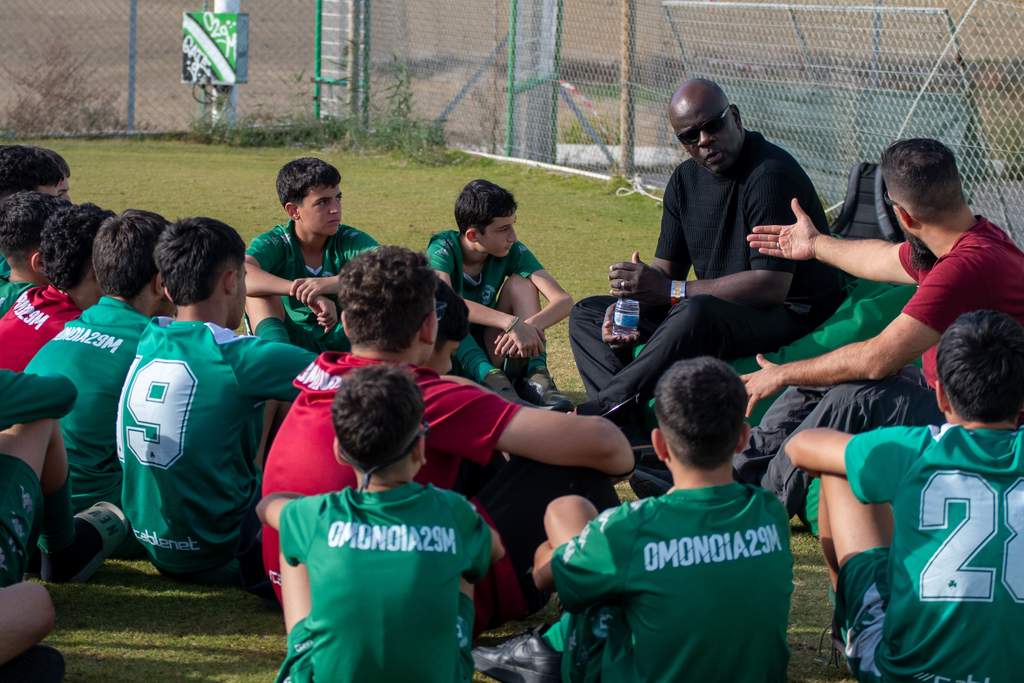
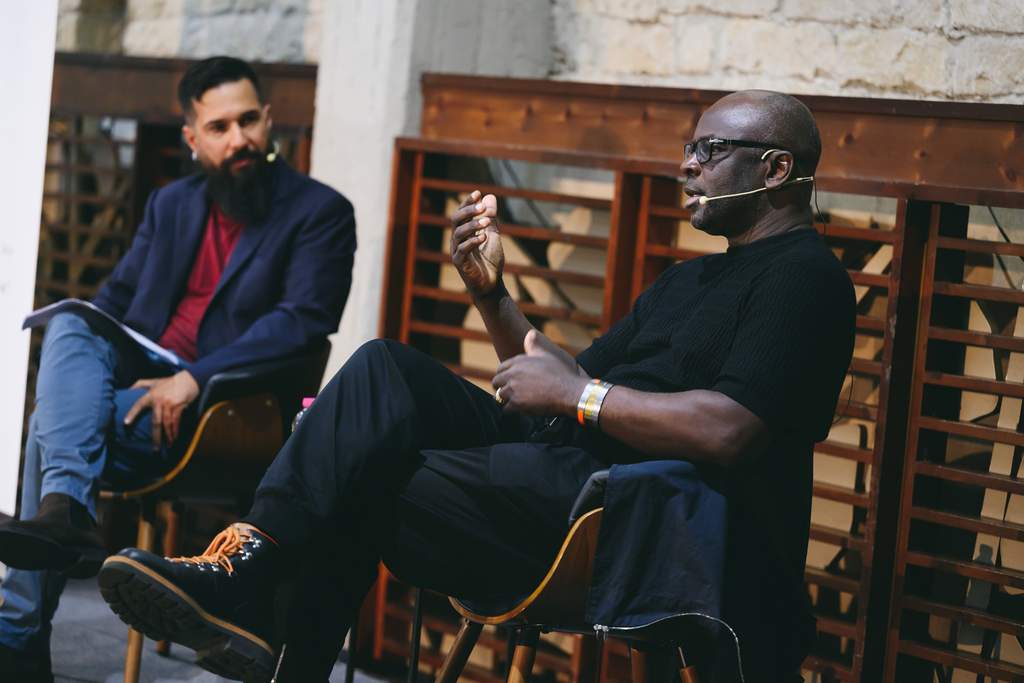
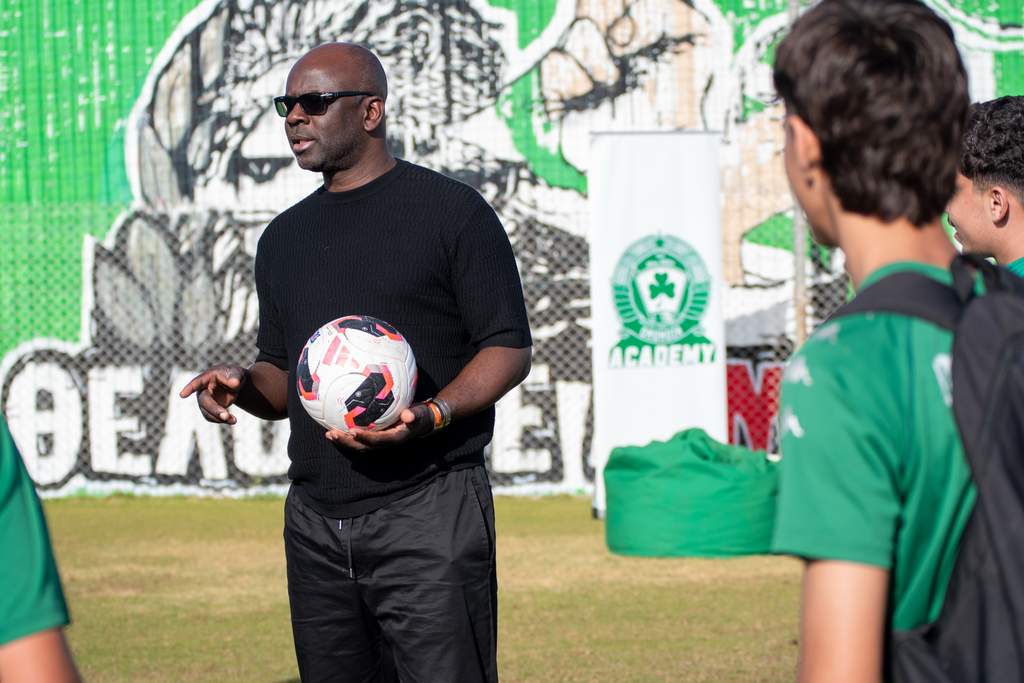
On Saturday, 21 November, the two came together in Cyprus. Thuram visited the island as a guest of the Limassol International Book Fair and the Center for Social Innovation (CSI). On the fair’s main stage, he discussed White Thinking with Vangelis Gettos, CSI’s arts and culture expert, who chaired the conversation. A few hours later, he was sitting on the grass among the youngsters of the People’s Athletic Club Omonia 29 May academies in Nicosia.
‘Everything is politics’
In Limassol, the conversation started from White Thinking, published in Greek by Antipodes Publications. Thuram kept coming back to his own experience. He moved to France from Guadeloupe when he was nine, and he sums up that moment in one phrase: “I became black at nine years old.”
Asked what he tells those who insist that sport and politics are separate, he was unequivocal: everything is politics.
Economic violence and ‘class war’
The social unrest in France turned the discussion to violence. Thuram maintained that the debate on violence, as the media conduct it, is a distraction. “There is economic violence produced by social inequalities, and nobody talks about it,” he said.
On economic divisions, he remarked that the rich are at least candid, recalling Warren Buffett’s well-known line that there is a class war and that his class, the rich, is winning it.
‘There is also the 65%’
On the far right in France, Thuram refused to give in to fatalism. He believes it is self-defeating to keep saying that the country will end up with a far-right president. If people present that outcome as inevitable, he said, they risk making it so.
If Marine Le Pen is on 35%, he pointed out, “there is also a 65% that does not choose her and is not far right.”
‘White thinking’ and Palestine
Palestine brought the discussion back to the heart of the book. Thuram contended that “white thinking” is at work there too, noting that Benjamin Netanyahu casts his actions as being carried out in the name of the West.
For Thuram, then, the problem is not limited to one leader or one government. It is also about how the West sees its place in relation to the rest of the world.
From the book fair to the pitch
A few hours later, at Omonia 29M, the same thinking found a new language.
Thuram used football to talk to the children about working together. “It’s not only the one who scores,” he told them. “For the ball to reach him, someone won it, someone passed it, and others made runs and worked for the move, even if the ball never reached them. The goal goes down in one person’s name; the effort belongs to many.”
A lifetime against racism
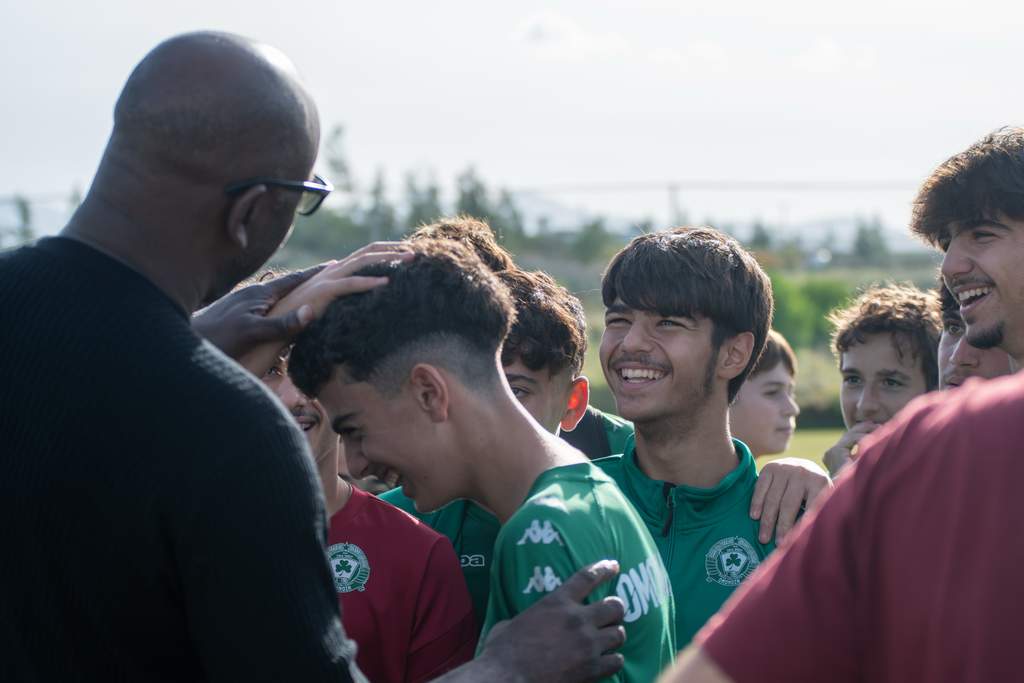
He also talked to them about equality between men and women, about stereotypes, and about the racism he faced himself, both as a child and as a footballer.
He told them how his professional career began. When Monaco spotted him at 17, his mother did not want to let him go, and his two older siblings had to talk her round.
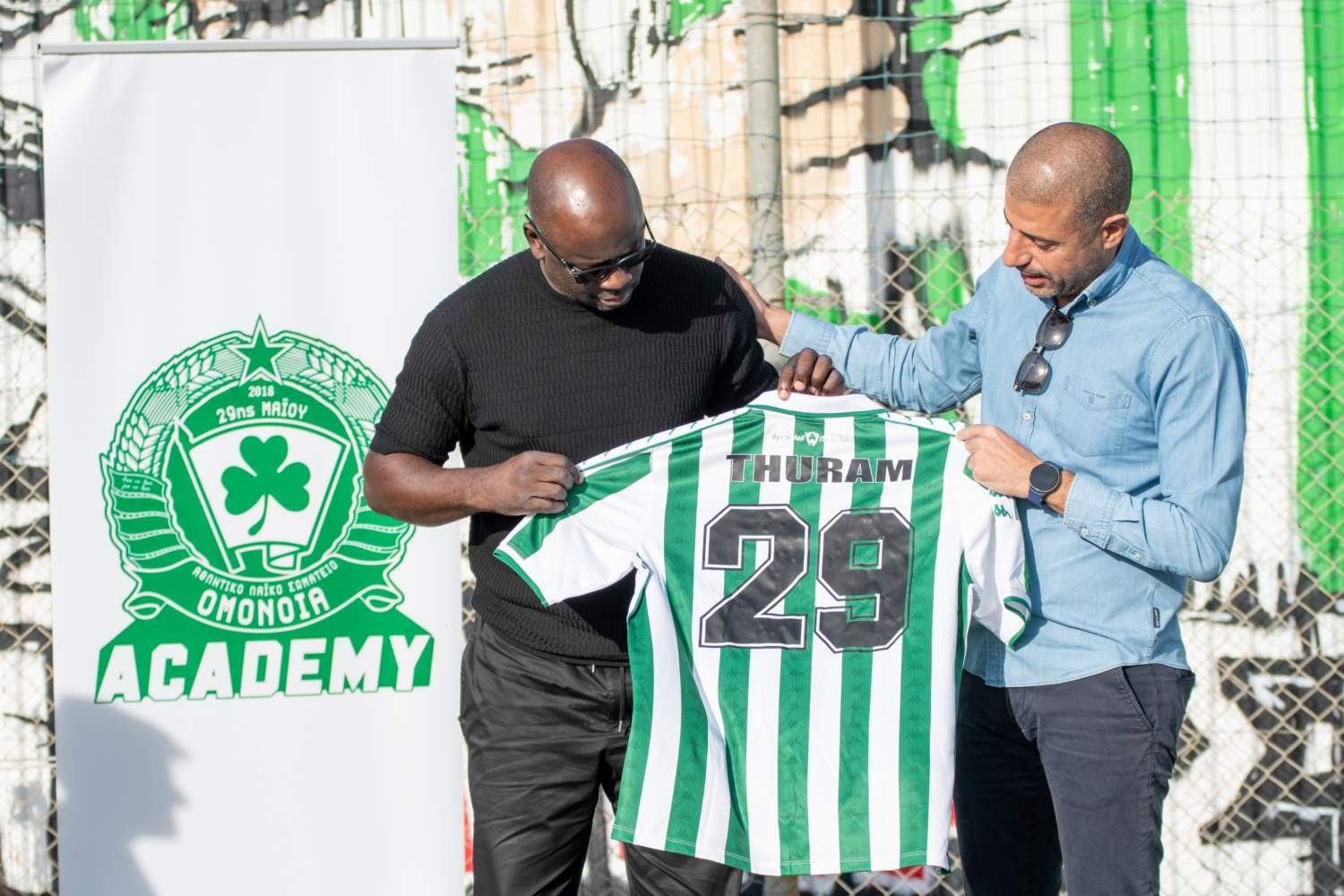
The children left with free copies of the Greek edition of White Thinking, donated by the Greece branch of the Rosa Luxemburg Foundation, which also supported the Greek translation. Thuram left with an Omonia 29M shirt bearing his name.
How we see the ‘other‘
From the conversation in Limassol to the meeting with children in Nicosia, the common thread was simple: the way we see other people shapes how we choose to live alongside them. Perhaps that is the essence of White Thinking: to recognise the way we were taught to look at others, so that we can change it.
Thuram’s visit to Cyprus was organised in cooperation with the Limassol International Book Fair, the Center for Social Innovation (CSI) and the Alliance Française de Limassol.
Read more:

