


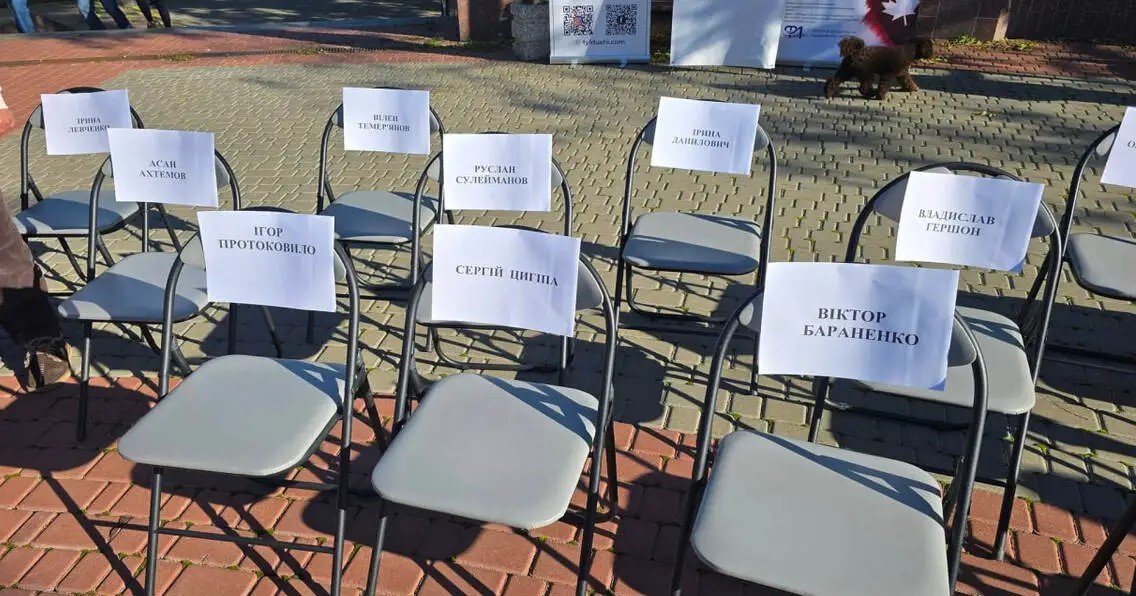
A few days ago, the Ukrainian embassy in Cyprus announced that it had taken part in the international “Empty Chairs” campaign, as a show of solidarity with Ukrainian journalists, artists, human rights defenders and all those who, as it put it, “because of Russian persecution, illegal imprisonment, enforced disappearances or murders, have been deprived of the chance to be with their loved ones and to live in freedom.
“Their names are written on the chairs as part of this campaign. Other chairs bear the words ‘Unknown Name’, because the exact number of Ukrainians being illegally held by Russia remains unknown.” Ukraine has repeatedly accused Russia of targeting journalists and other media workers in a war that has been under way since 2022 but effectively began in 2014, when Russia seized and annexed Crimea. The Ukrainian “Empty Chairs” campaign is a harsh reminder that journalists can become direct targets in armed conflict, and that the idea that every warring side respects the press is… an illusion.
In reality, having journalists on the battlefield, even in large numbers, does not “protect” them from attack, nor anyone with them or near them. A defining moment that threw this into sharp relief was the cold-blooded massacre of 32 journalists and 25 other civilians, many of them women and children, in Maguindanao province, in the Philippines, on 23 November 2009. No single day has seen a more heinous, abhorrent crime against journalists. The man behind the massacre was Andal Ampatuan, mayor of the town of Datu Unsay in the southern Philippines. There, armed gangs of Muslim warlords have for many years now been fighting one another, or the national army, their victims usually savagely brutalised. Still, the massacre added urgency to international pressure and led to the adoption in 2012 of the UN Plan of Action on the Safety of Journalists, coordinated by UNESCO.
In 2013, following a UN General Assembly resolution, 2 November was officially designated the International Day to End Impunity for Crimes against Journalists. And in 2019, a Manila court found several members of the Ampatuan family guilty of 57 murders and sentenced them to life imprisonment without parole. Sadly, though, for all the measures to end impunity, journalists and other innocent civilians are still dying in wars, leaving their empty chairs behind…

