


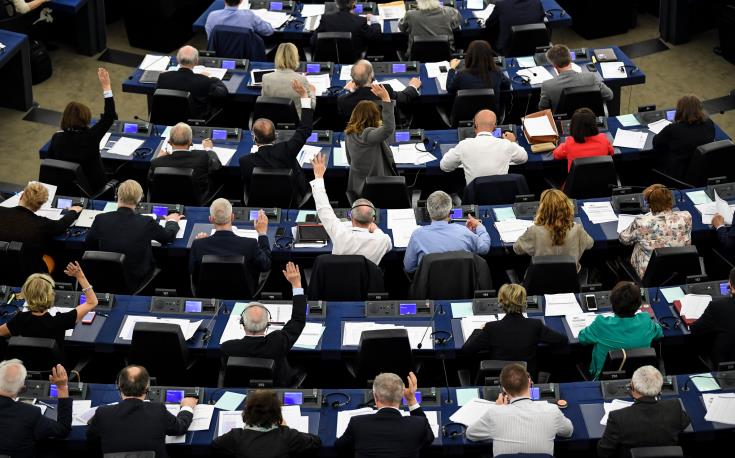
Nine years after Maltese investigative journalist Daphne Caruana Galizia was assassinated, the European Parliament has made press freedom a recurring test of the European Union’s commitment to democracy.
“Ultimately, it is not very safe to be a journalist in the Union,” stated Kostas Arvanitis, vice-chair of The Left group, at yesterday’s plenary session. He was pointing to the killings of Caruana Galizia, Slovak reporter Ján Kuciak and his fiancée Martina Kušnírová, Dutch crime journalist Peter R. de Vries and Greek journalist Giorgos Karaivaz.
Arvanitis renewed a proposal he had previously raised in Parliament: that the institution should effectively “adopt” the families, particularly the children, of journalists murdered in the line of duty, offering them tangible support.
Four killings, one democratic warning
Caruana Galizia was killed by a car bomb in October 2017 after years of reporting on corruption and political connections in Malta. Her assassination became a defining European case, exposing the consequences of a climate in which investigative journalism can threaten powerful interests.
In February 2018, Kuciak and Kušnírová were murdered in Slovakia. Kuciak had investigated alleged corruption and links between business interests and political figures. Their deaths triggered mass protests and intensified scrutiny of Slovakia’s political institutions.
In the Netherlands, De Vries was shot in Amsterdam in July 2021 and later died of his injuries. He was widely known for reporting on organised crime and supporting victims and witnesses.
Karaivaz, a Greek crime reporter, was shot dead outside his home in Athens in April 2021. His killing remains a particularly stark reminder of the challenges surrounding accountability for attacks on journalists.
The cases underline the risks facing journalists who investigate subjects that powerful individuals may prefer to keep out of public view.
In a 2023 resolution, the European Parliament condemned the killings and warned against impunity, stressing that attacks on journalists concern the entire EU, not only the member state where they occur. It subsequently called for stronger protection and accountability.
Brussels has laws, yet enforcement remains the test
The European Media Freedom Act, whose main provisions have applied since August 2025, establishes safeguards intended to strengthen media independence, pluralism and editorial freedom.
The Anti-SLAPP Directive, which entered into force in May 2024, seeks to protect people targeted by abusive litigation intended to silence participation in public debate. Member states had until 7 May 2026 to transpose it into national law.
Such lawsuits, known as strategic lawsuits against public participation, or SLAPPs, can impose substantial legal costs and psychological pressure even when the claims ultimately fail. For investigative outlets with limited resources, the threat of prolonged litigation can itself discourage reporting.
But legislation cannot, on its own, guarantee journalists’ safety, ensure effective investigations into murders or eliminate political pressure on independent media, nor does an EU directive automatically resolve shortcomings in national judicial systems.
Arvanitis argued that the measures adopted so far “have not decisively secured press freedom.”
The European Parliament’s own record shows that concern extends across political groups
Among those pressing the issue is David Casa, a Maltese MEP from the European People’s Party (EPP), who renewed calls for accountability on the ninth anniversary of Caruana Galizia’s assassination.
Other Maltese MEPs have approached the debate differently. During Wednesday’s plenary discussion, MEP Thomas Bajada of the Socialists and Democrats (S&D) emphasised the importance of independent journalism and warned that “disinformation and fabricated news undermine public trust.”
The exchanges illustrated that, while political groups disagree over how to assess national institutions and judicial proceedings, the protection of journalism remains a central European concern.
The Parliament also supports investigative reporting through the annual Daphne Caruana Galizia Prize for Journalism, which recognises outstanding journalism published or broadcast in the EU. The award carries €20,000 in prize money and highlights the public-interest reporting that can expose corruption and hold power to account.
Beyond commemoration
Arvanitis’s proposal introduces another dimension: what happens to the children and families when a journalist is killed? Financial and practical support would not undo the loss, nor should it replace criminal investigations or judicial accountability. But it could demonstrate that the consequences of an attack on journalism are not left entirely to individual families to bear.
For the European Parliament, such a proposal would require concrete consideration of its legal, financial and administrative feasibility. Arvanitis’s intervention does not establish that a support scheme already exists. It puts the idea on the political agenda and challenges lawmakers to consider what solidarity should mean in practice.
Nine years after Caruana Galizia’s death, Europe has new legal tools and a long record of parliamentary declarations. The measure of its commitment to press freedom will be whether those tools make journalists safer, whether justice is delivered in cases of murder and intimidation, and whether the people left behind receive meaningful support.
(Sources: European Parliament, European Commission)
Read more:

