


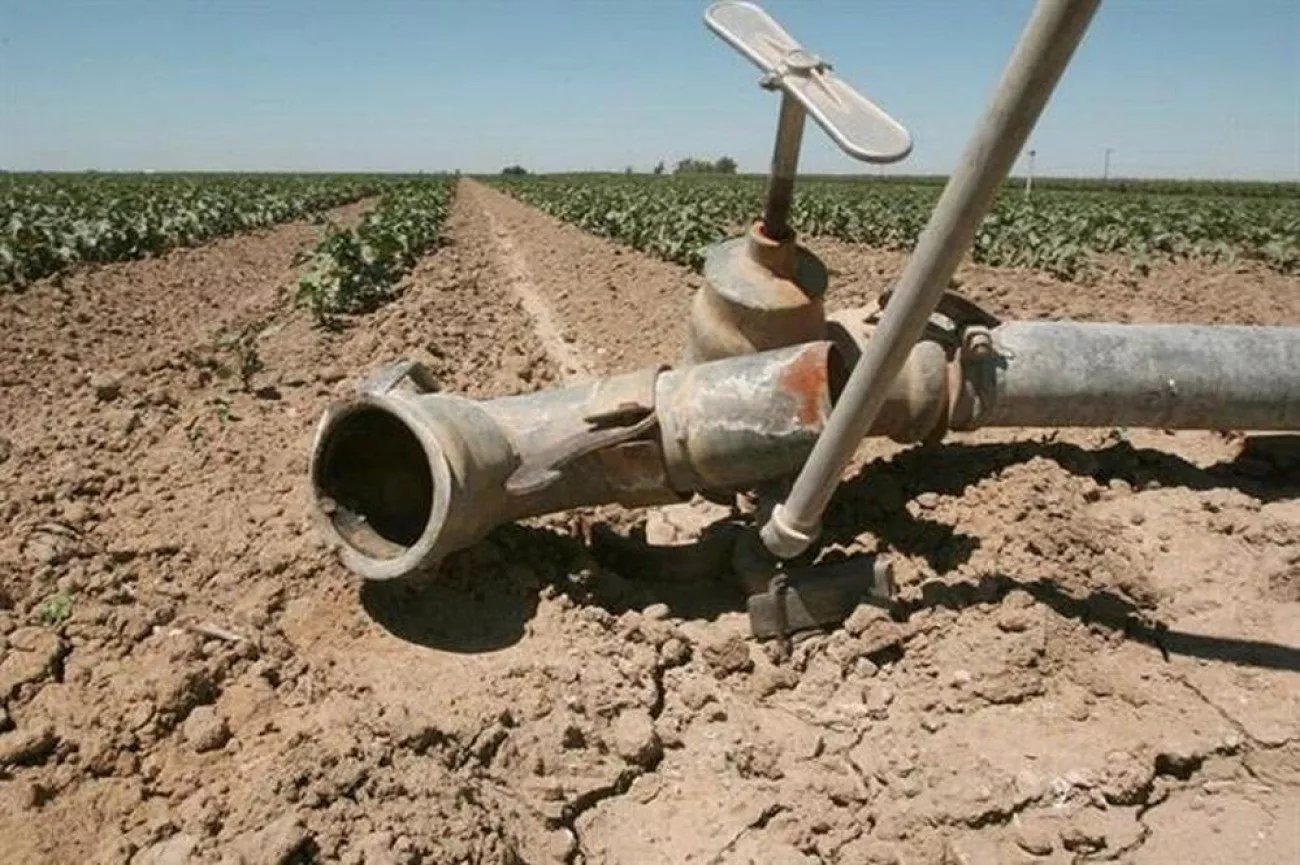
Only five of Cyprus’s 21 groundwater systems are in good condition, with the other 16 rated poor, mainly because of a negative water balance, according to monitoring data. The government is responding with a combined set of measures, with recycled water at the centre.
The five systems in good condition in both quantity and quality, and therefore not vulnerable to water shortages, are Maroni, Treminthos riverbed, Germasogeia, Paphos and Mari-Kalo Chorio. Fourteen of the 21 systems have good water quality.
Androlikou and Lefkara-Pachna are rated poor in quality. Androlikou shows negative level readings and Lefkara-Pachna a falling level, and Lefkara-Pachna is not recommended for drinking water supply. In the western Mesaoria zone, measurements show the water is unfit for human consumption.
The systems highly vulnerable to drought are Kokkinochoria, Treminthos riverbed, Kiti-Pervolia, Softades-Vasilikos, Maroni, Mari-Kalo Chorio, Limassol, Akrotiri, Paramali-Avdimou, Letymvou-Giolou, Peyia, Chrysochou-Gialia, Chrysochou riverbed, Central and Western Mesaoria, and Lefkara-Pachna.
Questions are often raised about the effectiveness of state policy and the obstacles to making full use of recycled water. The state’s official position is that its policy has not failed, but that weaknesses must be clearly acknowledged and its strategy continually adjusted, without dismissing the work under way. No single type of project, such as dams or desalination plants, can solve the problem on its own, and technical forecasts are constantly updated to reflect changes in inflows, consumption and new projects coming into operation.
The government’s policy combines higher water production, cutting network losses, using recycled water, upgrading infrastructure, water saving and a review of long-term water policy. By 2030, it aims to strengthen Cyprus’s water resilience fully through infrastructure projects, desalination and water saving. Recycled water from the tertiary treatment of urban sewage provides a steady, uninterrupted supply that does not depend on rainfall.
Recycled water
Cyprus is among the EU’s leading countries in using recycled water, with one of the highest recovery rates. In 2025 it produced 32.6 million cubic metres of recycled water, of which 30.1 million were used directly or indirectly. The share used rose steadily from 89 per cent in 2023 to 90 per cent in 2024 and 93 per cent in 2025.
About 90 per cent of recycled water goes to agriculture, covering almost 37 per cent of the country’s total irrigation needs. In 2024, 20 million cubic metres of recycled water were supplied for irrigation, compared with 33 million from dams. Some 55 per cent of recycled water is used directly to irrigate crops, while 30 per cent is used indirectly to recharge aquifers, from which it is later recovered.
Recycled water used to irrigate green spaces and crops provides extra protection against drought and frees up an equal amount of fresh water for drinking supply. Its nutrients help raise agricultural output and sustain traditional farming in dry conditions. Where it is used to recharge groundwater, at Ezousa and Akrotiri, it helps hold back seawater intrusion and, in the long term, improve the quality of coastal aquifers.
Obstacles
Some recycled water is still not fully used or is temporarily discharged into the sea. Making full use of it depends not only on the amount produced but also on technical and geographical factors. Extensive transport networks and storage are needed. Sewage treatment plants are often far from the farming areas that need irrigation, and while wastewater is produced all year round, demand for irrigation peaks in summer. The water’s quality must also match its intended use.
Where treated effluent is discharged into the sea, this is done under strict environmental terms and permits. The aim is to replace discharges with storage and transport infrastructure, as in Limassol, where 13 million cubic metres a year are supplied for irrigation.
Further major infrastructure projects are needed to make full use of the growing volumes from sewage treatment plants. Connecting all households and businesses to sewerage systems is expected to add about 22 million cubic metres of recycled water a year, and new sewage treatment plants due by 2030 will increase output further.
The National Investment Plan for Water Projects includes a 25.7 million euro recycled water project in Larnaca, as well as projects in Nicosia, Limassol and the free Famagusta district.
Under EU Regulation 2020/741, the Water Development Department (WDD) has drawn up a risk management plan to protect public health, the environment and water quality.

