


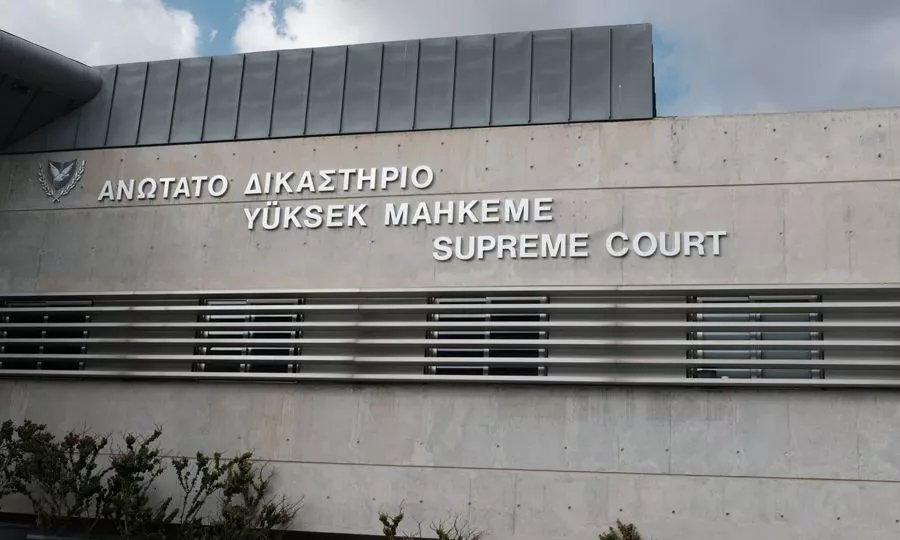
The Supreme Court has rejected a man’s latest attempt to block his extradition to Russia, clearing the way for him to be handed over to stand trial in a piracy case 17 years after the alleged offences.
The man, an Israeli national held at the Central Prisons, had applied for a writ of habeas corpus and his release. The court ruled that he had not shown his detention was unlawful, or that extraditing him to the Russian Federation would be unjust or oppressive.
He has been held since the Larnaca District Court ruled on 25 February 2026 that the conditions for his extradition were met, and ordered that he be detained until it is carried out. The Russian authorities want to try him for piracy involving violence and the use of weapons, or objects used as weapons, by an organised group. According to their request, the offences were allegedly committed between 24 July and 17 August 2009.
The Supreme Court said habeas corpus proceedings exist to review whether a detention is lawful and to protect personal liberty. But where someone is held after an extradition request has been approved, it does not act as an appeal court. It cannot re-examine the facts found by the court that ordered the extradition, or substitute its own discretion, as long as that discretion was exercised within legal limits.
The man argued that it had not been sufficiently proven that he was the person the Russian authorities were looking for. The judge found that this was in essence a challenge to a finding of the district court, which had evidence such as passports and related certificates before it. According to the Supreme Court, that evidence supported the conclusion that he was the person sought by the Russian Federation.
The court also rejected his argument that the offences were time-barred under Russian law. The district court had examined the issue even though it was not raised at the hearing, taking into account Russian provisions on, among other things, the limitation period and the grounds for suspending it. Nothing had been put before the Supreme Court to show that the lower court’s approach was wrong.
His argument that, after more than 16 years, evidence may have been lost or destroyed and witnesses may no longer be available also failed. The court said he had produced nothing specific to show that witnesses had died or emigrated, or that crucial evidence had been lost or not preserved. General references to possible ill-treatment in Russia were likewise found insufficient.
The ruling noted that since the Russian Federation’s withdrawal from the European Convention on Human Rights, assurances given by Russian authorities can no longer be considered satisfactory on their own. But that does not mean every extradition to Russia is ruled out, the court said. The person sought must present specific evidence showing a real and evident risk that his human rights would be violated.
The court also dismissed his claim, made under the Extradition of Fugitives Law, that extraditing him would be unjust and oppressive. It took into account, among other things, his attitude and conduct as accepted by the district court, and the reference to his ‘disappearance’ for many years and to the Russian authorities’ efforts to trace him and bring him to justice.
It concluded that the evidence before the district court justified its findings and that the decision to extradite and detain him was lawful, and ordered that he remain in custody until he is extradited. No order was made as to costs, and the translators’ fees will be paid by the Republic.

