


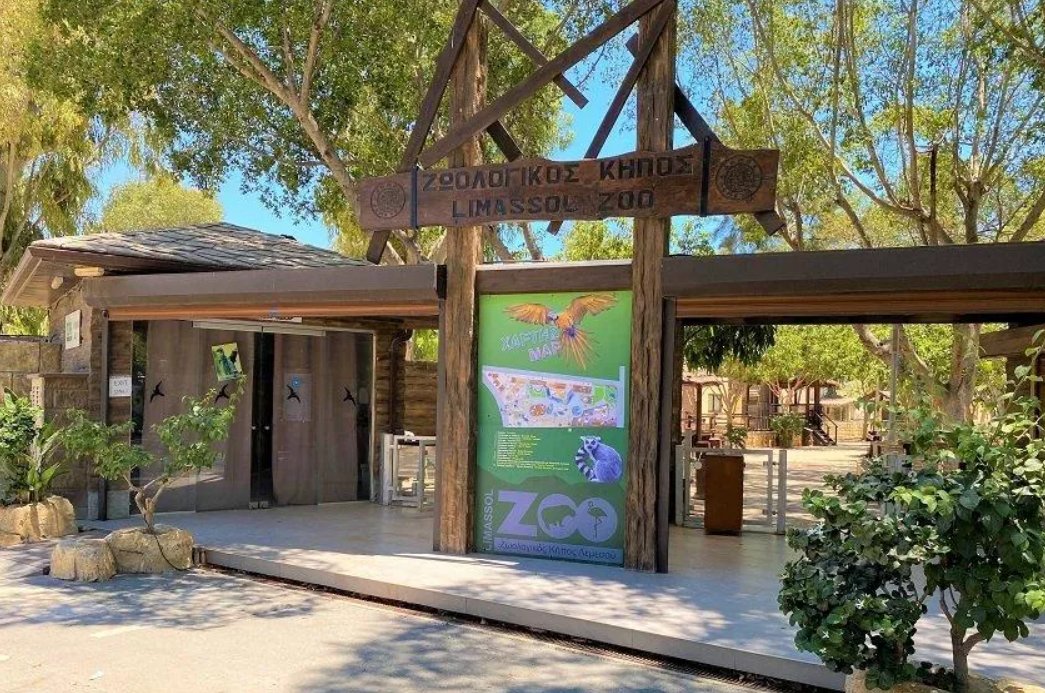
A revised proposal to transform Limassol Zoo returns to the municipal council today, after the previous plan was rejected on June 18 by 14 votes to ten.
The earlier proposal, to convert the zoo into a “Nature” Biodiversity and Urban Environment Centre for Limassol, was submitted by the Cyprus Centre for Environmental Research and Education, part of the Limassol Metropolis. The new proposal takes into account the positions and decisions expressed after that rejection and will be presented to the council today, Thursday.
Mayor Yiannis Armeftis told Phileleftheros that the revised proposal reflects decisions taken at the previous council meeting. He said an expanded meeting was held with the leaders of the council’s political groups, at which a new proposal for the zoo’s operation and transformation was presented.
The main goal remains converting the site into an educational centre focused on biodiversity and the urban environment, Armeftis said. However, the new proposal allows for a limited number of animals, mainly birds, along with a few other species that could be housed without being kept in captivity conditions.
“The spaces will be designed so birds are in a wider area, not cages,” he said, adding that they would either roam freely or be kept within protective netting rather than cages.
A limited number of animals and the absence of captive conditions remain the core requirement, Armeftis said. “We will not have animals in captivity. That was the basic principle,” he said, describing it as a new proposal involving a limited number of mostly domestic, not wild, animals.
On the atmosphere surrounding the plan, Armeftis said his first impression was positive. “From what I understand, it seems to be positive,” he said, adding that a presentation would be held to inform all council members and that no decision would be taken immediately.
He said the revised proposal’s presentation is on the agenda for the next council meeting, after which the council will be asked to take a position on the matter.
Armeftis said avoiding animal captivity remained his own key condition. “For me personally, the red line is no animals in captivity,” he said. “So either the animals will be free, or conditions will be shaped to guarantee their welfare.”

