


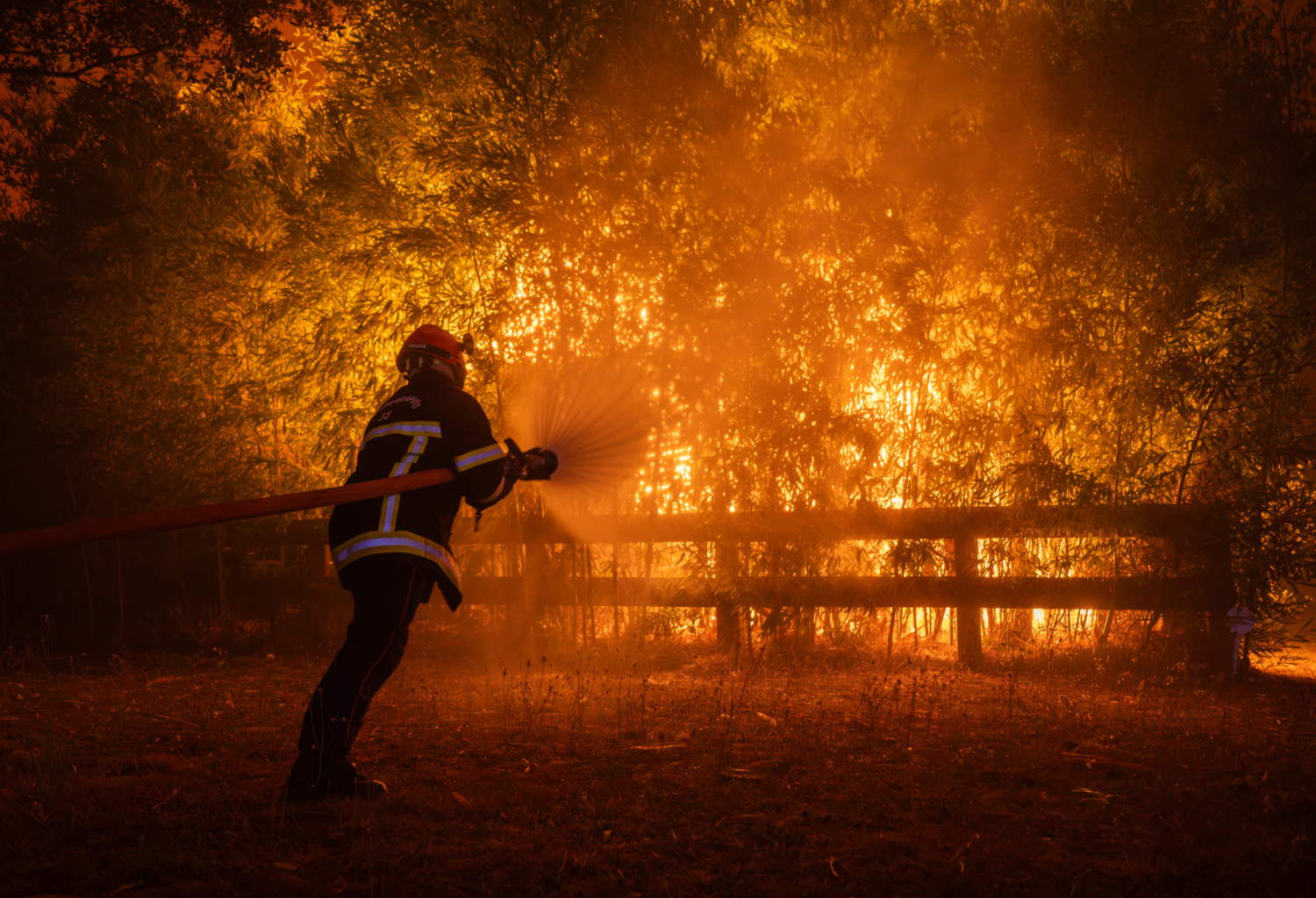
A historically hot summer on the planet’s fastest-warming continent has contributed to thousands of deaths and heightened the risk of wildfires across Europe.
High temperatures and tinder-dry conditions have fuelled a surge in wildfires, with blazes forcing thousands of people to evacuate in Croatia, France, Germany, Greece and Spain. Firefighters in France continued battling several major wildfires on Sunday, while Belgium recorded its largest modern-day wildfire, devastating 30 square kilometres along the border with Germany.
New EU data show that 2026 is experiencing an exceptionally severe wildfire season, with burned area at times exceeding the record-setting pace of 2025. As of 23 August 2026, the EU had recorded 623,470 hectares burned. That is below the 977,579 hectares recorded by the same date in 2025. The European Commission’s Joint Research Centre explicitly describes 2025 as “the worst year on record.”
However, 2026 has overtaken 2025 for the same point in the season in some of the earlier comparisons. The JRC reported on 12 August that by 5 August 2026, 505,683 hectares had burned versus 379,392 hectares by 5 August 2025.
In spite of these figures, the number of professional firefighters in Europe fell by 18,000, including a reduction of over 4,000 in France. These cuts fall under the auspices of the European Commission’s strict fiscal rules, which have led a significant pay-cut in public services, including the fire fighting services.
Countries such as Poland and France have seen the greatest cuts after being put under an Excessive Deficit Procedure in 2024.
This is not only dangerous for the public and firefighters as it can also be interpreted as a false economy. A recent Financial Times analysis, published in August 2026, estimated that wildfires had already caused more than €3.1 billion in economic losses in just five of the worst-affected EU countries: France, Greece, Portugal, Romania and Spain. This was based on the first roughly two months of the peak fire season.
Europe’s overstretched firefighters are facing a double burden: tackling the wildfires that have ravaged the continent this summer while also dealing with staffing cuts that could undermine Europe’s ability to respond to future emergencies.
Read more:

