


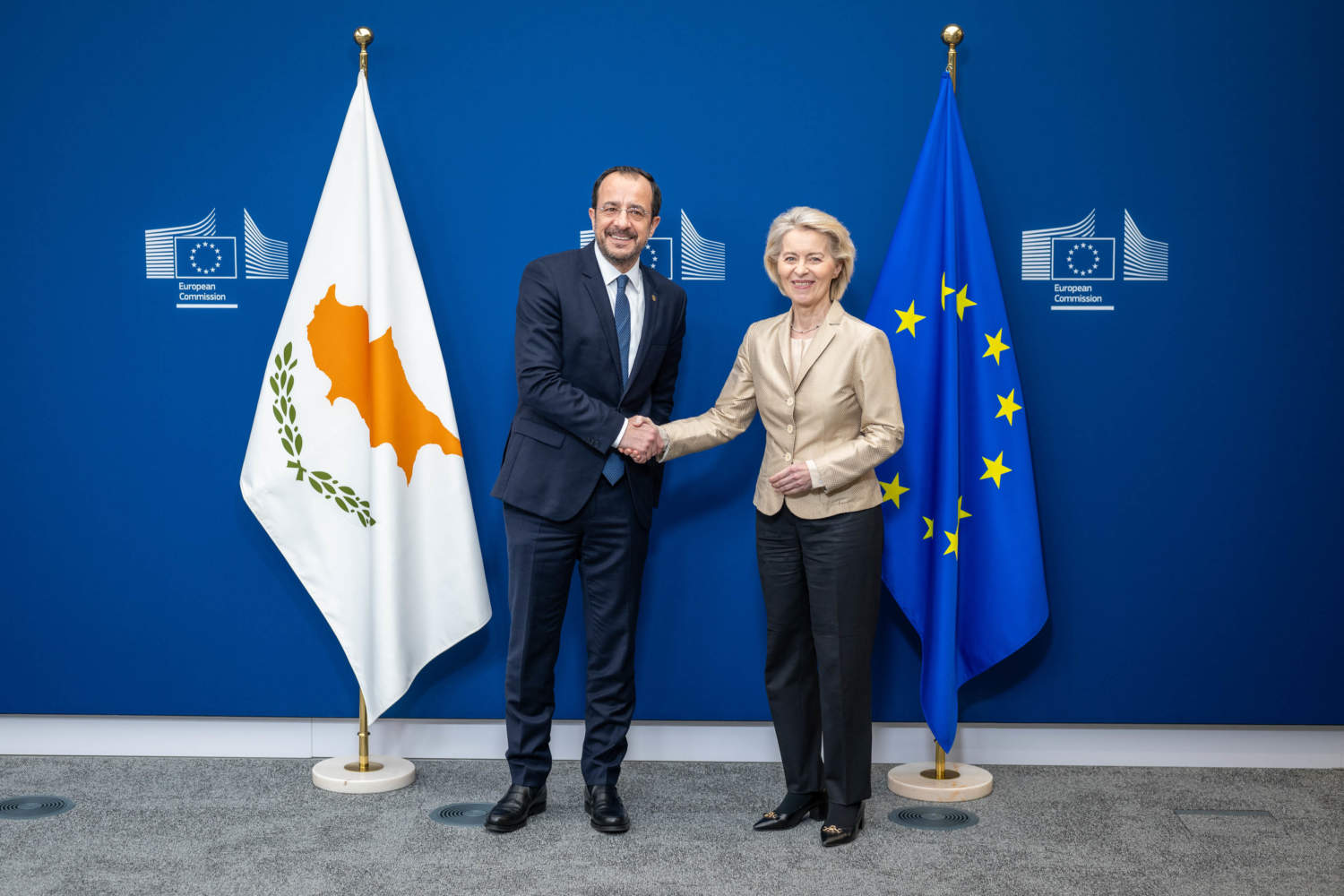
When EU leaders gather in Cyprus for an informal summit on 23–24 April, one item on the agenda will stand out: a structured debate on Article 42(7) of the Treaty on European Union — the bloc’s mutual defence clause. Cyprus pushed to secure its place on the agenda. Understanding the push requires looking beyond the immediate regional crisis and into the island’s unresolved division.
What is Article 42(7)?
Article 42(7) is the closest the EU has to a collective defence guarantee. It obliges member states to aid and assist any fellow member that becomes the victim of armed aggression on its territory, by all means in their power. It is often compared to NATO’s Article 5, though it is weaker in two important respects: it does not create an automatic EU military response mechanism, and it explicitly defers to NATO for member states that are part of the alliance.
The clause has been formally invoked only once — by France following the Paris terrorist attacks of November 2015. The response was improvised. Member states helped bilaterally, through individual commitments, but no centralised EU coordination mechanism was brought into play, because the clause does not require one.
The experience did, however, expose a deeper ambiguity that has never been properly addressed: the clause creates a legal obligation to assist, but leaves entirely open what that assistance should look like, who coordinates it, and at what scale.
Why Cyprus, and why now?
Cyprus is not a member of NATO. That fact shapes its security arrangements considerably. While most EU member states rely on the alliance’s Article 5 guarantee as their primary defence backstop, Cyprus has no such arrangement. Its security has historically rested on a combination of bilateral defence agreements and its own armed forces. Some argue that the presence of British Sovereign Base Areas, two UK military installations that remained on Cypriot territory after the island gained its independence from the British Empire in 1960, also provides security to the island and keeps Turkish aggression at a distance.
That arrangement has always been awkward. The bases are outside official Cypriot control and serve British strategic interests. The drone strike on RAF Akrotiri earlier this month, during the US-led war against Iran, placed Cyprus in the middle of a live military incident on its own land, with limited influence over how it was managed.
The current war in the Middle East has given Cyprus political momentum it did not previously have. With EU member states deploying military assets to the Eastern Mediterranean and Cyprus’s security featuring in the March European Council conclusions, Nicosia has moved to convert that attention into something tangible.
The procedural gap
What the debate has highlighted is a gap not in triggering the clause — a member state can invoke it unilaterally, without any prior collective debate or Council decision — but in what happens afterwards. Once Article 42(7) is activated, there are no agreed procedures governing the response: no defined framework for who coordinates it, what form assistance should take, or at what scale. The April summit is intended to begin addressing that.
For Cyprus, getting those procedures defined would mean that in any future security crisis, an established EU framework exists to call upon, rather than depending on the goodwill of individual member states or the specifics of existing bilateral arrangements.
Whether other member states share the same urgency as Cyprus does is a different question.
The Cyprus problem
Any discussion of EU collective defence in the Cyprus context carries a further dimension that, while well understood, tends to remain outside the formal parameters of the debate. Cyprus has been divided since 1974, when Turkish forces occupied the northern third of the island following a coup backed by the Greek military junta. Turkey maintains a military presence in the occupied north to this day, and the dispute remains unresolved. Also, Turkey is a NATO member.
That combination places real limits on how explicitly the implications for Article 42(7) can be discussed in a forum that includes NATO allies. Cypriot officials rarely frame the debate in those terms publicly. The formal conversation remains anchored in the current regional crisis and the general need for procedural clarity.
What comes next
The April informal summit will not resolve these questions. It is the start of a conversation. The March European Council conclusions did include references to Cyprus’s security and acknowledged the island’s intention to open talks with the UK on the bases — outcomes Nicosia will point to as progress.
Whether the debate produces concrete results will depend on how much appetite other member states have for defining a mechanism that, for most of them, has rarely been a priority until now.
Read more:

