


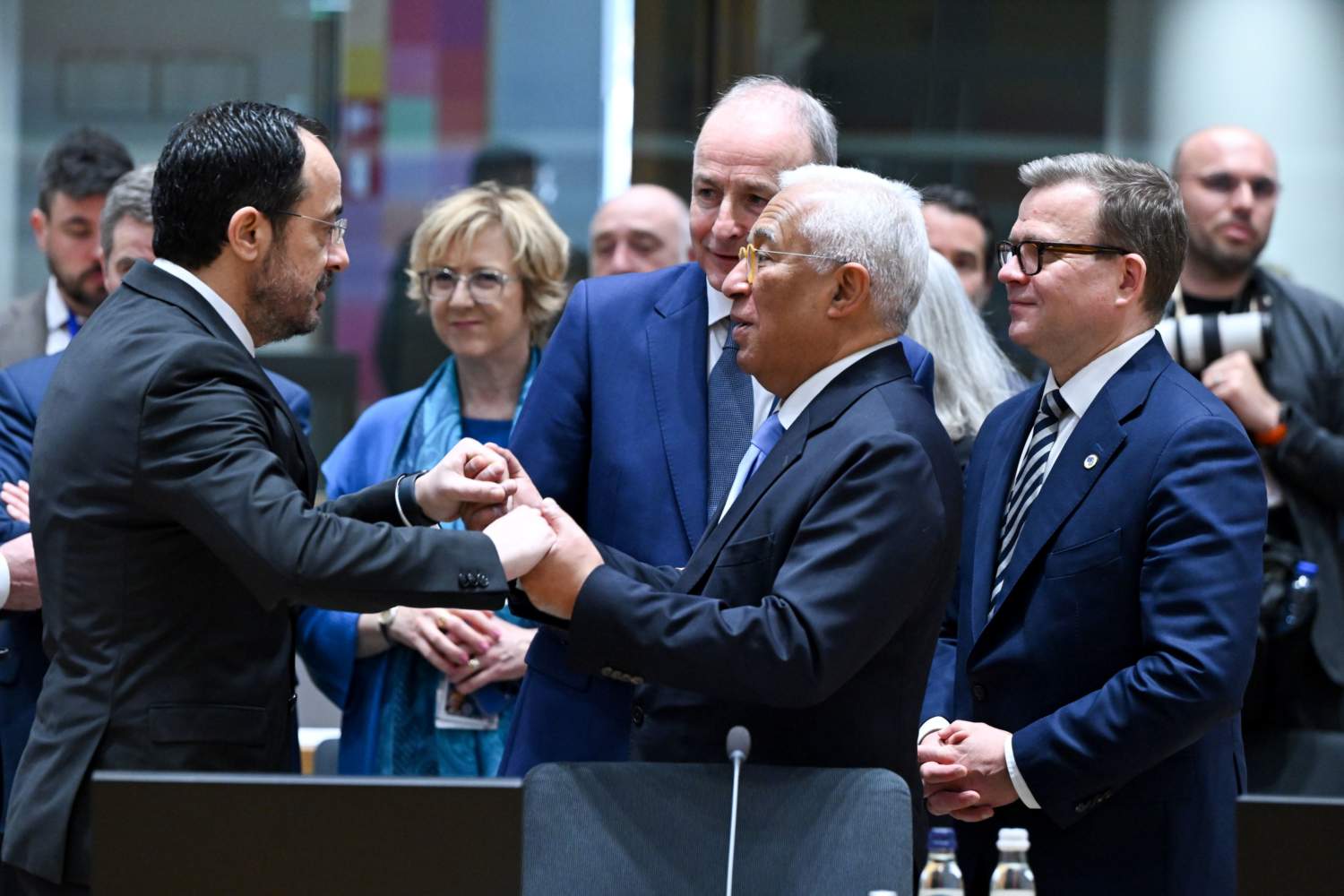
Article 42(7) — the EU’s mutual defence clause — is to be placed on the agenda of the informal European Council summit to be held in Cyprus on 23–24 April, following the spring summit which revealed the absence of concrete procedures for activating it.
President Nikos Christodoulides raised the matter with the Presidents of the European Council and the European Commission, securing agreement to include it as a formal agenda item at the April meeting.
Government sources said throughout the spring summit that Cyprus’s experience — member states responding to a security request with direct, practical support — could serve as a basis for a more substantive discussion on the clause. Talks in April are expected to address how and when Article 42(7) can be activated, who determines the initial response, and at what scale.
Regional developments ran through all items on the spring European Council agenda — Competitiveness, Defence and Security, Migration, and Multilateralism. In his interventions, Christodoulides called for the EU to signal more active engagement in the regional crisis and to pursue a de-escalation initiative alongside other parties. Cyprus, as a state in the region with established contacts among regional leaders, also conveyed their concerns and expectations to EU partners.
The March European Council conclusions addressed the Eastern Mediterranean directly, stating that the EU “stands firmly and unequivocally by the side of the Member States close to the region” and welcoming the deployment of military assets in the Eastern Mediterranean in support of Cyprus.
The conclusions also acknowledged Cyprus’s intention to open talks with the United Kingdom on the British bases on the island, with the EU stating readiness to assist when needed. That reference was secured during Thursday’s discussions. Government circles said afterwards that “the practical solidarity of our partners and the inclusion of relevant references in the Conclusions confirm that Cyprus’s security is an integral part of the European Union’s collective security.”
The Gaza section of the conclusions called on Israel to allow immediate, unimpeded access for large-scale humanitarian aid — including “through the Cyprus Maritime Corridor as complementary to land routes” — and to comply fully with its obligations under international law, including international humanitarian law.
Read more:

