


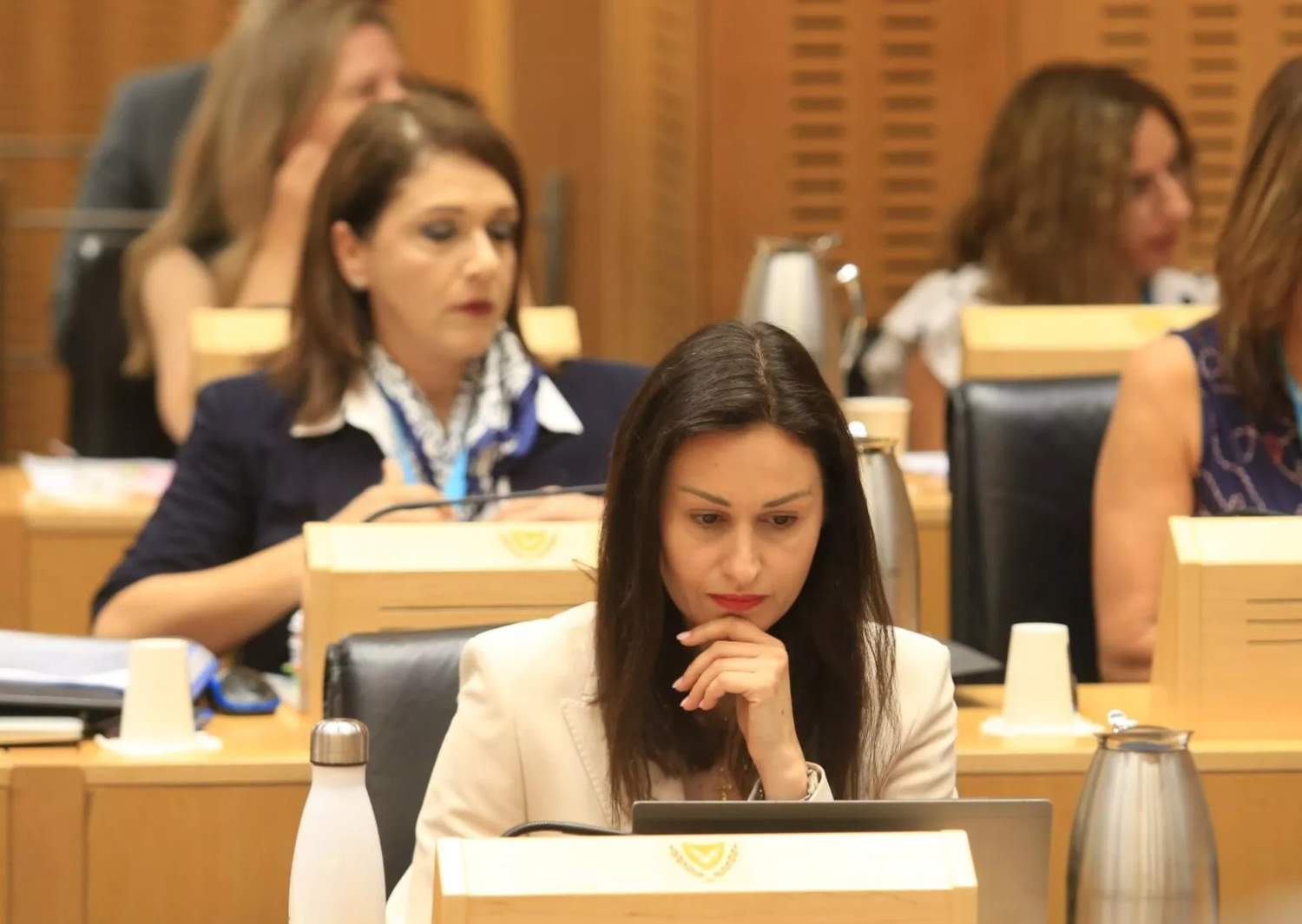
The parliament approved an amendment to the Fiscal Responsibility and Fiscal Framework Law on Thursday, allowing the government to bypass standard economic viability assessments to fast-track new desalination units this year, amid fierce criticism of Agriculture Minister Maria Panayiotou and widespread calls for her resignation.
The bill passed with 23 votes in favour, two against — A. Themistokleous and Chr. Orfanidis — and 14 abstentions. AKEL announced it would abstain, recognising the need for water but saying it had no confidence in the government and did not want to set a precedent.
The amendment grants a limited, time-bound exemption from the requirements of the fiscal responsibility legislation exclusively for desalination projects to be completed within 2026.
MPs from across the political spectrum spent hours attacking Panayiotou before the vote. Irene Charalambidou said the Agriculture Ministry had not even appeared before the relevant committee during discussions, and accused the minister of failing to act in time on water shortages.
Costly last-minute bypasses of proper studies were the result, she said, adding that millions were being wasted at the taxpayer’s expense.
Charalambidou went further, describing Panayiotou as an incapable minister whose failures had been repeatedly demonstrated, accusing the president of retaining her for pre-election reasons.
She said the minister had destroyed half of Cyprus in last year’s fires and was now set to leave the country without water.
Alexandra Attalidou questioned how much more parliament could tolerate from the Agriculture Ministry, citing the destruction of Akamas, four withheld reports, the water shortage, damaged dams, departments operating illegally since 2017 over Kouris river licences, the draining of the Saittas reservoir — the only water reserve in case of a Troodos fire — and the ongoing foot-and-mouth disease outbreak.
She said she would not accept any exemption until the president formed a cabinet capable of solving problems.
Charalambos Theopemptou said he would support the bill but considered it misguided.
Themistokleous, who voted against the bill, said he had long predicted the minister would make a mess of things, and warned that passing the legislation could open the door to potentially illegal actions.
He also warned that foot-and-mouth disease risked spreading across Cyprus from Cape Apostolos Andreas to Akamas.
Stavros Papadouris said his party had twice called for the minister’s dismissal, but would support the bill because economic viability studies took too long and Cyprus could not afford to wait months for new desalination capacity.
He added that anyone seeking to use the issue for electoral point-scoring should do so without his party’s involvement.
Christiana Erotokritou urged colleagues not to let pre-election campaigning cloud their judgement, arguing the exemption was narrowly focused on avoiding a lengthy economic viability study for a project that had to be completed within 2026.
She questioned what the alternative was for securing the country’s water supply.
Stefanos Stefanou of AKEL said the amendment was needed only because of government incompetence, accusing the government of having placed its hopes on divine intervention to solve the water crisis.
He said AKEL’s abstention reflected recognition of the need while withholding trust from the government.
Kyriakos Chatzigiannis said the desalination issue was too serious to be used as a political football, noting he had been among the first to call for the minister’s resignation.
Onouphrios Koullаs said that when his party had warned early on and called for timely measures, the minister and the government had reassured the public there was no problem.
The minister’s failures spanned wildfires, the water crisis and foot-and-mouth disease — covering prevention, containment and overall management — and there was no alternative but her resignation, he said.
Pavlos Mylonas defended the bill, saying Panayiotou was not responsible for the lack of rainfall, and that the exemption was a practical necessity to avoid being caught short in the summer.
Averof Neofytou said drily that unemployment was an act of God, but water shortages were the result of human incompetence.

