


The India–Middle East–Europe Economic Corridor (IMEC) is emerging as one of the most ambitious geo-economic initiatives of the past decade, with the potential to reshape connectivity between Asia and Europe. Envisioned as a network of railways, ports, energy links and digital infrastructure stretching from the Indian Ocean to the Mediterranean and onward to Europe, the corridor aims not only to facilitate trade but to reinforce the resilience of global supply chains.
Yet IMEC’s significance extends well beyond economics. As Plamen Tonchev, Head of the Asia Unit at the Institute of International Economic Relations (IIER) in Athens, tells Phileleftheros, the project carries substantial geopolitical weight, opening both new avenues of competition and strategic opportunity across the Mediterranean. For Cyprus, in particular, the initiative could represent a meaningful upgrade in geostrategic positioning — provided the island leverages its maritime and energy assets effectively.
At the same time, Tonchev cautions that IMEC remains a long-term undertaking. High financial costs, complex coordination among multiple states and persistent instability in the Middle East suggest that its realisation will be gradual — “a marathon rather than a sprint”.

The India–Middle East–Europe Economic Corridor (IMEC) is an ambitious initiative. Could you outline the project in brief?
It is indeed an ambitious initiative aiming to connect India with Europe through transport infrastructure, energy networks and transcontinental data cables. The plan includes the construction of railway lines crossing the United Arab Emirates, Saudi Arabia, Jordan and Israel, effectively linking the Indian Ocean with the Mediterranean. There has also been a proposal to build a pipeline for the transport of green hydrogen.
The idea of IMEC was promoted by India during the Biden administration in the United States, though it also builds, to some extent, on the Abraham Accords signed during Donald Trump’s first term. I should clarify, however, that this remains a blueprint under discussion. We are still far from having a clear picture of the routes, the parties involved, the legal framework governing the required investments and the sources of financing.
Is IMEC a response to China’s growing influence? If implemented, to what extent would it affect Beijing’s interests?
It is true that many analysts initially interpreted IMEC in precisely that way when the idea was presented in 2023 at the G20 summit in New Delhi. It is not insignificant that Chinese President Xi Jinping chose not to attend that summit, partly because information had already circulated regarding the proposal’s adoption.
India has not joined China’s Belt and Road Initiative (BRI), yet IMEC’s rationale is not solely linked to objections to the Chinese-inspired “New Silk Road” or to broader geopolitical rivalry between the West and China. IMEC is conceived as a complementary corridor for transport, energy and telecommunications, designed to enhance supply chain resilience between Asia and Europe.
Could you elaborate on IMEC’s significance for supply chain resilience?
Certainly. A clear example concerns the maritime route between the Indian Ocean and the Mediterranean, which has proven vulnerable on several occasions. Consider the incidents of piracy off Yemen and Somalia, or the Houthi attacks in the Red Sea over the past three years. We should also recall the 2021 incident involving the Ever Given, which ran aground in the Suez Canal and blocked it for roughly a week. At the time, Lloyd’s List estimated that the total damage to the global economy reached 60 billion dollars due to the delays.
The existence of alternative corridors can only have a positive impact. Beijing appears to recognise this as well, albeit implicitly. Notably, Chinese authorities have maintained a relatively low profile, and reservations regarding IMEC have come from certain commentators rather than from official statements.
Which countries stand to benefit most from IMEC?
India’s interest is evident, as reflected in Prime Minister Narendra Modi’s visits to Mediterranean countries: Greece in 2023, Italy a year later, France in February 2025, Cyprus last year and now Israel. Naturally, countries along the corridor in the Arabian Peninsula and the Mediterranean also expect benefits.
However, we should not overlook competition among European states for the anticipated gains — for example, between Greece, Italy and France. Greece, in particular, could benefit significantly from linking IMEC with the Three Seas Initiative (3SI), which spans large parts of Eastern Europe, from the Baltic to the Black Sea and the Adriatic. Greece joined the 3SI in 2023.
Could any countries emerge as losers from IMEC?
Currently, the primary form of connectivity between Europe and Asia remains maritime routes via the Red Sea. If IMEC becomes operational, Egypt could potentially lose revenue. The Suez Canal generates approximately 10 billion dollars annually, equivalent to 2%–3% of Egypt’s GDP.
There is also a historical precedent worth recalling. After the Suez Canal opened in 1869, the Ottoman Empire experienced a decline not only in public revenues but also in its geopolitical influence in the Eastern Mediterranean. Egypt could face a comparable scenario if and when IMEC becomes functional.
What role could Cyprus play in IMEC?
Cyprus’s potential role is internationally recognised, as evidenced by Prime Minister Modi’s visit a year ago. The establishment of institutional frameworks such as the India–Greece–Cyprus Business Council is also significant. It is positive that the Cypriot EU presidency has included IMEC on the agenda for discussion with European partners.
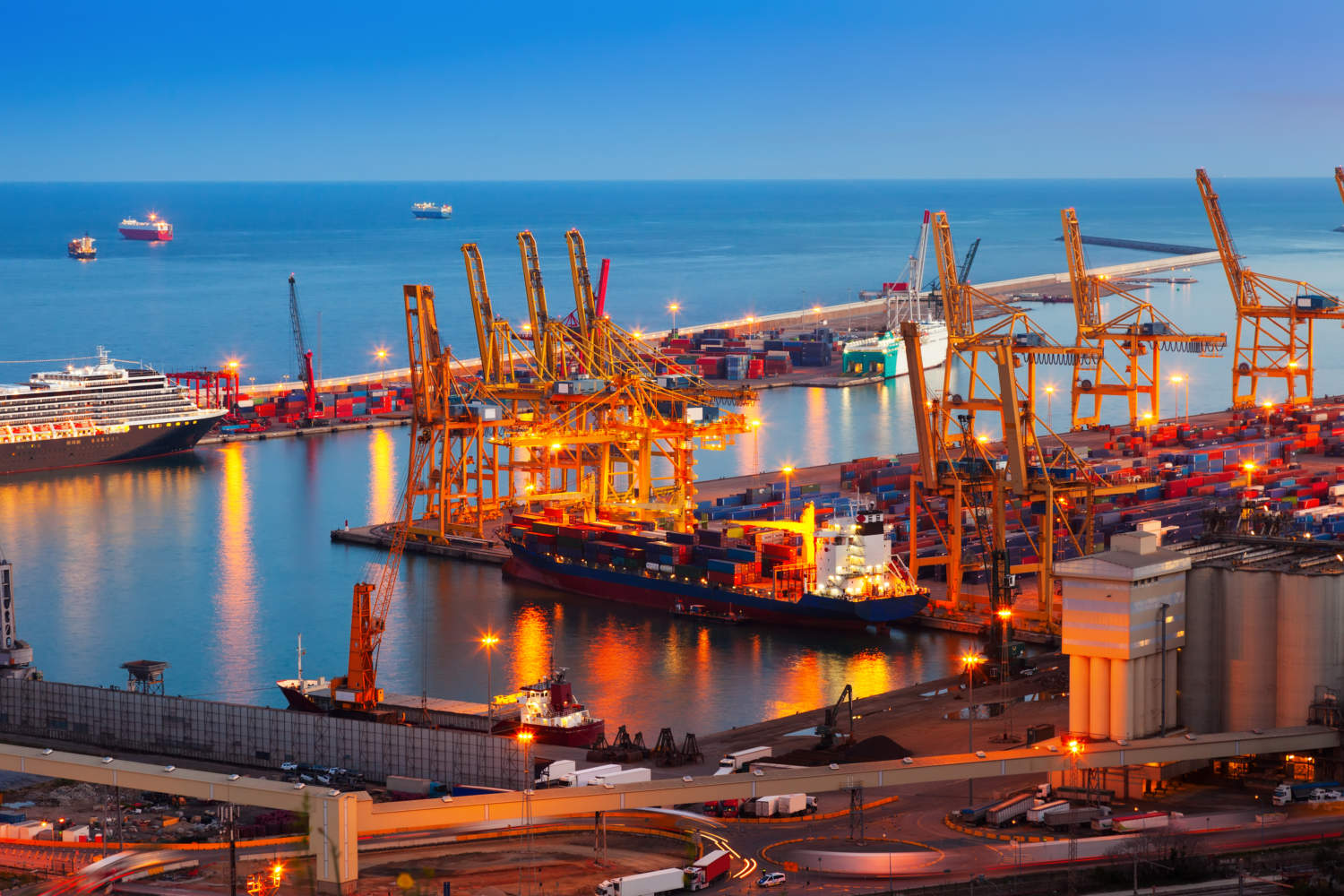
At an operational level, Cyprus’s ports are unlikely to function as major transshipment hubs. Limassol port, the largest on the island, handles around 500,000 TEUs annually — roughly one-tenth of Piraeus’s capacity. However, Cyprus is a major international ship management centre, hosting offices that control large segments of the global commercial fleet. This sector alone accounts for around 5% of GDP — a comparative advantage that could be utilised in the context of IMEC.
In the energy sector, the Great Sea Interconnector (GSI) is also of interest — provided outstanding issues are resolved. Although the cable linking Israel, Cyprus and Greece predates IMEC discussions, it could further enhance the Eastern Mediterranean’s broader geostrategic significance.
IMEC currently bypasses Turkey. Is the project viable without it?
President Recep Tayyip Erdoğan has stated that IMEC cannot proceed without Turkey’s participation. Decision-makers in Ankara view the corridor as a strategic threat to Turkey’s regional ambitions. They are concerned about the emergence of a regional security sub-system in the Eastern Mediterranean based on cooperation between Greece, Cyprus and Israel. For this reason, they advocate an alternative route from a port near Basra through Iraq to Turkey.
The geopolitical implications are evident. However, given the multiplicity of other issues at play, I believe Turkey’s objections will not prove decisive. In any case, I have the impression that IMEC is more likely to encounter difficulties in its central segment than in the Eastern Mediterranean.
A costly, long-term project
What is the estimated cost and timeline?
Preliminary estimates suggest that developing the required transport and energy infrastructure would require at least €100 billion. Including associated long-term investments, the figure could rise to half a trillion euros. While no comprehensive feasibility study has yet been completed, these amounts are not necessarily prohibitive.
More important is the question of who will bear the financial burden and how costs will be distributed among participating states and private actors. There is no provision for a single common fund — something that would be politically difficult. Discussions revolve around a broader framework coordinating multiple projects. It is therefore likely that implementation will proceed gradually and in phases.
As for the timeline, it has been aptly said that IMEC will resemble a marathon rather than a sprint.
How do developments in the Middle East affect IMEC’s viability?
This is a very pertinent question. Beyond financial costs and coordination challenges, geopolitical risks are equally significant. The corridor comprises three segments: from India to the Arabian Peninsula, from there to the Mediterranean and finally to European markets.
Tensions in the Middle East are a constraining factor for large-scale cross-border infrastructure projects that require cooperation among numerous states. Under the Abraham Accords framework, Saudi Arabia and Israel were close to establishing diplomatic relations, but the October 2023 Hamas attack and subsequent events in Gaza halted that process, at least for now.
At present, it is also unclear how developments involving Iran will unfold. A potential US strike could trigger Iranian retaliation against American bases in the Gulf and energy infrastructure elsewhere in the region. Such escalation would not favour the project. In addition, traditional rivalry between Riyadh and Dubai — evident in disputes over oil production and divergent strategies in Yemen — adds complexity.
In my view, the geopolitical conditions necessary for the central segment of IMEC have not yet fully matured. Greater clarity and stability in the Middle East will be required.
How might IMEC reshape global trade flows?
If and when IMEC becomes operational, two key assumptions apply. First, it would contribute to India’s deeper integration into the global economy, strengthening trade with Europe, particularly in light of the recent trade agreement between them. A noticeable restructuring of international trade flows is likely, given closer ties between the vast European market and the world’s most populous country, which continues to grow rapidly.
Second, the relative importance of the Red Sea and the Suez Canal would decline, and transport times between Europe and Asia would shorten. The same applies to energy and telecommunications sectors. The corridor would therefore enhance connectivity security between Asia and Europe, offering an additional option alongside existing routes.
Read more:

