


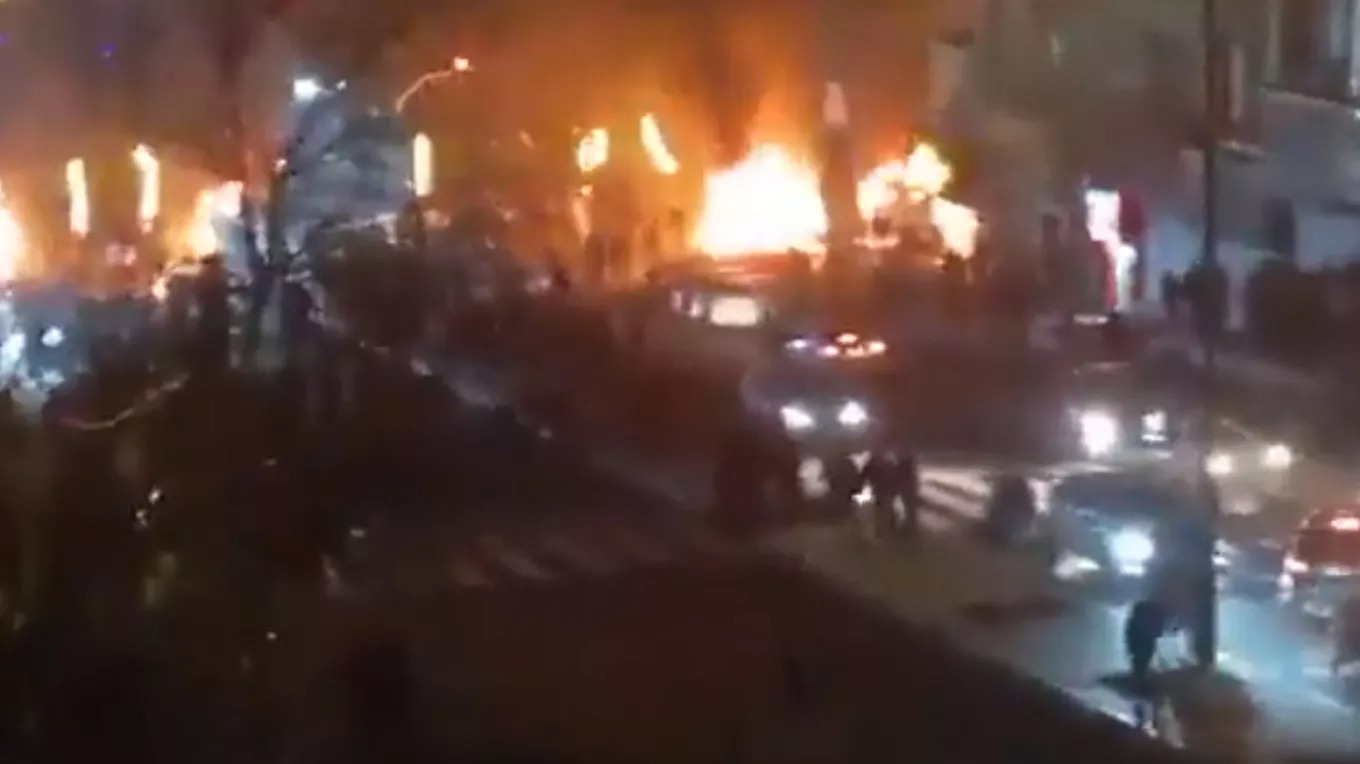
Iran’s internet went dark Thursday night as economic protests swept across the country, piling pressure on Tehran’s leadership amid a spiralling currency crisis, according to a Guardian report.
NetBlocks, which monitors internet freedom, first detected the nationwide blackout, though what triggered the shutdown remained unclear. Iranian officials have previously cut internet access during unrest.
The Norway-based group Iran Human Rights reported Thursday that security forces had killed at least 45 demonstrators since protests erupted in late December, including eight children. Earlier in the day, NetBlocks had tracked disruptions in Kermanshah as authorities cracked down harder on demonstrators.
Strikes paralysed commerce Thursday after seven Kurdish political organisations urged shopkeepers to close. Businesses shut their doors across Kurdish areas and in dozens of cities nationwide.
The Hengaw rights organisation shared videos of darkened storefronts in Ilam, Kermanshah and Lorestan provinces. Security forces opened fire on crowds in Kermanshah and the northern town of Kamyaran, wounding protesters, the group said.
By Thursday, unrest had touched all 31 of Iran’s provinces, with no sign that the movement was losing momentum.
Demonstrators in southern Fars province toppled a statue of Qassem Suleimani, the late Revolutionary Guards commander revered by regime supporters. Verified videos captured protesters celebrating as the monument crashed down.
Crowds gathered into Thursday night on Ayatollah Kashani Boulevard in north-west Tehran, with car horns blaring support, AFP verified from social media footage. Demonstrations also erupted in the western city of Abadan, where a woman had been shot in the eye during Wednesday’s protest, Iran Human Rights reported.
The rights organisation described Wednesday as the deadliest day yet in the 12-day uprising, with 13 protesters confirmed dead. Director Mahmood Amiry-Moghaddam said “the scope of the crackdown is becoming more violent” each day. Hundreds more had suffered injuries and authorities had detained over 2,000 people, he added.
Fars news agency reported Wednesday that a police officer died west of Tehran whilst trying to control disturbances.
State media and official figures have acknowledged at least 21 deaths, including security personnel, since protests began, according to an AFP count.
The movement marks Iran’s biggest upheaval in three years. Whilst smaller than the 2022 Woman, Life, Freedom protests, it has rattled political and security chiefs in Tehran.
Rights organisations accused officials of raiding hospitals to arrest wounded demonstrators. Amnesty International said security forces had harmed both protesters and bystanders through excessive force.
President Masoud Pezeshkian urged restraint Thursday in managing the demonstrations. In a website statement, he said “any violent or coercive behaviour should be avoided” and called for officials to listen to public grievances.
The currency collapse and broader economic decline that sparked the protests have left Tehran with few options to calm public anger. The rial kept falling in value Thursday as officials scrapped subsidised exchange rates for importers, sending grocery costs soaring.
Basic necessities have become unaffordable for most Iranians. Food costs have jumped over 70 per cent in a year, with medicine rising about 50 per cent over the same stretch.
Officials say they have limited power to fix the crisis, promising only to combat corruption and profiteering. Tehran blames Western sanctions over its nuclear activities for the economic catastrophe.
Unlike the 2022 protests that coalesced around Mahsa Amini—the 22-year-old who died in custody after her arrest over hijab violations—the current movement lacks a clear figurehead or central organisation.
Reza Pahlavi, the exiled son of Iran’s last shah, has tried to position himself as a leader. He asked Iranians to shout from their windows at 8pm Thursday and Friday as a show of solidarity. “Based on your response, I will announce the next calls to action,” he said in a widely circulated video.
How much backing Pahlavi commands remains uncertain, though some protest footage from the past fortnight shows crowds chanting his name. Pro-government social media shared videos purporting to show intelligence officers warning residents against joining Pahlavi’s demonstrations, with some outlets claiming drones would identify participants.
Whilst authorities have deployed violence, the crackdown hasn’t matched 2022’s ferocity. Observers suggest the state feels more vulnerable than three years ago after its June conflict with Israel weakened its position.
Tehran also faces external pressure. US President Donald Trump warned Thursday he would strike Iran hard if authorities “start killing people,” repeating earlier threats to intervene if demonstrators were killed.
Washington’s State Department boosted protesters online, posting videos of people sticking Trump images on road signs and noting that sky-high prices hurt both buyers and sellers.
Treasury Secretary Scott Bessent told Minnesota’s Economic Club on Thursday night that Iran’s economy was “on the ropes” and described the situation as tense, saying Trump opposed further harm to demonstrators.
Germany’s Foreign Minister Johann Wadephul condemned Iranian forces for using disproportionate violence against protesters.
Iranian military and foreign ministry officials lashed back at Trump’s remarks. The army chief threatened on Wednesday to launch strikes against any country menacing Iran.
Officials increasingly portray demonstrators as rioters backed by foreign powers who have hijacked legitimate grievances.
Pro-government outlets reported a police colonel was stabbed near Tehran, whilst five people died when attackers hit a police station in Chenaran, north-east of the capital, on Wednesday night.
(information from The Guardian)

