


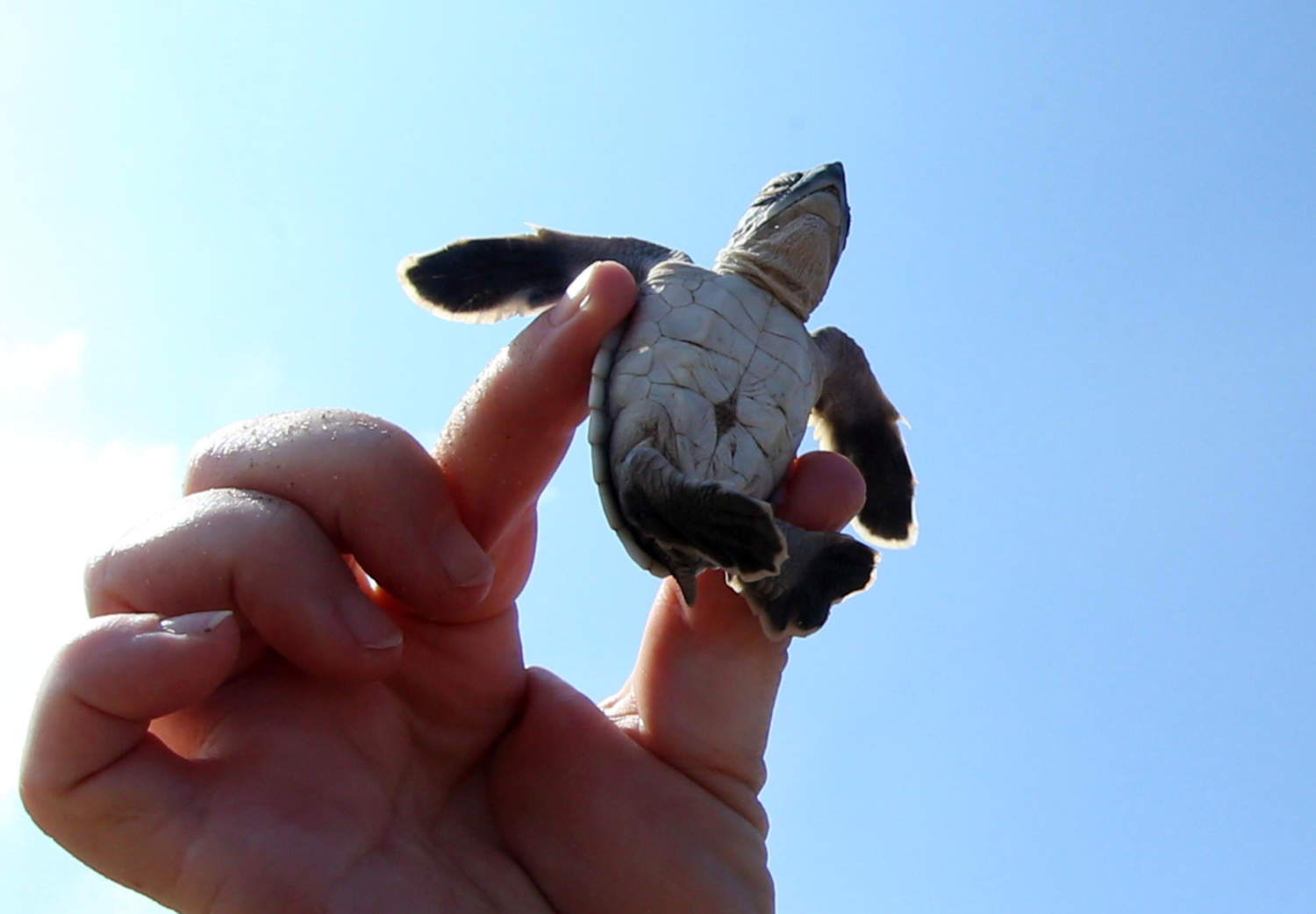
Cyprus’s Department of Fisheries and Marine Research (DFMR) is buying 20 satellite transmitters to track sea turtles once they leave the island’s beaches.
While scientists know a good deal about the beaches where the turtles lay their eggs, their movements at sea have not been studied to the same extent.
Scientists want to find out where the turtles go, where they feed, how deep they dive, whether they return regularly to particular areas, how long they stay there and which routes they follow in search of food. The tracking data will be combined with other information to identify sea areas that are particularly important to the two species. The findings will help the DFMR consider how to improve protection measures, both in existing marine protected areas and in Natura 2000 sites.
The department has budgeted 81,000 euros excluding VAT for the devices, including satellite tracking services. They will be fitted to green turtles and loggerhead turtles, mostly young ones but also larger animals.
The transmitters will be fixed to the turtles’ shells and record their location and diving data. They will send the data via satellite when a turtle surfaces.
They must work at depths of at least 250 metres and have batteries lasting at least 12 months. Together with the attachment materials, they must not exceed 5 per cent of the animal’s body weight, with separate specifications for smaller turtles.
From 300 nests to 1,500
Efforts to protect sea turtles in Cyprus began in 1978, when around 300 nests were recorded on the island’s beaches. Nearly five decades later, the number has reached around 1,500. Green turtle nests alone rose from 300 in 2020 to more than 477 in 2025, according to the DFMR.
The Lara-Toxeftra area in Akamas is one of very few green turtle nesting sites in the European Union, while the Polis-Gialia area is important for loggerheads. The department’s documents also mention the ‘Islands’ area and the wider Larnaca marine area.
Despite the rise in nests, the turtles still face serious threats, including accidental capture in fishing gear, abandoned nets, plastic waste and climate change. Nesting beaches have been protected for years, but less is known about what happens in the sea areas where the turtles spend most of their lives.
Two deliveries
The transmitters will be delivered in two batches, within five months and 15 months of the contract being signed. DFMR staff, who will be trained to use the devices, will fit them to the turtles.
The data will be available through software or an online platform, allowing scientists to follow each turtle separately. Satellite service will be provided for at least 12 months per device.
The project is part of the EU’s LIFE ADAPTS programme, which focuses on protecting vulnerable species and adapting to the effects of climate change.

