


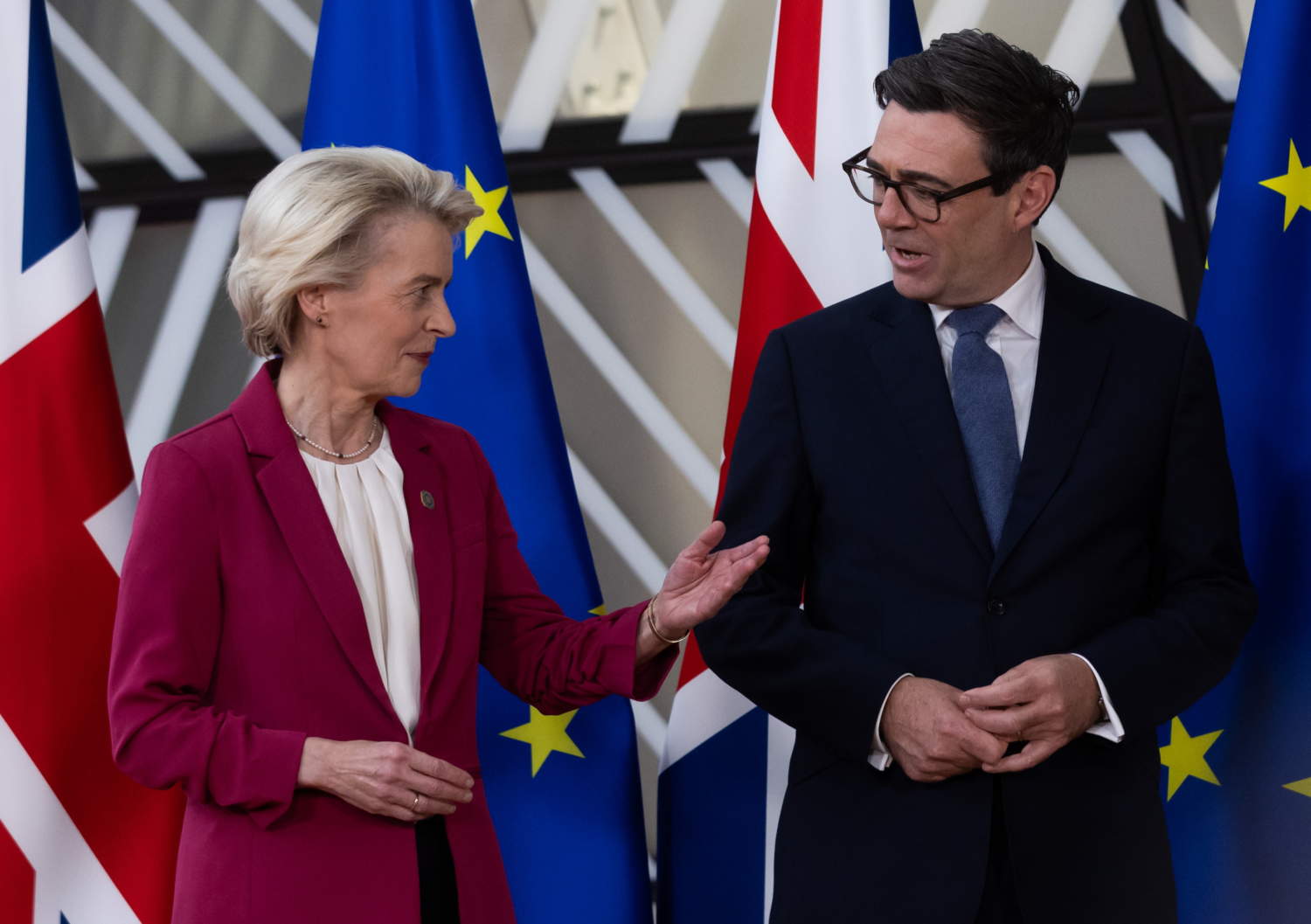
European Commission President Ursula von der Leyen said on Friday she was confident a solution with Britain could be reached on university tuition fees.
Speaking to reporters after meeting British Prime Minister Andy Burnham at a UK-EU summit, she said the two sides would be working on it in the next month, adding that “we have a track record of finding solutions”.
The British government is considering letting European Union citizens pay the same university tuition fees as British students, as part of talks to reset relations with Brussels.
EU citizens have paid higher fees since Brexit took effect, exceeding 30,000 pounds a year at some institutions, while British students in England pay just over 9,000 pounds. In both cases, the exact amount depends on the university and the course.
In return, Burnham’s government would seek a significant economic concession from Brussels: access for British businesses to the EU’s planned ‘Made in Europe’ programme, which gives priority to products made in Europe in sectors including the car industry, steel and clean energy technologies. The government is concerned that being left out would hurt British industry, exports and investment.
Compensation for universities
The government appears willing to give universities up to 450 million pounds a year to make up for lost income, according to media reports. Treasury sources stressed that the figure was indicative, saying it was based on the possibility of a sharp rise in EU students and that the final cost could be much lower.
Universities have already voiced reservations, warning that equalising fees without enough state funding could worsen their financial problems. The Russell Group, which represents 24 leading research universities, estimates the cost could exceed 500 million pounds.
Support for rejoining
The fee talks are part of a wider push by Burnham to reset relations with the EU. In his first Labour conference speech as party leader and prime minister, he announced a review of the options for Britain’s future relationship with Europe, later making clear that full EU membership could be among them, alongside a customs union or a return to the single market. He has said Brexit did “more harm than good”.
A survey of 11,461 people by The Messina Group (TMG) found that 49 per cent support rejoining the EU, compared with 28.5 per cent who oppose it. Some 52.4 per cent said Britain was wrong to vote to leave in 2016. The poll also found that immigration control and national sovereignty, two arguments that dominated the 2016 Leave campaign, still resonate with a significant section of voters.
Caution in government
Several senior government figures remain wary of reopening a major political battle over Brexit, particularly ministers and MPs representing constituencies that voted Leave in 2016. Home Secretary Shabana Mahmood has said rejoining the EU is “not a simple, straightforward thing”.
Reform UK leader Nigel Farage said Burnham’s decision to reopen the Europe debate had given him “the biggest boost in my career”.
(With information from Reuters)

