



“A child psychologist said she couldn’t help me because, when I was baptized, God had assigned me a different gender.” “The heels disappeared from our house.” “I know people who live a double life and are married with children because they are afraid to express their sexual identity.” These are just some of the testimonies of LGBTQI+ individuals living in Cyprus, as recorded in the report “Understanding the Needs of LGBTQI+ Persons when Accessing Therapy and Health Care Services,” prepared as part of the Safe-R project by the IMR/University of Nicosia.
Discrimination and stigmatization are daily realities, while targeting can happen anywhere: in the family, school, work, on the street, and even in health services. It is no coincidence that 17% of LGBTQI+ individuals avoid going to the doctor, despite the fact that 50% face some disability or chronic illness.
The Shocking Data, Testimonies, and Experiences
Participants in the survey revealed what they experience as LGBTQI+ individuals during interviews.
A 32-year-old trans man reported being rejected by a child psychologist who cited baptism as an act of divine gender assignment. “She told me she couldn’t help me because, when I was baptized, God had assigned me a different gender.” The incident, even at a young age, created barriers to accessing supportive care.
A trans woman, over 50, described being punished when she expressed her identity: “When I started telling them I was a little girl, I ended up with a boy’s haircut. The heels disappeared from the house,” she said.
“I know people who live a double life – married with children – because they are afraid to express their sexual identity,” said a 43-year-old lesbian woman, mentioning that many individuals also maintain a secret life.
“She kept saying that it would pass and that I would marry her cousin. It took her almost a decade to unlearn that,” reported the 43-year-old lesbian woman.
Another person mentioned that their family was particularly harsh with them. “They never told me the word ‘love’. I left home at 19 because I couldn’t bear the silence anymore,” they characteristically stated.
“There is always the fear of who might find out – especially when you live in a village or small town,” pointed out a 60-year-old gay man. In such environments, he stressed, coming out can seem impossible. “I came out very late, partly because in our community nothing stays private,” he said.
“Just being able to walk somewhere without being stared at or judged remains difficult,” said a 35-year-old gender-fluid person.
34% Have Chronic Illness or Disability
The data emerging regarding the healthcare received by LGBTQI+ individuals is alarming and extremely serious.
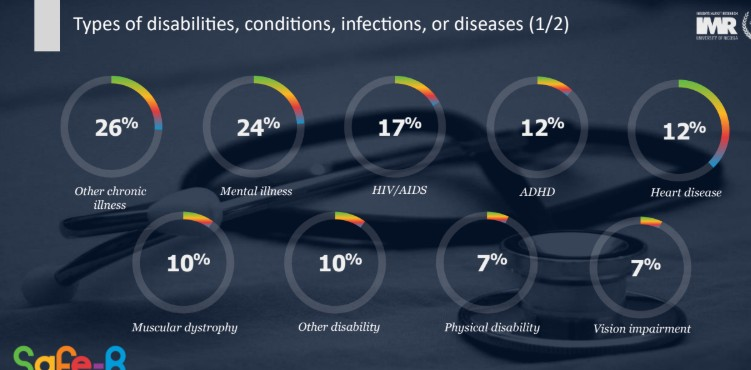
One in three (34%) of the survey participants reported having a disability, chronic condition, or illness that requires regular interaction with the health system.
The most frequently reported issues were mental health conditions (24%), HIV/AIDS (17%), heart disease (12%), muscular dystrophy (10%), motor or visual impairments (7%), and physical disability (7%). 26% reported dealing with other chronic conditions.
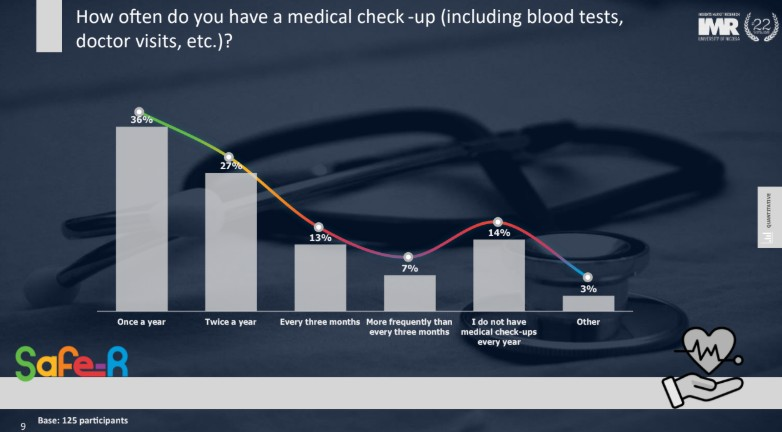
Approximately one in three (36%) participants reported undergoing a medical check-up once a year. 27% responded twice a year, and 13% make more frequent visits. However, 14% do not even undergo an annual check-up.
Half of the people who participated in the survey (50%) reported visiting health professionals only when they feel unwell, while 27% stated that they rarely or irregularly visit a doctor. “This finding is remarkable, given that 34% have a disability, chronic condition, or illness, meaning they belong to a group that is usually expected to need continuous care,” the survey emphasizes.
Nevertheless, only a relatively small percentage reported making regular visits. “This suggests that even individuals with long-term health needs may have limited or inconsistent and irregular interaction with the health system,” it is stated.
17% Avoid the Doctor Due to Fear; More than Half of LGBTQI+ Patients Cannot Afford Care
A portion of LGBTQI+ patients (17%) avoided visiting the doctor due to fear of negative behavior, while more than half (53%) did not seek medical or pharmaceutical services for financial reasons.
More specifically, 53% would not seek general medical or psychological support for financial reasons, while 40% specified that they are not covered by the public or private health systems of the Republic of Cyprus.
26% cited the lack of desire or need for help as a barrier to receiving care. 23% cited a lack of trust in services, and 22% cited the fact that they do not know where to turn for help.
17% did not contact a doctor due to the fear of experiencing prejudice. 15% cited previous negative experiences with healthcare providers, as well as complicated bureaucratic procedures (10%).
Smaller percentages stated they avoid seeking care due to their gender expression (1%) or sexual orientation (5%).
These results, according to the research, highlight both systemic and social barriers that may prevent members of the LGBTQI+ community from accessing care. Financial insecurity and lack of coverage by public or private insurance emerge as the most urgent structural barriers, affecting over half of the individuals who participated in the survey. Furthermore, the data demonstrates alarming levels of distrust and uncertainty towards the health system itself, as many individuals stated they either do not know where to turn, do not trust the services provided, or fear facing prejudice from healthcare providers.
The fact that some individuals avoid seeking care due to their sexual orientation or gender identity and expression, even if their number is small, indicates persistent stigma and the need for more inclusive and gender-affirming environments.
In combination with reports of negative past experiences and complicated bureaucratic procedures, it becomes clear that for many LGBTQI+ individuals, access to healthcare is not simply a matter of availability, but is linked to psychological safety, respect, and the ability to navigate the health system. Addressing these multi-layered barriers is crucial for ensuring equal access to healthcare and mental health support.
43% in Mental Health Therapy Sessions
43% of the survey participants responded that they are attending mental health therapy sessions. Considering that 24% of individuals reported a mental health condition and 34% a chronic condition or disability, it is understood that a significant portion of individuals with potential mental health needs are in therapy.
Individuals in therapy stated that they participate with a frequency of once a month (27%), once a week (25%), and once every two weeks (25%), in all cases in-person.
Specialist Doctors Receive the Most Discrimination
Psychologists and psychiatrists received the most positive evaluations from survey participants. 80% stated that they received both information and support.
Personal doctors were also positively evaluated, with 78% of respondents reporting that the support they received was helpful.
Other specialties of health professionals received the lowest evaluation (51%), and it emerged that 66% had not recently visited a specialist doctor.
In the Dark About Hormone Therapies and Gender Confirmation Surgeries
More than half (52%) did not know whether gender-affirming procedures, such as hormone therapy or surgeries, are available in Cyprus. 34% responded that such services are offered, and 13% believed they are not offered.
This high rate of uncertainty, the survey points out, suggests a lack of accessible information about gender affirmation options within the country’s health system.
Insecurity is also evident in the way they evaluate health professionals in Cyprus regarding the specialized needs of LGBTQI+ individuals. Only 4% of participants reported being very satisfied, 19% satisfied, and 33% rather satisfied. Conversely, 8% reported being very dissatisfied, 16% dissatisfied, and 7% rather dissatisfied. 14% chose not to answer.
Discrimination During Health Provision
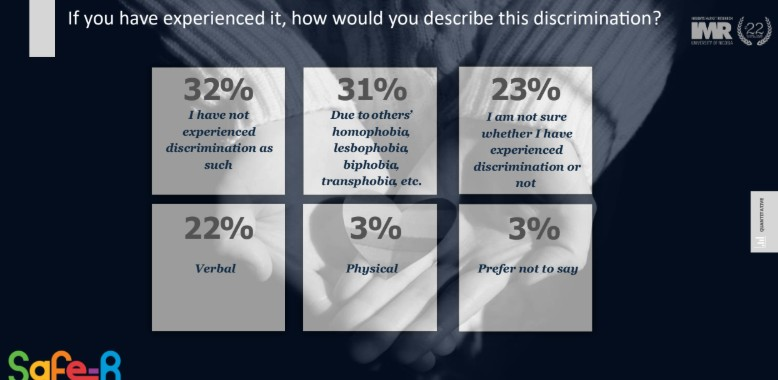
There was a disagreement expressed by participants as to whether they have experienced discrimination because they are LGBTQI+ during the provision of health services. 35% answered negatively and 34% positively, while 27% were unsure of their answer.
Of those who answered positively, 31% attributed the discrimination they experienced to homophobia, transphobia, or similar prejudices. 22% referred to verbal discrimination.
The vast majority experienced negative reactions because they behaved in ways considered “too feminine” or “too masculine” based on social stereotypes.
63% were treated negatively due to femininity and 39% due to masculinity.
6% Experienced Violence When Seeking Care
A small portion of LGBTQI+ patients (6%) stated that they have experienced some form of violence when seeking health care. 11% were unsure if what they experienced constituted violence, while the vast majority (81%) responded that they have not experienced violence.
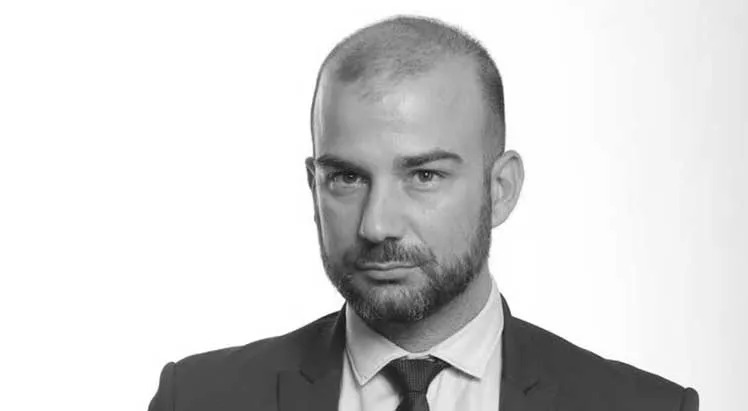
Stefanos Evangelides: “They Did Not Accept a Trans Man to a Gynaecologist”
Accept LGBTQI+ Receives Complaints – Patients Report Microaggressions
“Many patients report experiences of microaggressions, offensive behaviors, stereotypical perceptions, or arbitrary assumptions based on heteronormative and binary models,” said the President of Accept LGBTQI+ Cyprus, Stefanos Evangelides, clarifying that they have received complaints.
“We had a trans man who a gynaecologist refused to see. This is an example of such behavior,” he said, adding that discrimination undermines the quality of care provided and limits the sense of trust and safety towards the health system.
“Before conversion therapies became politicized, we received complaints about attempts by specialists for conversion. Or complaints that they were rejected by doctors or neglected or mocked them in the hospital,” he said.
“Another example concerns endocrinologists, the majority of whom do not offer services to trans individuals. This shows that we are behind,” he stressed, adding that many LGBTQI+ individuals avoid contacting a doctor and delay seeking medical or psychological support. However, he said not all doctors are like this. “Many are interested and informed or even offer their services voluntarily. But the attitude of doctors should not rely on their personal beliefs but on their professional status. Respect for the patient must be a given,” he underlined.
“17% stated that they would not seek medical or psychological help due to prejudice, 15% avoided care due to previous negative experiences, and 6% because of their sexual identity or gender expression. The research shows that the challenges are more complex and frequent for trans individuals,” said Mr. Evangelides.
In the first comprehensive study of its kind in Cyprus, he stressed, the fact that there are also gaps regarding the education and training of specialists is also demonstrated. “This is why we, as Accept, emphasize the need for immediate institutional action and ask for it to be included in the National Strategy on Sexual Orientation and Gender Identity. To create a system that protects all individuals, in a framework of safety and dignity, providing high-quality health services.”

