


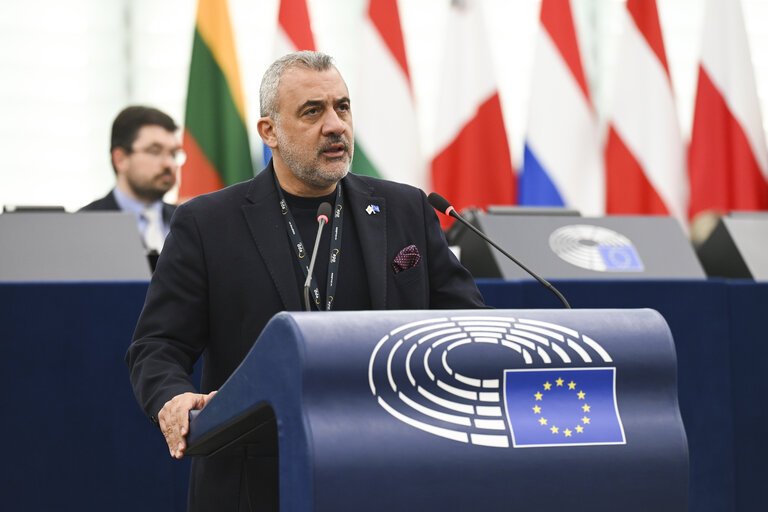
By Loucas Fourlas, MEP, European People’s Party, Democratic Rally
The debate over the future of European Union–United Kingdom relations continues with undiminished intensity, as the consequences of Brexit still shape the daily lives of millions of citizens.
Recently, the President of the European Commission, Ursula von der Leyen, and the President of the European Council, António Costa, met with the British Prime Minister, Keir Starmer. During their discussions, all sides reaffirmed their commitment to finding solutions to outstanding issues affecting both EU citizens living in the UK and British citizens residing in the EU.
Within this framework, the European Parliament was tasked with preparing a report outlining the steps needed to achieve these objectives. I was honored that the European People’s Party entrusted me with the role of rapporteur. This gave me the opportunity to set out a clear condition for Britain: to support European students by restoring tuition fees to pre-Brexit levels.
Following Brexit, tuition fees for European students at UK universities skyrocketed to prohibitive levels, leaving tens of thousands of young people facing insurmountable financial barriers. Where students from Cyprus and other EU member states once paid around £10,000 a year, the cost has now risen to £35,000 or even £40,000.
My position has always been that education must not become a privilege for the few. It must remain accessible to all—especially at a time when cooperation in knowledge, research, and innovation is more essential than ever.
The condition I proposed in the report was adopted by a majority in the European Parliament’s Committee on Culture and Education. It will now be put to a vote in the next Plenary Session as the official coordinated position of the EU’s political groups.
The report, of course, does not deal only with education. It also addresses issues of culture, sport, exchange programs, and mobility schemes that have been “frozen” since Brexit. The message from the European Parliament is clear: we must restart the bonds that connect our societies and put an end to the uncertainty that citizens have been forced to endure for too long.
Britain is asking for much from the European Union within the framework of our trade relationship. But it cannot simply demand; it must also give something back that will improve the daily lives of citizens. Europe enters these negotiations with a firm and consistent position: cooperation must be reciprocal and fair.
I remain hopeful that positive developments will follow. This is not just a matter of negotiation—it is a matter of principle. Our citizens, especially young people, must not become the victims of political decisions. Europe must stand by them and guarantee that access to knowledge, culture, and opportunity remains open and affordable.

