


Cyprus’s new civil service performance evaluation system has failed spectacularly in its second year of implementation, with officials reporting a return to previous public sector mentalities rather than the intended reform improvements.
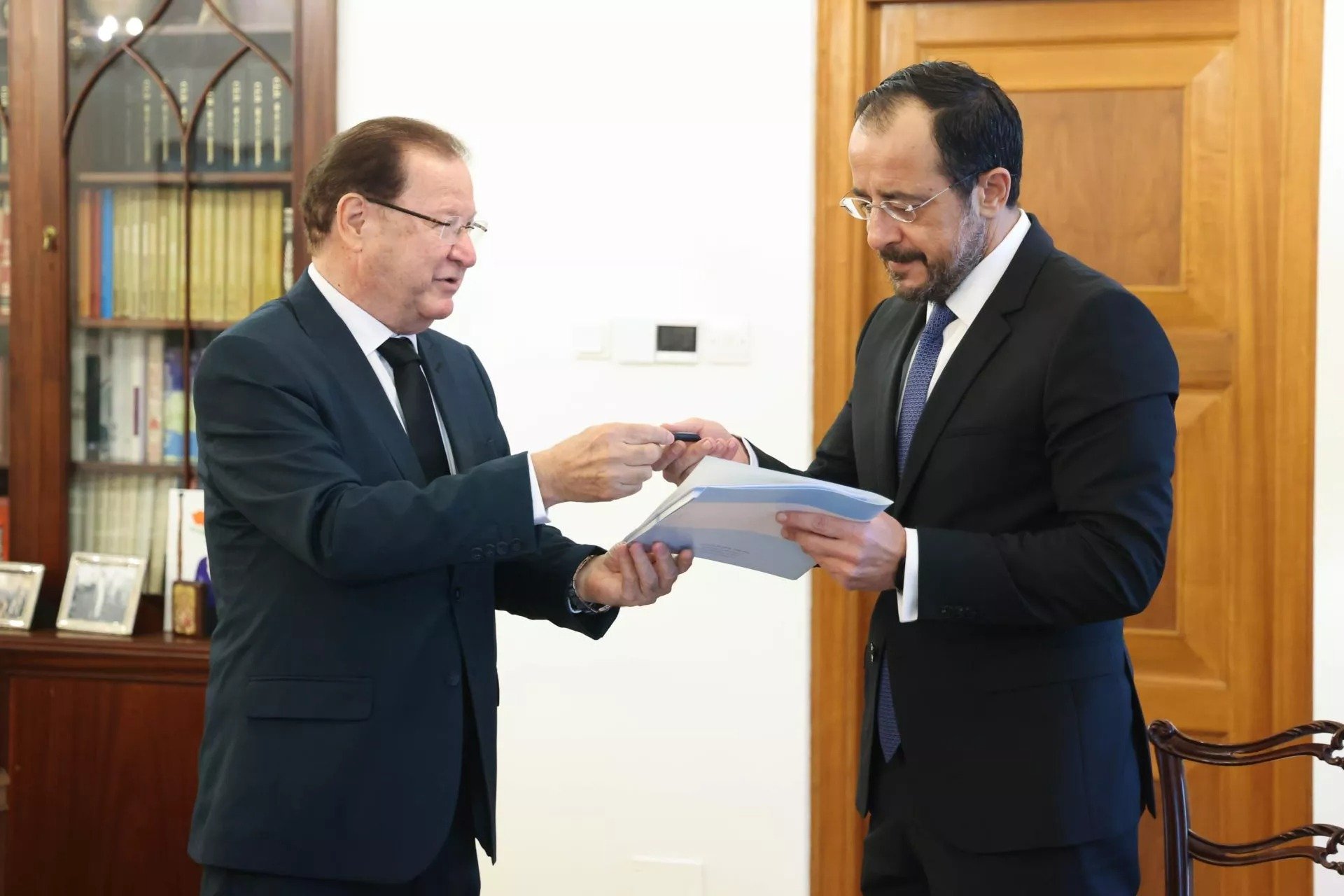
Public Service Commission Chairman Georgios Papageorgiou delivered the commission’s 2024 annual report to President Nikos Christodoulides on Monday, revealing that most government ministries, departments and services continue to violate the new assessment framework.
“The data announced raises concerns about the evaluation system in the public service, as most Ministries, Deputy Ministries, Departments and Services not only continue to apply it with complete deviation from the provisions of the new system, but blatantly violate it,” Papageorgiou stated during a press conference.
Average performance scores rise to 9.01 despite system reforms
The average performance score across all evaluated civil servants rose from 8.747 in 2023 to 9.01 in 2024, with non-transferable staff scores increasing from 8.754 to 9.00 and transferable staff from 8.724 to 9.09.
The report’s executive summary noted that “symptoms are presented that refer to outdated levelling mentalities, trends that, if not halted and reversed in time will lead again with mathematical precision to undesirable situations”.
Some departments recorded particularly high averages that raised concerns, including the Famagusta Provincial Administration with a perfect score of 10, the Ministry of Health with 9.84, and the Judicial Service with 9.55.
Only three government departments show proper compliance
Only the Deputy Ministry of Shipping, the Department of Information Technology Services, and the Press and Information Office demonstrated successful compliance with the evaluation system’s principles, according to the commission.
The report emphasised that “it is obvious that the evaluators have not understood the magnitude of the responsibility they have in relation to the evaluation of their subordinates”.
Training provided to evaluators prior to implementation “did not deliver the expected results and therefore should be repeated,” the commission concluded.
The system’s failure extends to supervisors’ application of the 0-15 unit recommendation system for promotions.
The report noted that despite this being an independent criterion and exclusive authority of supervisors, “in certain cases, supervisors have awarded units in a manner that raises reservations regarding the correct application of the relevant provision of the law”.
In some instances, supervisors awarded significantly different recommendation units to candidates with identical or very similar annual service report scores, highlighting inconsistent application of evaluation criteria.
The report revealed that 69.4 per cent of civil servants in 2024 held university qualifications, including undergraduate and postgraduate degrees.
Among new appointees to positions not requiring university qualifications, only 23 per cent had secondary education qualifications alone, with the remaining 77 per cent holding diplomas or higher education credentials.
Another challenge identified was the inability to find candidates for entry-level positions on the A7 government salary scale, which require secondary school completion or three-year post-secondary diplomas as basic qualifications.
The commission stated this issue “should be studied both in terms of the underlying reasons and the ways to address it”.

