


Political party leaders and their campaign teams are grappling with unprecedented uncertainty ahead of the 2026 parliamentary elections, as the political landscape remains more fluid and unpredictable than ever before, according to party sources and political analysts.
For the first time, the political scene remains so unclear and indeterminate due to extraordinary voter fluidity, preventing parties from forming coherent images upon which to organise pre-election strategies.
This political uncertainty intensifies party concerns, as it reinforces the potential for disruptive scenarios at the ballot box, similar to what occurred during the European elections.
Party leaders seek high-profile candidates amid fluid political landscape
Within this framework, party leadership teams are organising their electoral objectives, primarily investing in selecting individuals to populate their candidate lists based on recognition and popularity, either broadly within society or among specific audiences they wish to mobilise.
For several months, party leaderships have been in constant search of strong names for their candidate lists, a particularly difficult mission given the characteristics of the current political scene.
“Internal transfers,” returns, or party movements present particular interest, showing greater mobility and concentrating more attention thus far.
The cases of Giorgos Pamporidis and Anastasia Anthousi for DISY’s Nicosia ballot were intensely discussed recently, as they were considered “returns” expressing a distanced segment of Nicosia’s urban society that traditionally voted DISY but remains distant or disappointed with the current state of affairs for various reasons.
Retired Brigadier Paris Markou, son of missing hero Tasos Markou, represents the most discussed name among DISY’s leading candidates.
He carries a “heavy” name, symbolic for an audience particularly sensitive to DISY, and joins the Famagusta ballot, a province where the party appeared to have losses to ELAM.
The case of Andreas Apostolou and discussions surrounding his move to DIKO’s ballot exemplify the increased movement between parties.
Apostolou, who was elected as Larnaca MP with EDEK after joining following the absorption of Giorgos Lillikas’s Citizens’ Alliance, secured first place in preference crosses as a European Parliament candidate in the European elections.
Battle for parliamentary presidency emerges as key post-election priority
The election of Parliament President will be the first act in the political scene as it develops after the parliamentary elections, potentially functioning as a bellwether for alliances that will evolve until the presidential elections.
Election results will set up the chessboard and determine player strength.
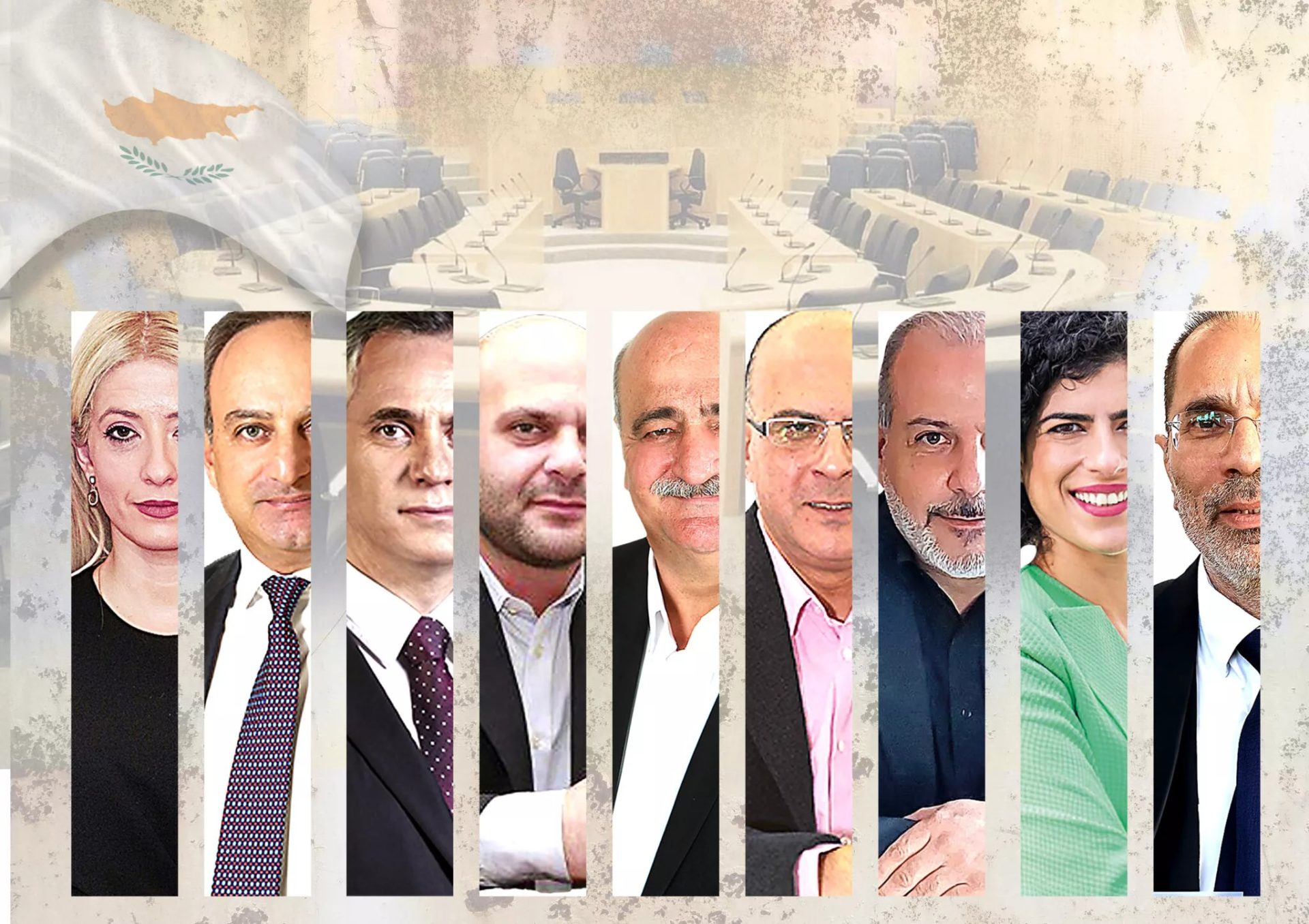
Annita Dimitriou, Stefanos Stefanou, Nikolas Papadopoulos, Christos Christou, and Odysseas Michaelides are names circulating as scenarios for Parliament’s Presidency.
The framework includes alternative choices, with speculation surrounding broader centre-right party cooperation and potential front formation between AKEL, the ALMA Movement, Volt, and the Greens.
For Annita Dimitriou to remove herself from re-seeking the Parliament Presidency, she would obviously need “something up her sleeve” – possibly a cooperation for the presidential elections.
Could DIKO provide support for her in the 2028 presidential race, securing support for Nikolas Papadopoulos for the Parliament’s Presidency?
However, no one can assume cooperation between the two parties will have the required number of MPs to elect a Parliament President.
Currently, DISY has 17 MPs and DIKO has 9, totalling 26 – insufficient for an absolute majority. By May 2026, their strength may decrease further.
Electoral targets and survival strategies
At the Democratic Rally (DISY), the primary objective is maintaining first place in parliamentary elections, even if accompanied by percentage losses. How clear the lead will be and the difference from other parties matter significantly.
AKEL does not speak openly about first place, though this scenario exists in some minds at the Ezekias Papaioannou headquarters under certain conditions. The main objective remains maintaining or increasing percentages compared to previous parliamentary elections, where it received 22.34% in 2021.
ELAM targets remaining above 10% with a regulatory role in Parliament, though behind-the-scenes aspirations exist for higher percentages.
DIKO seeks double-digit percentages, with the 10% threshold representing a barrier for establishing the party as a regulatory factor.
Odysseas Michaelides targets ALMA Movement’s parliamentary entry with double-digit percentages, upon which he will base any presidential election ambitions.
Meanwhile, EDEK, DIPA, Greens, Volt, KEKK, and other emerging political forces prioritise parliamentary entry as their primary objective.
The coming period is expected to see the publication of the first post-summer opinion polls, potentially providing data that could function as factors for deciphering political scene formation trends.
With candidate lists largely completed by year’s end, a more stable parameter will exist for detecting voting intentions.
Read more:

