


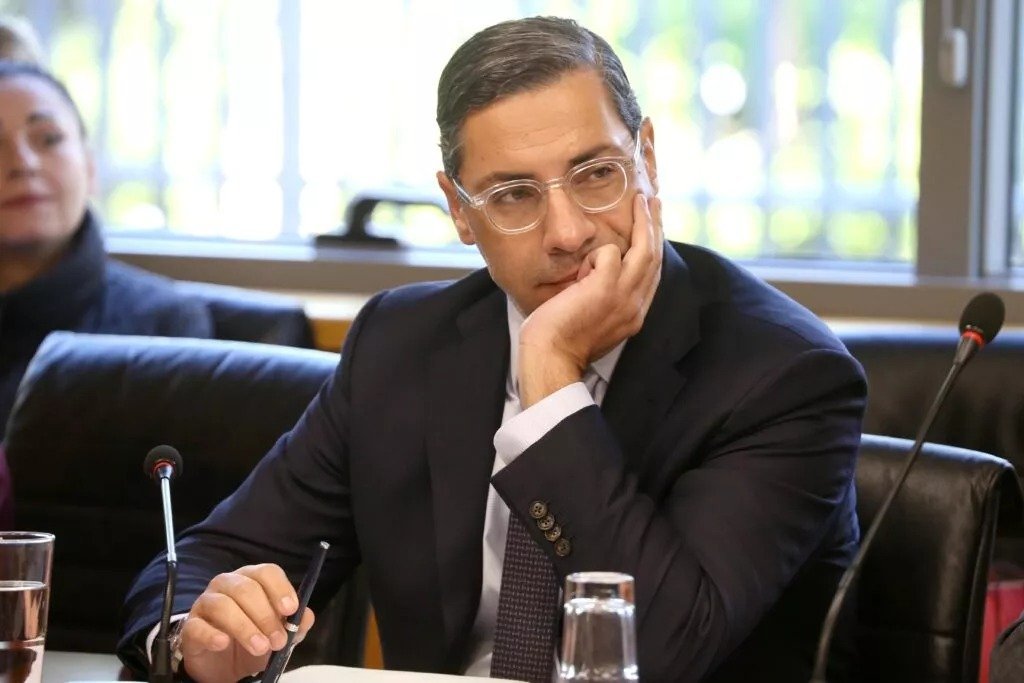
Τhe government has defended its position during European Union discussions on reviewing the bloc’s association agreement with Israel, with Foreign Minister Konstantinos Kombos citing procedural concerns and timing amid ongoing Gaza negotiations.
The Cypriot government faced criticism for expressing reservations during the latest Foreign Affairs Council meeting, where EU High Representative Kaja Kallas initiated discussions on potentially reviewing the EU-Israel agreement.
Οn May 19, 2025, 22 countries issued a joint statement urging Israel to immediately allow the full resumption of humanitarian aid into Gaza, citing the risk of starvation among the population.
The statement, signed by foreign ministers from nations including Australia, Canada, France, Germany, Japan, New Zealand, the United Kingdom, and several European Union members, acknowledged the limited restart of aid but emphasised that food, medicines, and essential supplies were exhausted, and the population faced starvation.
The signatories also opposed Israeli proposals to alter the aid distribution framework within Gaza, asserting that the United Nations and humanitarian organisations should be allowed to operate independently and impartially. Cyprus was not among the 22 signatories.
Kombos said Cyprus’s stance focused on the practical benefits of such a review rather than opposing Israel’s need to change its approach or humanitarian aid flows to Gaza.
“There was no issue for member states to take a decision,” Kombos explained, noting that the High Representative holds exclusive competence over the matter after consulting member state views.
Cyprus raised procedural objections regarding the potential effectiveness of such a decision, particularly given that any resulting report would not come from EU personnel on the ground and would require unanimous approval from the College of Commissioners.
The minister questioned what implications would arise “if it does not pass unanimously through the Commission.”
He said Cyprus maintains that the current review “does not serve the purpose for which the discussion took place” whilst affirming three key positions: the situation in Gaza is tragic and unacceptable, Israel must change its stance, and large-scale humanitarian aid must flow to the territory.
According to Kombos, ten member states expressed concerns about potential changes to the procedure and proposal. He suggested some parties misinterpreted Cyprus’s position as opposition to the Palestinian people, referencing the President’s recent visit to Ramallah.
The Foreign Minister outlined two additional concerns behind Cyprus’s reservations: questioning what alternative leverage mechanisms the EU would retain if dialogue through the EU-Israel Association Council were removed, and citing the sensitive timing during ongoing hostage release and ceasefire negotiations led by Qatar.
Kombos clarified that no vote was taken, with Cyprus simply making a position statement during discussions.
Regarding the humanitarian corridor from Cyprus, the minister reported renewed interest over the past 48 hours with some contacts established. However, Cyprus seeks a concrete plan detailing how operations would function within Gaza and Israel’s approach to aid delivery.
Cyprus previously sent 21,000 tonnes of humanitarian aid to Gaza civilians, making it the only EU member state to take such independent initiative.
Speaking to Alpha TV, Foreign Ministry spokesman Theodoros Gotsis confirmed the review represents High Representative Kallas’s initiative, requiring a report from the European External Action Service, College of Commissioners approval, and subsequent return to member states for final discussion.

